


Facing talent, supply chain, and compliance challenges when going overseas in Southeast Asia? Lihua, Saivi…revealing practical experience!
Focusing on the overseas expansion of printing and packaging enterprises, we engaged in conversations with several representative companies with practical experience and market insights, conducting in-depth exchanges on the opportunities and challenges encountered in the process of going abroad. This issue mainly presents the frontline experiences and reflections of companies operating in Southeast Asia.
Lihua Group
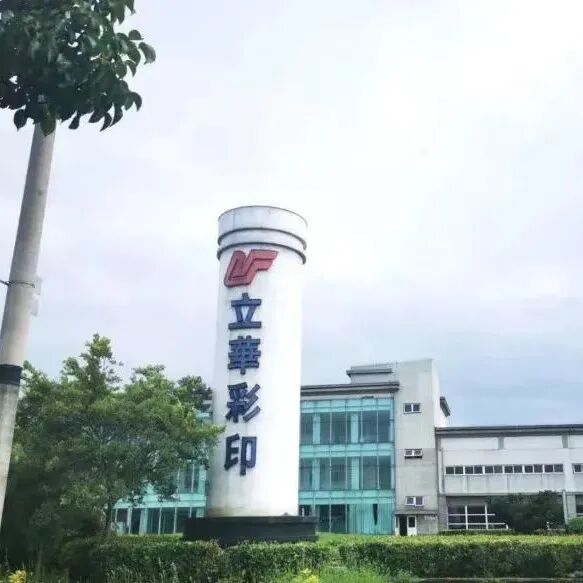
Q1:What is the current layout of your company's production capacity going overseas? What are the strategic considerations behind it?
Lihua Group currently has two 100% wholly-owned printing factories in Vietnam and Thailand, mainly serving the electronics industry. In the future, we also plan to go overseas to Malaysia and other countries.
Aiming at the Southeast Asian market, it was initially mainly positioned as a "tariff safe haven", and gradually aimed at promoting local performance growth as a long-term goal. The strategic considerations behind it are mainly as follows.
The first is tariff compliance. In the context of global trade fragmentation and tariff barriers brought about by geopolitics, transit through Southeast Asia can ensure the compliance of our products into major markets such as North America and Europe.
The second is cost and domestic demand-driven. Although labor costs are currently low in Southeast Asian countries, there is still a gap with China in terms of overall production efficiency. It is believed that in the long run, with the widespread application of automation equipment and the improvement of management level, the gap between the two will become smaller and smaller.
The third is the "near-field" of the supply chain. Establishing a base in Southeast Asia will help us connect more closely with customers or foundries and shorten the delivery cycle and distance.
Q2: What do you think is the biggest challenge in the localization operation process? What are the replicable practical experiences in talent training, supply chain construction or management models?
Currently, in the process of localizing operations in Southeast Asia, the biggest difficulty we face is still the cultural differences and the complexity of the compliance system. In terms of labor culture, there are differences in religious beliefs in Southeast Asian countries, and the general resistance of local workers to overtime is in conflict with the domestic culture of "mission must be achieved", which can easily lead to personnel effectiveness falling short of expectations. At the compliance level, there are multi-dimensional requirements, and the policies of various countries in taxation, environmental protection, foreign exchange control, and ESG are not only different, but also may fluctuate.
In the face of these challenges, I would like to share with you a few experiences and insights summarized by Lihua Group in the process of going overseas.
1. Talent training: from "airborne" to "deep cultivation"
First of all, Lihua Group adopts the "1+1+N" structure - 1 expert stationed in China (responsible for technology/process output) + 1 local middle management (responsible for communication/relationship coordination) + N local employees. Practice has shown that direct Chinese supervisors managing local teams can lead to higher turnover rates.
Second, management language needs to be "de-terminualized". Break down complex KPIs into easy-to-understand SOPs (Standard Operating Procedures) and translate them into local languages. Reduce the indoctrination of corporate culture with grand narratives, and instead adopt real-time incentive feedback mechanisms such as the "points system".
In addition, two-way talent rotation is implemented. Outstanding local middle management in Southeast Asia is selected to go to the Chinese headquarters or mature factories for 3~6 months of paid practical training to enhance their sense of identity with the company's core values and culture.
2. Supply chain construction: from "moving" to "symbiosis"
First of all, modular "packaging" to the sea. Leading companies no longer fight alone, but drive core suppliers to go overseas collectively. Through the construction of a "park within a park" in the local area, the close matching of raw materials, molds and packaging materials is realized, and the uncertainty of logistics is reduced.
Second, the supply chain "grayscale" transition. In the early stage of going overseas, printing and packaging enterprises can adopt the model of "Chinese core parts + local low-value parts", and gradually improve the localization rate in stages within 2~3 years by supporting local small suppliers or guiding Chinese suppliers to carry out technology authorization.
In addition, digital "strong control". Use the cloud ERP system to open up the data link between the headquarters and overseas factories to achieve real-time penetrating management of inventory and finance. In the immature stage of the supply chain, data transparency compensates for the management challenges posed by physical distance.
3. Management mode: from "strong pressure" to "adaptation"
First of all, overseas enterprises can set up core departments such as R&D and legal affairs in China, and only retain operations, sales and other administrative department teams overseas. Ensure flexibility management with lightweight settings.
Secondly, in actual operation, we found that if some management requirements are forced, it may cause serious strike risks. The successful approach is to hire local "opinion leader" supervisors who localize attendance and efficiency issues, rather than directly involving Chinese HR leaders.
In addition, a "network of compliance partners" can be established. Instead of trying to handle all government relations independently, it minimizes the risk of going overseas by settling in well-known local industrial parks such as Viet Huong Industrial Park and Thai-China Rayong Industrial Park, with the help of legal and tax supporting services provided by the parks.
Q3: How to divide labor and cooperate with overseas bases and domestic headquarters to maximize benefits?
At present, the core technical personnel of our overseas factories are still mainly domestic teams, and they carry out local training for 3~6 months at the Southeast Asian base through technology inheritance. The local factory is responsible for local production and delivery, and responds quickly to relevant questions from clients. Other positions such as product managers and production personnel are mainly recruited locally, so as to achieve localized operations.
Q4: How do you see the development potential of the local market? Will it continue to expand production or shift to other regions in the future?
At present, Southeast Asian countries are still facing many development bottlenecks, and it will take more time to catch up with China's level in terms of soft and hard power at the same time. However, Southeast Asian countries themselves contain rich business opportunities, in addition to the familiar electronics industry, other local non-electronic fields also have broad development potential. It is believed that with the advancement of a new wave of supply chain adjustment, the development space of Southeast Asian countries and other regions will be further expanded.
A well-known packaging enterprise in Shanghai

Q1:What is the current layout of your company's production capacity going overseas? What are the strategic considerations behind it?
In terms of production capacity overseas layout, the company mainly focuses on the Southeast Asian market, which is based on the comprehensive consideration of industry attributes and market judgment.
From the perspective of industry logic, printing and packaging essentially serve food, daily chemicals and other livelihood consumption fields, and demand is highly dependent on population size and consumption base. Therefore, regions with a large population base and rapid consumption growth have more room for long-term development. In recent years, the consumer market of Southeast Asian countries such as Vietnam and Indonesia has continued to expand and become an important incremental market in the industry.
At the same time, the competition in the domestic market is becoming increasingly fierce, the overall production capacity of the industry is relatively sufficient, and the profit space of enterprises is under pressure. In some segments, the company's domestic market share is already at a high level, and there is limited room to continue to tap the potential inward, and it is urgent to find new volume through overseas layout.
In terms of regional selection, Southeast Asia has multiple advantages: first, the geographical distance is relatively close, which is convenient for management coordination and resource allocation; Second, the overall political situation is relatively stable, and there is a certain continuity of foreign investment policies, which is conducive to reducing the uncertainty of manufacturing going overseas. Considering factors such as market potential, cost structure and investment security, Southeast Asia has become the key layout direction at this stage.
Q2: What do you think is the biggest challenge in the localization operation process? What are the replicable practical experiences in talent training, supply chain construction or management models?
From the core dimension, the difficulties of localized operation in Southeast Asia can be summarized in two points: policy stability and market foundation, which are the prerequisites for determining whether the project can be established.
The first is policy factors. Overseas investment is essentially to obtain income and return funds through overseas layout. Therefore, whether the local policy is stable and whether the foreign investment environment is predictable is directly related to the safety and long-term sustainability of the project. If the return of funds is limited, the investment itself loses its meaning.
The second is the market foundation. For the printing and packaging industry, the method of "building a factory first and then finding a market" is extremely risky and undesirable. Before going overseas, enterprises need to have a relatively certain market foundation. This requires enterprises to meet at least two conditions: first, there are already order sources that can support production capacity, usually from long-term strategic customers; Second, there are clear cooperation expectations with customers, such as production capacity scale, price range and medium and long-term order volume. On this basis, evaluate the profit margin in the next 5~10 years.
In contrast, talent and supply chain are more of an "operational" issue than a "survival threshold". Local professionals in Southeast Asia are relatively limited and need to be trained by enterprises themselves; In terms of supply chain, it can rely on a mature logistics system for cross-regional deployment. These two mainly affect efficiency and cost, and do not determine whether the project can be implemented.
Overall, going overseas is not a simple capacity transfer, but a systematic project of superimposing localized operation capabilities under the premise of "controllable policy + clear market".
Q3: How to divide labor and cooperate with overseas bases and domestic headquarters to maximize benefits?
First, when operating overseas, it is essential to respect and integrate into the local culture. Different countries have great differences in customs and habits, employment methods, etc., if not handled properly, it is easy to cause friction in the management process and even affect the operation of enterprises, so we will attach great importance to adapting to local culture in the early stage of landing.
On this basis, the management adopts the model of "domestic leadership and local coordination". The core management team is stationed in China to ensure the consistency of business ideas and management systems, and at the same time flexibly adjust according to local conditions. This also puts forward higher requirements for expatriates - not only to have production and management capabilities, but also to have a certain market awareness and cross-cultural adaptability. In addition, the company will also incentivize and guarantee expatriates through subsidies, promotions, etc.
In terms of organizational division of labor, a collaborative mechanism of "headquarters overall planning and territorial implementation" has been formed. The headquarters is responsible for coordinating key links such as strategic decision-making, customer and supply chain resource allocation, and overseas bases focus on manufacturing, quality control and finished product delivery. In short, this collaborative division of labor model can improve the efficiency of global resource allocation and maximize overall benefits while ensuring management consistency.
Q4: How do you see the development potential of the local market? Will it continue to expand production or shift to other regions in the future?
Overall, we believe that Southeast Asia still has great potential for development in the coming period. In terms of economic law, Southeast Asia is in a stage of development similar to China's 80s and 90s of the 20th century, with obvious trends of population growth and consumption upgrading, and the continuous expansion of the consumer market for people's livelihood, forming a direct support for the packaging industry. At the same time, there is still room for improvement in the overall local industrial base and technical level, and there is a certain "generational advantage" for Chinese enterprises with mature manufacturing capabilities. In other words, enterprises that can survive and be competitive in a highly competitive domestic environment generally have a certain leading edge in equipment, technology and management after entering the Southeast Asian market.
In terms of future layout, we are still focusing on Southeast Asia, especially in Vietnam, Indonesia and other markets, and the overall feedback is relatively positive. At the same time, we also see it as a "testing ground for going overseas" - gradually verifying the feasibility of the model by accumulating investment, management and operational experience locally. If the layout of Southeast Asia is mature and the experience is fully precipitated, it is not ruled out to expand to other regions in the future.
Saiwei Precision Technology (Guangdong) Co., Ltd
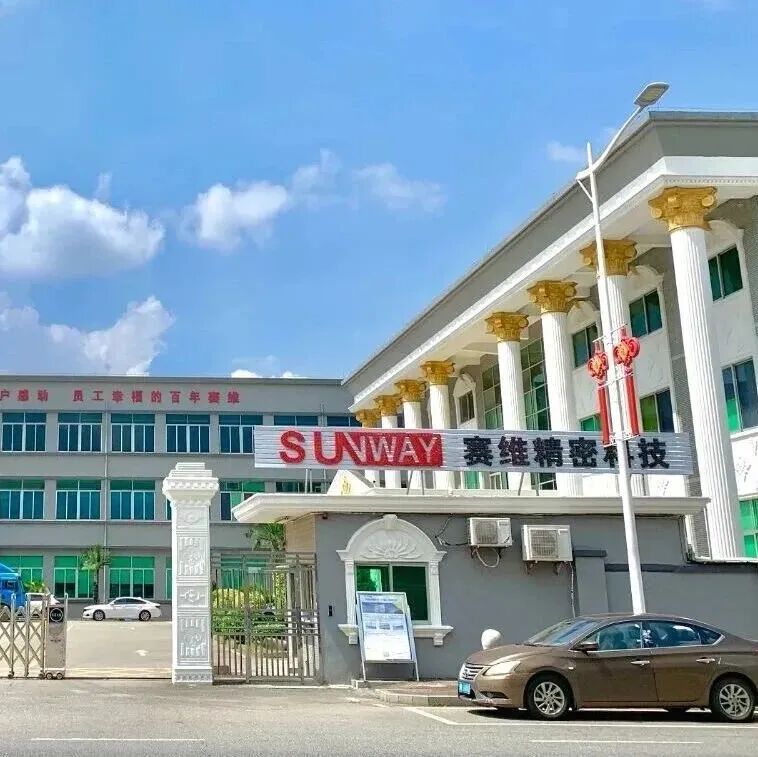
Q1:What is your company's current layout for overseas production capacity? What are the strategic considerations behind it?
Savi initiated its overseas expansion in 2014, setting up a subsidiary in Vietnam. Currently, Savi owns self-built factories in Vietnam, with a workforce of about 350 employees.
Our choice to build factories in Southeast Asia is primarily based on two considerations: on one hand, to be close to customers and stabilize orders. International brand clients are accelerating the diversification of their supply chains and require suppliers to have a "China 1" capacity configuration. Laying out in Vietnam in advance is a necessary prerequisite for obtaining long-term order share. On the other hand, it is to diversify operational risks. Under uncertainties such as geopolitical issues and exchange rate fluctuations, a single production layout offers weak risk resistance. Using Southeast Asia as a capacity buffer zone can effectively enhance supply chain resilience.
Q2: In the process of local operations, what do you consider the biggest difficulties? Are there any replicable practical experiences in talent cultivation, supply chain construction, or management models?
In the early stages of going overseas, Savi faced considerable difficulties in both talent development and supply chain construction.
Regarding talent development, the main difficulties are: first, language barriers, making it difficult to accurately convey technical documents and quality standards; second, cultural differences, as Vietnamese employees value workplace harmony, and direct criticism-style management easily leads to resignations; third, a shortage of mid-level managers, insufficient local technical talent reserves, and the high cost and difficulty of long-term posting of expatriate staff. In response, we are continuously improving our talent development system. For outstanding employees and personnel in key positions, we arrange for them to return to headquarters for training before resuming their work on site.
In terms of supply chain management, in recent years, with the influx of an increasing number of Chinese companies into Vietnam, the local supply chain has become increasingly complete. Additionally, the headquarters' procurement department is responsible for supplier auditing and pricing management for the Vietnam subsidiary to ensure optimal supply chain costs.
Q3: How do the overseas base and the domestic headquarters currently divide and coordinate work to maximize efficiency?
Currently, there are some differences between the products developed by the headquarters and the Vietnam subsidiary, so the two sides frequently engage in technical exchanges.
In supply chain management, the headquarters handles strategic procurement, key material negotiation, and global logistics coordination, while the Vietnam subsidiary undertakes local procurement execution, regional warehousing, and distribution.
In operational management, the headquarters is responsible for overall data analysis, standard formulation, and audits, while the Vietnam subsidiary handles on-site data collection and real-time problem feedback.
Q4: How do you view the development potential of the local market? Will you continue expanding production or shift to other regions in the future?
Personally, I believe that due to policy fluctuations and the complex changes in the international situation, opportunities and challenges coexist in overseas markets. However, whether expanding production or shifting to other regions, it requires enormous investment and management effort. Therefore, regardless of future development, printing and packaging companies must fully assess their own and the market conditions before taking the next step.