


After coming out of bankruptcy restructuring, she married into a wealthy family! Deshi fully acquires European flexographic printing giant MPS
At the crossroads where the global label and flexible packaging printing industry is rapidly moving towards 'high automation, full-process interconnection, and a deep mix of digital and traditional,' the European printing equipment manufacturing sector is seeing a major shake-up.
Digital inkjet printing giant Durst Group has officially announced that it has signed a controlling stake acquisition agreement. The well-known Dutch manufacturer of narrow and mid-web flexographic printing systems, MPS Printing, will officially become part of the Durst Group on January 1, 2027.
After the deal is completed, this veteran company, which has been deeply rooted in the narrow-web rotary field for 30 years, will continue to serve the global market under its new identity as 'MPS Company, part of the Durst Group.'
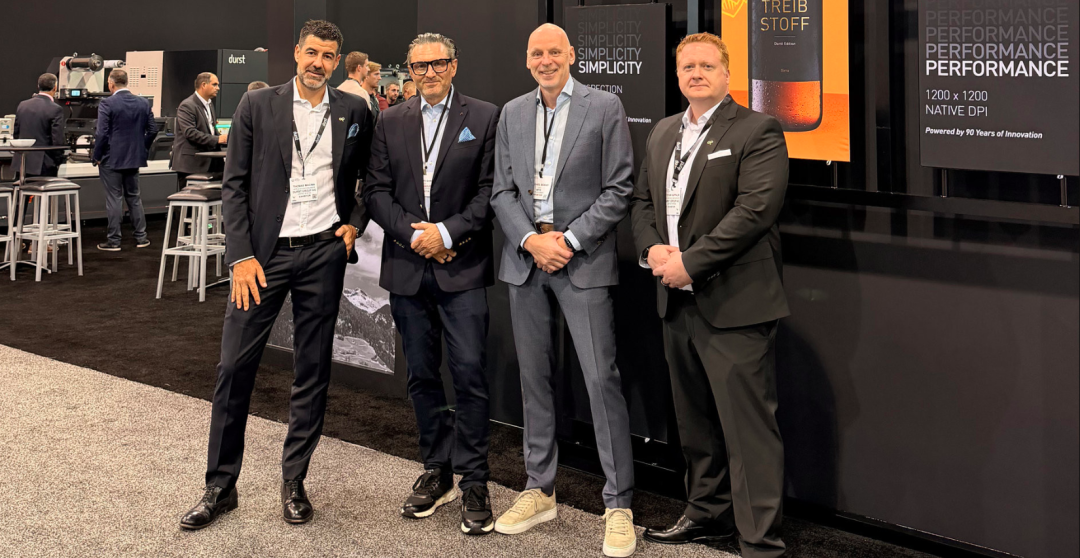
Stepping out of the shadow of divestment and bankruptcy restructuring, the management's self-rescue finally receives support from strong industrial capital
For MPS, which has a solid engineering foundation, merging into the Deshi Group marks a complete break from the darkest period it endured over the past year. Looking back at its recent turbulent journey, MPS went through a thrilling survival crisis.
In late October 2024, due to the fatal blow of a key external investor suddenly pulling out at the last moment, four core Dutch entities under MPS, including the holding company, system manufacturing, technical services, and supply chain, were forced to apply for "temporary suspension of payments" and were officially declared bankrupt by the Dutch court on October 28.
At that time, data showed that although MPS recorded a healthy turnover of over €30 million in the 2024-2025 fiscal year, the continuous pressure from external geopolitical and macro black swan events caused its cash flow to suddenly strain-after the outbreak of the Russia-Ukraine conflict, energy costs like European natural gas and electricity surged dramatically, resulting in comprehensive operational losses that wiped out about 20% of the company's revenue; combined with US-Europe trade frictions and volatile exchange rates, the company ultimately fell into a liquidity crisis.
Fortunately, the industrial assets and brand reputation that MPS had built up did not disappear. In the bidding process handled by the bankruptcy administrator, UK Managing Director Nick Taylor, together with MPS co-founder Bert van den Brink, decisively pushed for a management buyout, successfully separating and restructuring the core manufacturing system into "MPS Printing" in late November last year, achieving a smooth business restart.
Now, with Deshi, this multinational industrial capital officially taking over, not only are previous market concerns over MPS's long-term cash flow and supply chain sustainability completely resolved, but it also injects the unique long-termist patience of a family industrial group.
Digital giants complete the traditional flexographic engineering puzzle, building a full-matrix multi-track innovation foundation
Founded in 1996, MPS enjoys a stellar reputation in the global label printing industry. So far, it has delivered and installed over 750 high-end flexographic presses in around 100 countries and regions worldwide, establishing mature direct sales and service networks in the UK, Germany, Asia, and North America.
Its deep expertise in precise web tension control, automated register servo systems, and strict film feeding mechanisms is exactly the foundational puzzle Deshi is eager for in its move from pure digital inkjet toward full industrial process integration.
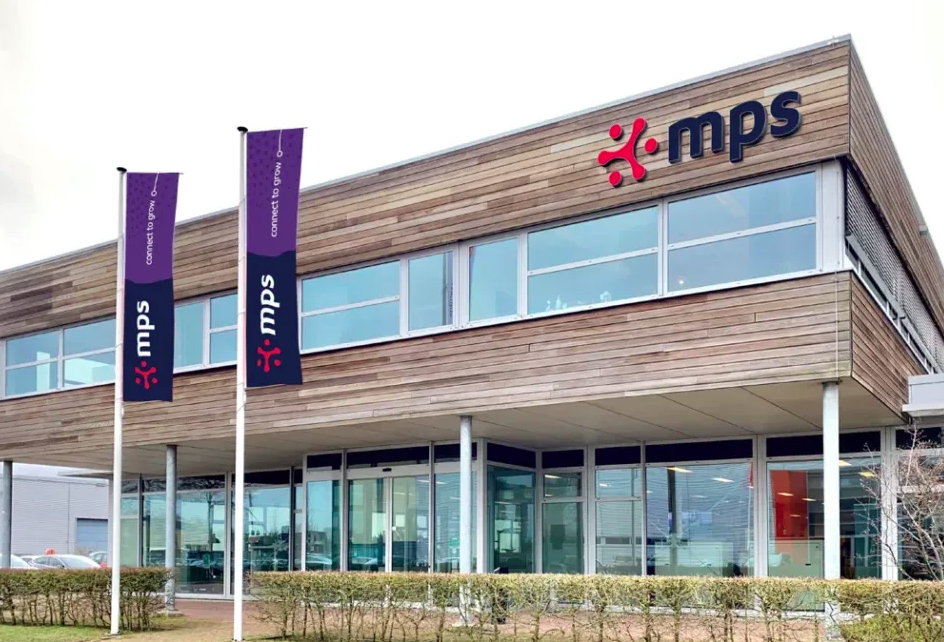
The business model of the current label and flexible packaging market is experiencing unprecedented fragmentation: a mix of long and short orders, significantly shortened delivery times, and exponential SKU expansion. Relying solely on either pure digital inkjet or traditional flexographic printing can no longer achieve optimal total lifecycle costs.
Christopher Gamper, CEO and co-owner of Gallus, emphasizes that the smart factories of the future must rely on an organic integration of digital inkjet, mechanical flexo, end-to-end automation software, and inline finishing die-cutting.
By integrating MPS's mechanical engineering expertise into Gallus's digital ecosystem, the group can significantly shorten R&D cycles without having to develop mechanical chassis from scratch, accelerating the delivery of integrated hardware and software solutions across technology lines to packaging plants worldwide.
Maintaining existing teams and independent brands, with deeply embedded global direct sales and after-sales networks
In terms of company governance and operational integration, Gallus has adopted a highly pragmatic and gradual integration strategy. According to the deal plan, MPS's current management team will remain entirely stable. Michiel Bolsters will continue to lead as Managing Director of the newly listed company, reporting directly to Gallus's top management.
Bolsters stated that MPS's proud entrepreneurial culture and technical R&D tradition will not be diluted, but with Gallus's global industrial platform and supply chain network, the team will gain global delivery capabilities that were previously out of reach.
In the sales and after-sales service chain, both sides have established an efficient and complementary division of labor:
European local market: MPS's existing mature direct sales and service network will be fully maintained to ensure that existing customer orders and machine upgrades are not affected by the transaction;
High-growth North American market: Gallus's official North American branch will fully take over sales and technical services for MPS products, allowing North American processors to connect directly with Gallus's extensive and responsive regional engineering network;
Global maintenance and spare parts: MPS will fully integrate into Gallus's global warehousing and original spare parts distribution system, fundamentally improving overseas component supply timing issues previously affected by bankruptcy and restructuring.
Strategic cooperation with Umet proceeds as parallel, Gallaus is fully strengthening its hybrid printing dominance network.
With MPS joining, the industry inevitably started paying attention to the existing alliance between Durst and another renowned Italian printing company, Omet. Previously, Durst and Omet had closely collaborated to create the highly acclaimed KJet and XJet high-performance hybrid digital flexo platforms, making significant inroads in the high-end packaging market.
In response, Durst's management provided a very clear clarification in their announcement: the strategic partnership with Omet is completely independent of the MPS deal and will continue to be firmly maintained and promoted in the future.
Christopher Gamper pointed out that the global label processing market has an enormous range of demands, and no single standardized equipment type can cover everything from ultra-short-run fast-moving consumer goods samples to million-meter heavy-load flexible packaging.
The partnership with Omet will continue to serve as the core pillar of its flagship hybrid solutions, while fully owning MPS gives Durst a more autonomous and flexible channel for engineering trial-and-error and customized integration, catering to different application scenarios, specific customer process preferences, and diverse budget ranges.
From traditional equipment manufacturers making tough self-rescue moves during crises to industrial inkjet leaders strategically acquiring others, Durst's major acquisition of MPS not only sets an example for European long-standing printing machinery companies to turn crisis into opportunity, but also more clearly reflects an irreversible trend in the global label and packaging equipment manufacturing industry-the era of single-equipment manufacturing is rapidly coming to an end, and the giants who hold core digital inkjet control algorithms, deep mechanical flexo expertise, and the capability to connect the entire pre- and post-press workflow with industrial IoT software are the ones firmly in control of defining the future of packaging production.