


Europe restricts PFAS products in packaging
According to reports, at the beginning of 2025, a survey showed that over 90% of pulp-molded tableware products in China had excessively high total fluorine content. If compared to the relevant EU standards, these products far exceed the standard limits, with the highest reaching 16.6 times the limit.
The EU officially published the "Packaging and Packaging Waste Regulation" on January 22, 2025, under Regulation No. (EU) 2025/40, and it officially came into effect on February 11, 2025. According to the regulation, it will be fully implemented from August 12, 2026, and will simultaneously repeal the old Directive 94/62/EC that has been in use for nearly 30 years. Among its provisions, one of the most closely watched is the regulation on perfluoroalkyl and polyfluoroalkyl substances (PFAS).
PFAS is a class of fluorinated organic compounds, which have been widely used in food contact materials (such as greaseproof paper, fast food box lining), cosmetics (waterproof mascara, foundation), textiles (outdoor clothing coatings), non-stick cookware, firefighting foam, etc. due to their excellent waterproof, oil-proof and high-temperature resistance. However, PFAS are extremely difficult to degrade in the natural environment and can continue to accumulate in the human body and ecosystems, and have been confirmed by several studies to be associated with endocrine disruption, liver and kidney damage, immunosuppression and even an increased risk of cancer. For this reason, the EU has listed it as a "substance of concern" for priority control.
According to Article 5 of the EU PPWR, from August 12, 2026, all packaging materials used for food contact must contain no more than 25 ppb (25 parts per billion) of each PFAS substance; The sum of all PFAS must not exceed 250 ppb; The total PFAS content in fluorine terms must not exceed 50 ppm (50 parts per million). In addition, if the total fluorine content in the package exceeds 50 ppm, the manufacturer or importer must provide downstream customers with proof of fluorine content of PFAS or non-PFAS sources, ensuring traceability and verifiability.
The EU is not alone, and PFAS restrictions are becoming a global trend. The U.S. Food and Drug Administration (FDA) announced in April 2024 that the United States will no longer sell PFAS-containing food contact oil-repellent materials, and Minnesota, Colorado, and other states have banned the use of PFAS in food packaging; Japan has banned 138 perfluorinated compounds from January 10, 2025; France will ban the sale of PFAS-containing cosmetics and textiles from 2026. China has banned or severely restricted typical perfluorinated compounds such as PFOS, PFOA, and PFHxS, but not all PFAS.
What are the risks faced by Chinese companies? If PFAS are detected in the packaging, the product will be refused entry, recalled or destroyed; Many companies have not yet identified PFAS (e.g., oil-repellent coatings, adhesives, inks) in their packaging; Environmental compliance has become a core sourcing standard for international buyers such as IKEA, Nestlé, LVMH.
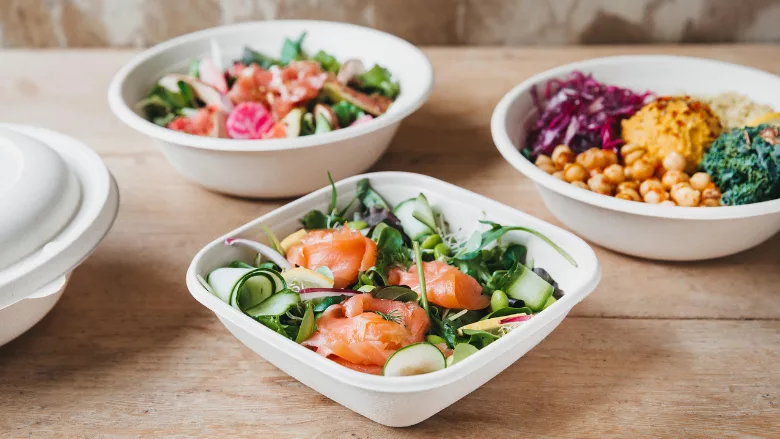
It is particularly noteworthy that PFAS can be found in seemingly "ordinary" packaging: an oil-repellent coating on the inner layer of kraft paper bags; coffee filter paper, tea bags; Frozen food cartons; Fast food paper trays, baking paper, etc., these are all "food contact packaging" clearly covered by PPWR.
So, how should enterprises respond in advance? The focus is on requiring all packaging suppliers to provide PFAS-free claims for third-party testing of high-risk materials (paper products, laminated films, coatings); Fluorine-free oil-repellent technology (e.g., starch-based, chitosan, PLA coating); Choose compostable packaging certified by OK Compost, TÜV Austria, etc.; Cooperate with SGS, TÜV, CTI and other institutions to carry out compliance assessments.
The implementation of PPWR is not only an upgrade of environmental regulations, but also a signal of restructuring the global consumer goods value chain. Whoever can take the lead in realizing the transformation of "PFAS-free, recyclable, and reduced" green packaging will win the access pass to the EU and even the global high-end market.
The countdown has entered on August 12, 2026, and now is the perfect time to act.