


Digitalization, cultural and creative industries, going global, AI applications… Yutong reveals its market breakthrough experience!
On September 18-19, 2025, the Printing and Packaging Industry Economic Forum and the National Printing Managers Annual Conference were grandly held in Hangzhou, Zhejiang. At the conference, many industry experts delivered a series of wonderful presentations, inspiring new thoughts and directions for the attendees. We will continue to compile the highlights from the annual meeting, and more exciting content is worth looking forward to!This edition shares the speech by Wang Shaoping, Senior General Manager of Yutong Group YunChuang Cultural Technology Co., Ltd. (hereinafter referred to as Yutong YunChuang), titled "Improving Both 'Internal' and 'External,' Unlocking the Secrets for the Printing Industry to Break Through."
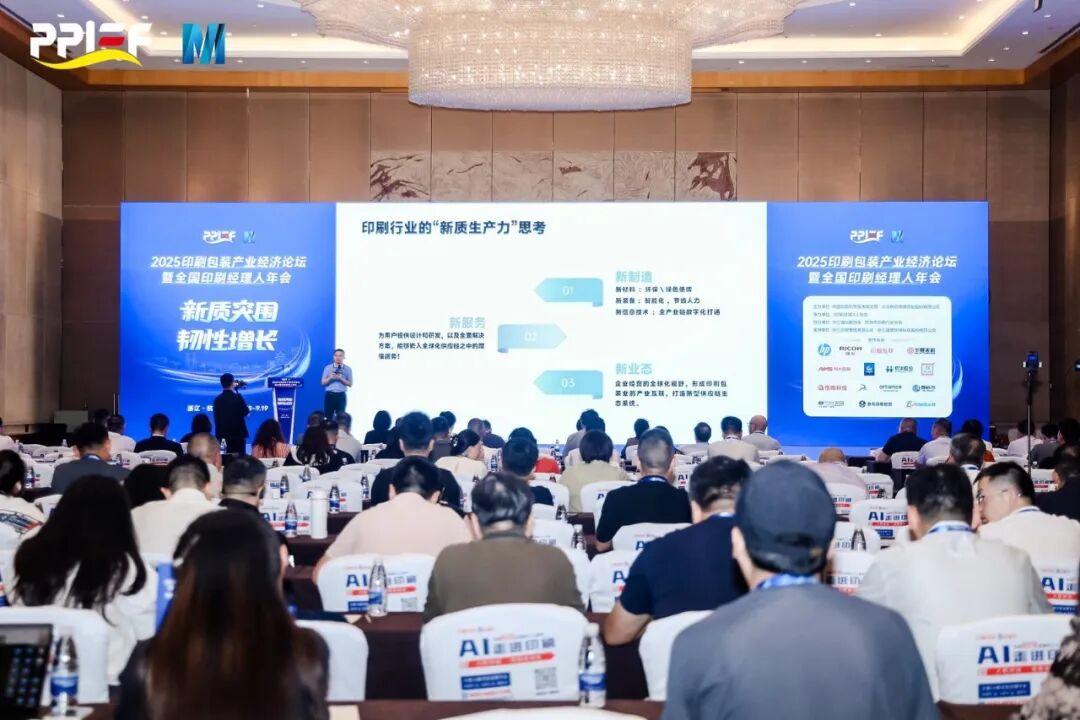
Today's meeting topic revolves around the concept of "new quality." Most printing and packaging companies are currently still focused on the manufacturing process, whereas printing companies in Europe, the US, Japan, and other countries and regions have already extended their added value and value-added space to the service end. From the perspective of new-quality productivity, I believe it is necessary to rethink the positioning and development direction of enterprises from three dimensions: new manufacturing, new services, and new business models. Below, I will specifically analyze the new development opportunities in the printing industry from five aspects.
Digital Operations: Restructuring the Entire Chain Collaboration System
When it comes to digital operations, many people first think of the production end, such as smart factories and digital systems. However, in the past 3–5 years, there have been many new changes in the industry. Compared with traditional factories, the core difference of digital factories lies in the establishment of an "end-to-end information sharing platform." Specifically, establishing a digital factory can focus on four core directions: online business, digital supply chain, digital production, and online warehousing and logistics.
In terms of online business, there is currently a differentiation trend. Some commercial printing companies have formed mature models by building private-domain platforms to facilitate customer orders. Some companies in Hangzhou, Zhejiang, leverage e-commerce advantages and obtain orders through public e-commerce platforms such as 1688, Taobao, and Tmall. However, most packaging companies still rely on offline channels. In terms of the application of emerging Internet tools, many packaging companies need to learn from commercial printing companies.
The digitalization of the supply chain is another major shortcoming in the industry. Most printing and packaging companies still rely on traditional methods when dealing with suppliers. Although WeChat groups have replaced part of the communication methods, they also cause internal operational data fragmentation and isolation, making effective analysis difficult. Currently, the digital platform built by Yutong YunChuang has achieved comprehensive online functions for document delivery, order management, and reconciliation and settlement, basically realizing production-sales collaboration.
In advancing production digitalization, breaking the "island" dilemma is key. For companies, merely purchasing a large number of digital devices does not mean achieving digitalization. If digital devices are only used as production tools without being integrated into the entire business process, they will become "isolated islands," which directly leads to workshops still needing extensive manual communication with purchasing and business departments, limiting the efficiency of digital applications.
Online warehousing and logistics rely on the support of the front-end system. Take automated warehouses as an example; they are a microcosm of digitalized warehouse and logistics management, and their implementation reflects the company's overall digitalization level. If front-end manufacturing and supply chain are not standardized and collaborative, automated warehouses may instead cause confusion in inventory management.
Packaging companies should learn from commercial printing companies how to better productize, shifting business from relying on top sales performers to building online marketing platforms. At the same time, it is necessary to clarify the internal full-process flow logic from raw material intake, product outbound, to finished product delivery. Before promoting digitalization, the degree of product standardization within the company should be clearly defined.
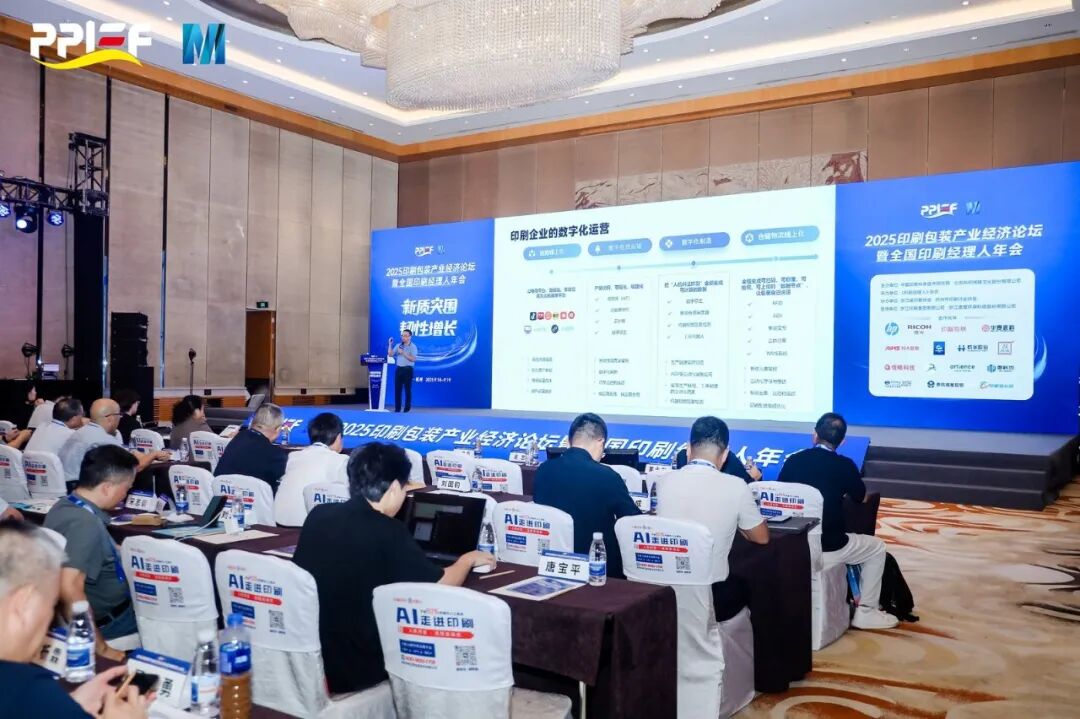 Speech by Wang Shaoping, Senior General Manager of Yutong Cloud Creation, at the Annual Meeting
Cultural and Creative Market: New Opportunities for the Printing Industry
Looking back at the development of the domestic cultural and creative industry, its early forms can be traced back more than 20 years, when a large number of Hong Kong-funded enterprises in Shenzhen and Dongguan undertook substantial international IP peripheral processing business. 2014 marked an important turning point for the domestic cultural and creative market, when the National Palace Museum in Taipei launched 'I Got It' and Washi Tape, which became a milestone for the Chinese trend in cultural creativity. Subsequently, the Palace Museum in Beijing also accelerated its cultural and creative development, making traditional culture more tangible and commercialized, breaking the public's stereotypical perception of traditional culture. Currently, the Palace Museum in Beijing, the Dunhuang Museum, and the Sanxingdui Museum have become the core leaders in the Chinese trend cultural and creative field.
The emergence of POP MART brought another perspective to the market: Chinese trend cultural and creative products do not necessarily have to be presented in a Chinese style but can be showcased in an international style to global consumers. For example, Labubu attracted worldwide attention with its international appearance. Some other large companies or platforms, such as Yuewen, Ximalaya, and certain game companies' works, have also made the development of derivative products increasingly popular. The appearance of the 'Nezha' film series has ignited the peripheral market for domestic film IP. Observing the development trajectory of the domestic cultural and creative industry, it did not start from scratch but went through a clear evolution-from early processing and manufacturing for European, American, Japanese, and Korean IPs, gradually shifting to independent development of Chinese local IPs.
The development of trendy toys and cultural creativity has also brought a new business growth point for the printing industry. For printing and packaging enterprises, this is a market opportunity for innovation and breakthroughs. For instance, printing and packaging companies can innovate in paper art or visual design, offer personalized customizations, mix cross-industry materials, or even focus on content innovation to develop their own new business sectors in cultural and creative services.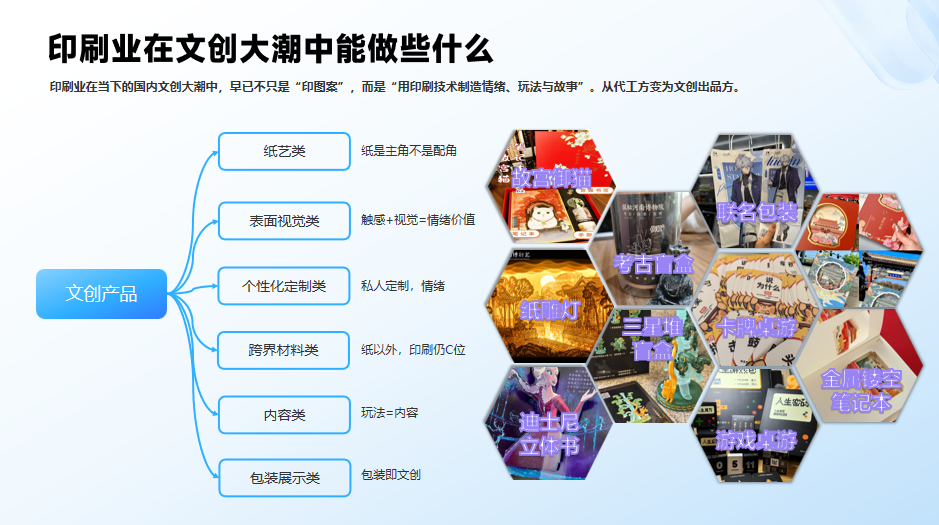 Cultural and Creative Business Scenarios in the Printing IndustryInternational Market Expansion: Opportunities and ChallengesIn recent years, domestic printing and packaging enterprises have actively ventured into overseas markets. On one hand, this move aims to alleviate competition pressures in the domestic market, and on the other, it seeks to meet the needs of core clients. Currently, many client companies have expanded their businesses to regions such as Southeast Asia and North America. To simultaneously meet clients' supporting needs and respond to changes in the global trade landscape, printing and packaging companies are accelerating their overseas expansion.The current advantages for printing and packaging enterprises going overseas are mainly concentrated in two aspects. First is the support from supply chain collaboration: domestic core brands in automotive, electronics, and fast-moving consumer goods continue to expand abroad, driving upstream printing and packaging demand and providing a stable business foundation for related enterprises. Second is the building of overseas service networks through platforms like TikTok and the overseas version of Pinduoduo, allowing enterprises to serve international clients while also connecting with overseas Chinese markets.The key challenge for enterprises going overseas lies in insufficient understanding and respect for the target market's culture. "When in Rome, do as the Romans do, and abide by local laws" is the fundamental premise for successful overseas operations. Enterprises must ensure their business activities fully comply with local laws and regulations to avoid risks. Additionally, they should conduct early market research, proactively understand and respect local cultural customs and social norms, and avoid business issues arising from cultural differences.AI Application: Breakthrough Growth of AI in the Printing IndustryAI application in the printing industry faces dual bottlenecks. First, domestic equipment is not sufficiently intelligent. Second, there is a severe shortage of industry big data, as companies consider their existing data commercial secrets, such as quotations, costs, and production efficiency. These data cannot be publicly shared, thus preventing the formation of effective data pools. Moreover, most companies do not have sufficient data accumulation, and some data may even be incorrect. Data quality is inadequate because the original purpose of the data was to complete deliveries and orders, not to build effective big data models.In reality, AI has extensive application scenarios in the printing industry, covering multiple key stages. For instance, at the design level, text-to-image AI tools can generate product detail images quickly based on keywords, helping design creativity achieve efficient implementation. At the customer service level, AI technology can respond professionally and quickly to client inquiries, enhancing service efficiency. At the supply chain level, utilizing big data and AI technology can enable intelligent matching recommendations, automated procurement traceability, and PMS planning management, optimizing the entire supply chain process.Although currently restricted by the insufficient intelligence of AI equipment and fragmented industry data, these application scenarios clearly demonstrate AI's implementation potential. How to ensure AI technology more accurately meets the actual production needs of the industry and promotes the digital and intelligent transformation of the printing industry is an issue worth exploring in the future.Industrial Internet: Building Regionally Coordinated EcosystemsThe core logic of the industrial internet is to achieve cost reduction and efficiency improvement through regional resource integration, not to eliminate small and medium-sized enterprises. Regional leading enterprises act as the "chain leaders," integrating small and medium-sized supporting enterprises around them, achieving park-based and platform-based integration, and forming cluster-based bargaining power.Digital operations, development of cultural and creative businesses, international market expansion, AI application implementation, and industrial internet collaboration-in all five aspects-focus on new productive forces, reshaping the value logic of the printing industry and driving the added value of the industry to extend deeply from production to services. Grasping these directions is key to seizing new growth opportunities in the industry.