


From "experience" to "data," the underlying cognitive logic of digital transformation in printing enterprises
Currently, the digital wave is sweeping across all industries, and many domestic printing companies are advancing digitalization, but the overall implementation results have fallen short of expectations. The root cause lies in the fundamental cognitive logic of digital transformation within enterprises. Simply put, it is the fundamental approach and core principles for looking at problems and doing things.
Digital transformation is an essential path for enterprises
01/ Market demand structure forces production model upgrades
Currently, the market is characterized by small batches, multiple batches, personalization, and fast delivery, which in turn forces companies to develop flexible production capabilities to quickly respond to complex and changing order requirements. At the core of flexible production capability lies the integrated embodiment of digital and intelligent technologies such as data connectivity, automatic production scheduling, and process adaptation.
02/ Lean cost control widens profit margins
The core costs of printing companies are concentrated in three main areas: raw and auxiliary materials, machine energy consumption, and production losses. Traditional production control relies heavily on the personal experience of the machine captain, leading to large fluctuations in losses and unquantifiable hidden waste. However, through full-process data collection and standardized process parameters, precise cost control can effectively reduce material and energy waste, quantify hidden costs, and help companies maintain profits amid homogeneous competition and widen the profit gap.
03/ Downstream customer supply chain access forms a rigid barrier
Digital capabilities have shifted from being a bonus for bidding and cooperation for Indian companies to becoming essential for leading brand clients to enter the supply chains. Entry barriers are continuously rising, such as traceable production processes, traceable quality data, and quantifiable carbon emissions. Only by integrating full-chain data can Indian companies obtain a "passport" to enter high-quality supply chains.
The proportion of enterprise construction results falling short of expectations is high
Based on our recent practical exploration and frontline research, most printing companies' digital investments have ultimately fallen far short of expectations. At its root, we have summarized four common reasons:
01/ Understanding one-sidedness
Many printing companies still stick to traditional business thinking, believing that adding digital printing equipment, purchasing ERP/MES software, and running AGVs means digital transformation is complete. But they neglect business process streamlining, data interconnection, personnel capability support, and management system adjustments, ultimately resulting in a disconnect between business and data.
02/ Path mismatch
Many printing companies hope to learn from successful cases of their peers, but each company has different scales, capacity layouts, customer structures, and process flows. Blindly copying generic solutions easily leads to "cultural misfits," ultimately leading to resource waste and poor digital transformation results.
03/ Implementation of shallow layers
Most printing companies only digitize traditional paper documents and enter production ledgers online, but data from order receiving, production, warehousing, and finance remain fragmented. Core data such as production parameters, paper waste, and labor costs cannot be interconnected, resulting in ineffective accumulation of production experience, inability to quantify the actual cost of orders, and inability to feed back into the business.
04/ Short-term thinking
Most enterprises lack long-term planning for digital transformation, with issues such as insufficient planning investment, inadequate overall planning, and unsynchronized management systems, making it difficult to iterate and optimize their digital systems.
Breaking down the underlying logic of digital transformation
Looking beyond the surface to the essence, the root cause of digital transformation implementation problems lies in cognitive biases. The essence of digital transformation in Indian enterprises is a deterministic revolution from "empirical judgment" to "data-driven." The core is to achieve a shift from empirical thinking to data-driven thinking, but this process is not easy.
Here's an example that everyone can relate to: In the past, when driving, we relied entirely on experience to find directions, remember routes, identify directions, and assess road conditions. When encountering unfamiliar or congested sections, we relied on on-the-spot judgment, which was highly unpredictable. But now, with smart navigation, routes, traffic conditions, and time travel become clear data, making travel stable, efficient, and controllable. Shifting from "relying on personal experience" to "relying on data systems" means first changing old habits, while also facing the four characteristics of the transformation process: scenarioality, complexity, uncertainty, and evolution.
01/ Scenario-based
There is no universal navigation route, and printing companies' digitalization is no different. Books, packaging, cartons, and other processes differ greatly in terms of process, quality, and delivery. Even for similar products, the requirements for hot stamping, UV printing, lamination, and embossing vary greatly. Digital transformation plans for printing companies must align with their order structures and production scenarios; digital construction detached from business scenarios is doomed to remain ineffective.
02/ Complexity
Navigation is useful because it involves massive data calculations such as road networks, traffic flow, weather, and traffic restrictions. Printing companies' production chains are even longer; from inquiry to delivery, every link is closely linked, and every link hides a wealth of implicit human experience. Digitalization is about turning these tacit experiences into standardized data, involving cross-departmental collaboration, process restructuring, and changes in job habits. It is a systematic project and cannot be accomplished overnight by installing a set of software or adding a digital device.
03/ Uncertainty
Navigation can also change routes temporarily due to road repairs or unexpected incidents. The same applies in printing production: sudden equipment failures, fluctuations in raw material batches, and last-minute order changes from customers...... Uncertainty happens every day. No matter how well-developed the initial plan is, the implementation process remains full of variables. Digital transformation cannot finalize a permanent plan all at once. True capability lies in continuously adjusting data standards and optimizing system parameters amid dynamic changes, allowing the system to evolve alongside the business.
04/ Evolutionary
Experienced drivers won't lose their ability to recognize their own directions even if they use navigation; Combining navigation routes with personal experience will make driving smoother and smoother. Digital transformation is the same: operating habits must be changed, organizational support must be improved, process parameters must iterate, and data must be continuously accumulated. Slow return on investment is an objective law; it can only be done step by step, not in one go.
Awareness implementation ensures the effectiveness of Runfeng's implementation
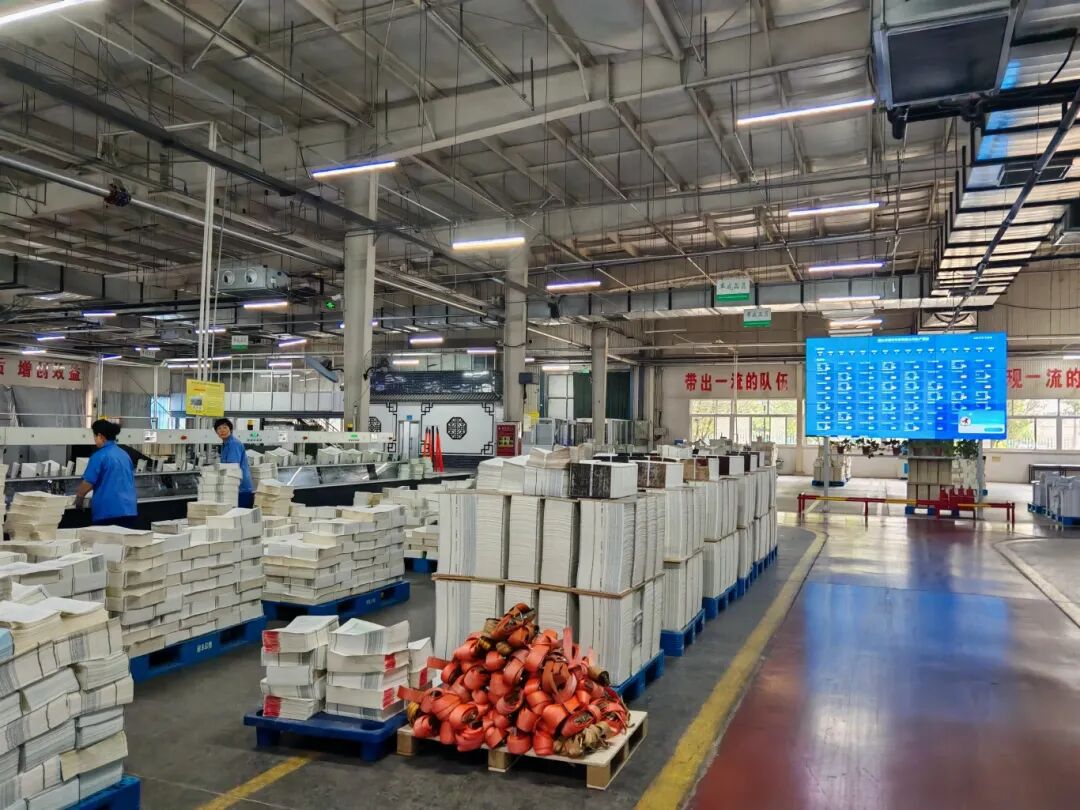
The key to understanding the underlying logic of digital transformation lies in recognizing the four characteristics mentioned above. This article takes Tangshan Runfeng, which has long been deeply serviced by the China Indian Academy of Sciences, as a practical case study to see how it understands the underlying logic and achieves results.
01/ Runfeng Implementation Case: Early Existing Problems
Before the digital transformation, we identified five common industry issues in Tangshan Runfeng:
(1) Information silos: ERP and MES rely entirely on manual processing, and production data cannot be automatically obtained.
(2) Delayed management: Production progress is not transparent, and order scheduling during peak seasons is constantly adjusted, affecting on-time delivery.
(3) Efficiency bottleneck: Work reports are random and inaccurate, planning and execution are disconnected, and equipment efficiency is not fully utilized.
(4) High labor costs: Full-time statisticians have high labor costs, with large discrepancies between estimated costs and actual settlement costs.
(5) Employee fatigue: During busy seasons, management and logistics staff are all on duty, exhausted from running around.
02/ Runfeng Implementation Case: Construction Status of the First Two Phases
Based on the identified issues, starting from Runfeng's business characteristics, top-level planning and design were carried out, with construction divided into two phases. During this process, using the plan as a blueprint, it continuously iterated on uncertain issues encountered in production, achieving some practical results:
(1) Full-process electronic management: shifting from paper-based forms to fully electronic assignment, job reporting, and scheduling management.
(2) Multi-dimensional cost accounting: Enables system-based automatic accounting of three core costs: sales contract price, manual cost estimation, and piece-rate wages.
(3) Improved order creation efficiency: The conversion efficiency of sales orders to production work orders is greatly enhanced.
(4) Coverage and efficiency improvement of static scheduling: Supports automatic formation of static scheduling plans based on machine processes and quota capacity.
(5) Standardized Production Execution: The production execution process is fully standardized and real-time, significantly improving the quality of work report data.
(6) Comprehensively enhancing production transparency: Information is transparent between upstream and downstream processes, significantly improving production collaboration efficiency.
(7) Improved statistical analysis efficiency: Automatically generates daily output reports, payroll reports, etc., reducing the workload of statistical personnel and achieving job optimization.
03/ Runfeng Implementation Case: Mutual transfer of experience-based data, spiral iterative upgrades
From the construction of Runfeng's first and second phases, as well as the ongoing third phase of the automated production scheduling project this year, we have come to deeply realize that the process from experience to data is not one-way, but a continuous transformation and spiral upward process.
The first and second phases of digitalization have solidified the experience of equipment, processes, business, and people through equipment data collection, system architecture optimization, and business data accumulation into standardized data. This data is integrated with business during production applications, creating new experiences that simultaneously enhance personnel capabilities. After two years of accumulating a large amount of high-quality data, this experience and data form a solid foundation, and this year the third phase of production scheduling projects was carried out based on this data.
Automatic production scheduling has always been a challenge in the industry. However, through Runfeng's experience and data conversion, it has established a solid foundation for implementation. It is believed that in the future, through the application of the scheduling system, new experiences and data will continue to be developed, further iterative and optimized systems, and continuously empowering enterprises to enhance their digital capabilities.
Recently, there has been a flurry of related industry policies. The "Implementation Opinions on the Special Action of 'AI + Manufacturing'" proposed accelerating "industrial intelligence" and boosting the "mutual empowerment" of AI technology and manufacturing applications. The "Three-Year Action Plan for Digitalization of the Printing Industry (2025–2027)" released at the 2025 Innovation Conference introduced a three-in-one digital empowerment system for the printing industry: "assessment-driven, innovation breakthrough, service protection", aiming to build and improve a data exchange and connectivity standard system covering prepress, printing, and post-press processes. Meanwhile, the release of the "Intelligent Manufacturing Capability Maturity Assessment" provides an objective evaluation of the current state of intelligent manufacturing in enterprises, guiding companies in phased planning for digital transformation and offering standardized diagnostic references for factory digital upgrades.
At the enterprise level, there are three key things to focus on:
First, keep pace with policy guidance and channel resources into key scenarios for technological innovation and digital empowerment.
Second, make good use of policy subsidies for technological renovations and digitalization demonstrations to spread out transformation costs.
Third, implement requirements for traceability, quality control, environmental protection, and safety in advance, turning process experience into traceable data, aligned with customer and industry standards.
Benchmarking and review for progress
With policies providing the direction, actual implementation can refer to the Ministry of Industry and Information Technology's CMMM maturity assessment, following four key points:
(1) Find the starting point: first evaluate the current stage of the company to identify which processes still rely on manual experience and which have already been digitized.
(2) Control the pace: continuously advance along the path of "standardize → integrate → optimize". First, digitize and archive experience, then achieve data interoperability across the entire workflow, and finally let data iteratively refine process experience.
(3) Verify results: quantify benefits with hard metrics like yield rate, loss rate, and cost per order. Let the data show whether digitalization is effective.
(4) Avoid blind following: choose hardware and software according to maturity levels, match them based on needs, and avoid premature purchases. Without solid foundational data, even the most advanced systems may sit idle.
The core of digital transformation has never been about stacking technology tools; it's about fundamentally shifting from "experience-driven" to "data-driven". Only by avoiding superficial transformation mistakes, grounding efforts in actual business scenarios, maintaining long-term iteration, and steadily implementing changes to close the full-process data loop can digitalization truly translate into cost reduction, efficiency gains, and competitive advantage. Looking ahead, we will continue to deeply explore the digital transformation of the printing industry and jointly promote a high-quality digital upgrade for the printing sector.