


China Packaging Federation Focuses on Green Transformation in the Seasoning Industry: Haitian Flavor Leads a New Full-Chain Carbon Reduction Model Through Green Packaging Reform
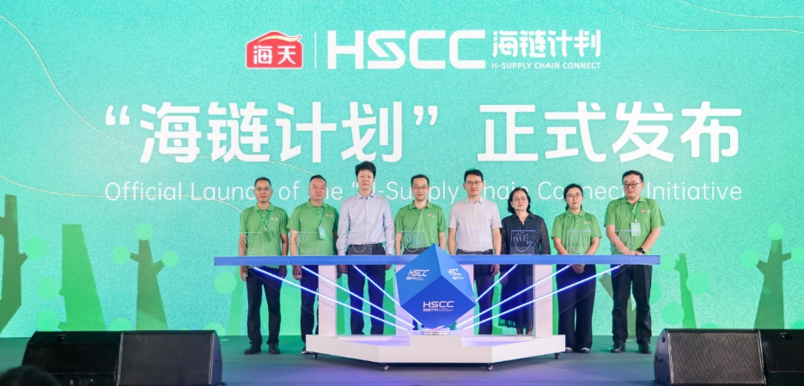
On July 20th, the seasoning industry's first carbon reduction collaboration platform covering the entire industry chain, the 'Carbon Path Green Chain Alliance,' held its one-year anniversary event at the headquarters of Foshan Haitian Group. During the event, the industry's first full-chain 'carbon reduction map,' covering everything from raw materials to recycling, was released, and the 'Hai Chain Project'-the seasoning industry's first 'whole-industry chain symbiotic value community'-was launched. Hu Zhengyang, Deputy Secretary-General of the China Packaging Federation, attended on behalf of the federation and delivered a speech.
The Federation continues to support the alliance's growth, advancing both standard leadership and technology promotion
In July last year, Han Xueshan, Vice President and Secretary-General of the China Packaging Federation, attended the launch ceremony of the alliance and highly praised its establishment in his speech as "drawing a clear blueprint for the seasoning industry's green and low-carbon development," and announced that the alliance will support the alliance in five areas: standard leadership, technology promotion, industry chain integration, circular system construction, and international experience introduction. Over the past year, these initiatives have gradually been implemented through daily collaboration within the alliance, transforming from a consensus initiative into a physical platform with concrete actions, member collaboration, and project implementation.
In his speech at this anniversary event, Deputy Secretary-General Hu Zhengyang pointed out that green packaging has shifted from a "multiple-choice question" to a "mandatory question." In April this year, the Ministry of Industry and Information Technology and four other departments released the "Industrial Product Green Design Guide (2026 Edition)." The packaging industry's "15th Five-Year Plan" under preparation also lists green design, low-carbon materials, and recycling as key industry focus areas. Three transformation paths-lightweight reduction, material substitution, and easy-to-recycle design-have become industry consensus.
Hu Zhengyang stated that the China Packaging Federation will continue to respond to the requirements for green certification and full lifecycle management in the packaging "15th Five-Year Plan," continuously supporting the alliance's development in four areas: first, the implementation of green packaging design and carbon footprint accounting standards; Second, connecting technical resources to help enterprises find more economical and feasible green packaging solutions; Third, exploring recycling and circular models, accumulating reusable experience based on existing pilot projects; Fourth, disseminate alliance practice cases to more industries through the federation's platform.
The green packaging transformation has achieved remarkable results, with Haitian delivering a solid report card
As the initiator of the alliance and the leading enterprise in the industry chain, Haitian Flavoring & Food has made its green practices in packaging particularly impressive over the past year, becoming the most visible breakthrough in full-chain carbon reduction.
In terms of lightweight reduction, by 2025, Haitian will optimize bottle structure and improve octagonal carton design, reducing packaging materials by over 8,700 tons through lightweight packaging. In just optimizing the structure of octagonal cartons, the cumulative weight reduction was 254 tons, equivalent to saving about 1.7 million rolls of toilet paper. In terms of material substitution and recycling, Haitian's recycled packaging usage has exceeded 387,000 tons, and it continues to introduce FSC-certified paper and post-consumer recycled plastics (PCR). Suppliers must provide carbon footprint data and are encouraged to pursue green certification. The weight of a single plastic bottle is reduced by 8% to 10%, achieving significant resource savings while ensuring product protection performance.
In terms of recycling and circularity, Haitian has partnered with organizations such as Aihuishou and Haorun Environmental Protection to build a multi-dimensional recycling network covering employees, factories, and online platforms, connecting the entire chain of "recycling→ sorting→ pelletizing→ design and manufacturing." By 2025, Haitian alone has successfully recycled 100,000 plastic bottles, and more than 3,000 employees at the Gaoming factory have fully adopted uniforms made from recycled materials. At the event, recycled cultural and creative products such as work uniforms, aprons, canvas bags, and flower pots made from recycled bottles were displayed. Each item came with a QR code to trace "made from XX recycled empty bottles," extending the concept of recycling from factories to homes.
From packaging carbon reduction to full-chain collaboration, systematic innovation reshapes the green genes of products
The green transformation of packaging does not exist in isolation; it is embedded within Haitian's entire industry chain carbon reduction system. The first batch of SGS-certified carbon reduction soy sauces in the seasoning industry showcased on the event day is the result of coordinated efforts between packaging and raw materials, manufacturing, and logistics. The two 500mL new products improve raw material utilization efficiency through AI big data fermentation technology on the raw material side, apply photovoltaic biogas and other renewable energy applications on the manufacturing side, and use lightweight packaging (about 10% weight reduction) combined with FSC-certified paper and multimodal transport and new energy heavy trucks on the logistics side systematically. As a result, the carbon footprint in the manufacturing process has decreased by 41.0% and 11.36% respectively, with carbon reductions of approximately 240g and 165g of CO₂e per bottle. Later, the bottle will also include a QR code, allowing consumers to trace the carbon footprint of a bottle of soy sauce from the field to the dining table by scanning.
In 2026, the internationally authoritative index agency MSCI will upgrade Haitian's ESG rating to AA, achieving a "four-year leap" from B to AA, ranking first among 24 A-share peers.
The "Hailian Plan" has launched an industrial ecological revolution, and green packaging standards are expected to be promoted across the entire industry
The "Hailian Plan," launched on the day of the event, takes Haitian as the chain master, breaking the traditional zero-sum game mentality of upstream and downstream buyers, and promoting each link of the industry chain from "going it alone" to "empowering each other." The plan establishes five major directions: green development, quality trust, industrial empowerment, social responsibility, and co-creation and sharing. In the packaging sector, the plan clearly identifies green design, lightweight materials, and recyclable systems as core elements of ecological co-construction. In the future, it is expected to transform Haitian's practical experience accumulated in packaging green transformation into reusable industry standards.
Echoing the alliance's previously announced systematic carbon reduction goals-focusing on five key areas: sustainable procurement, green packaging, intelligent production, green logistics, and recycling-the first batch of claimed projects can reduce carbon emissions by up to 100,000 tons over three years-Haitian is transforming from a traditional manufacturer into an empowering ecological organizer. From the "Carbon Roader Green Chain Alliance" to the "Hailian Plan," this green transformation not only provides a reference model for the seasoning industry but also opens a new chapter of full-chain collaboration and symbiotic prosperity in China's food industry.