


At the end of the 'roll', where is the way out? Ricoh's high-end inkjet leads the new future of printing
On September 18-19, the 2025 Printing and Packaging Industry Economic Forum and National Printing Managers Annual Meeting were held grandly in Hangzhou, Zhejiang. At the meeting, many industry experts presented exciting sharing sessions, inspiring new thinking and directions for the attending colleagues. Next, we will sort out the essence of the annual meeting, and more wonderful things are worth looking forward to!
The focus of this issue is on the speech by Shao Guangming, the industry opinion leader and director of large-scale commercial printing product solutions and customers of Ricoh (China) Investment Co., Ltd.'s production-oriented printing division, titled "High end inkjet leads printing transformation, Ricoh helps printing enterprises seize new development opportunities".
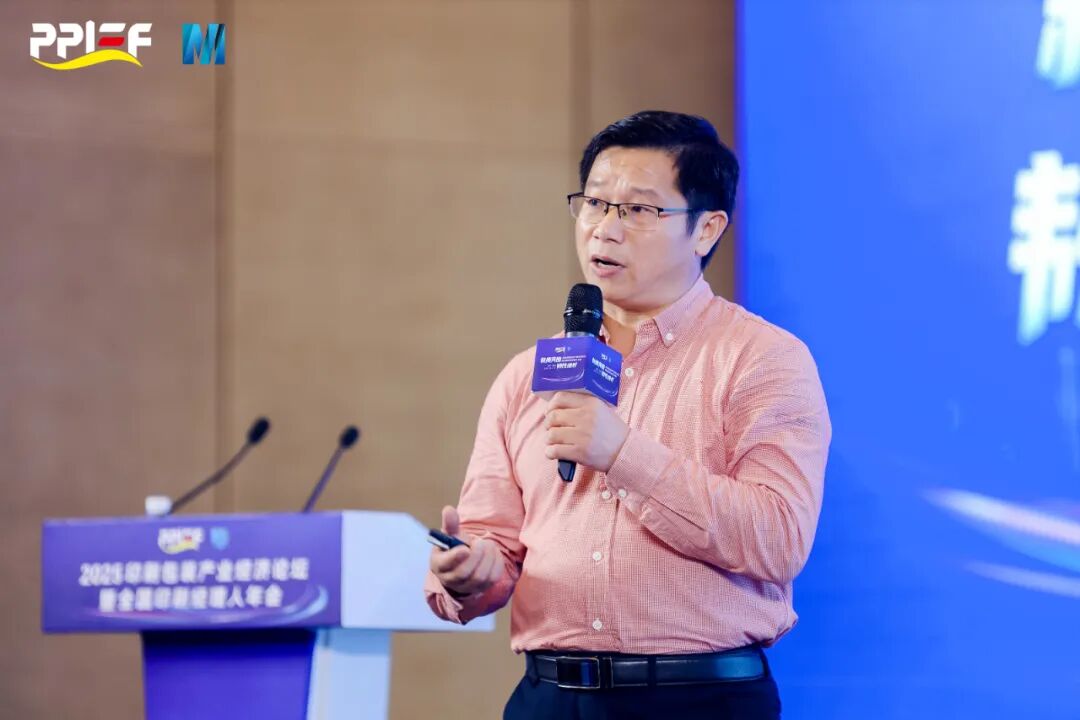
Roll to the end: Digital driven high-quality development of the printing industry
Currently, the world is undergoing a 'once-in-a-century great change'. The foreign trade environment is becoming increasingly complex, the real estate market continues to be sluggish, and there is a clear trend of consumption downgrading. The traditional three drivers of the economy - exports, consumption, and investment - are all under pressure, leading to an overall economic downturn. In this context, the overall environment of the printing industry is particularly severe, with a slowdown in growth rate, and the future market is not optimistic.
For the printing industry, external challenges are intertwined with internal dilemmas. On the one hand, the impact of the Internet has shrunk traditional markets such as commercial printing, bills and books; The decline in birth rates and changes in reading habits further weaken demand from the source. On the other hand, the industry is deeply mired in the vortex of "internal competition", showing the characteristics of "slight decrease in revenue and sharp decline in profits"; Young consumers pursue emotional value, and the demand for printed materials changes accordingly. At its root, the problem lies in the contradiction between "outdated overcapacity" and "unmet emerging demand".
The era of extensive growth has come to an end, and the competition dimension has expanded from a single "roll technology" to a comprehensive competition of "roll technology, roll efficiency, and roll cost". It is worth noting that while under overall pressure, digital printing, especially high-speed inkjet printing, is on the rise and becoming a new growth point in the industry. Against the backdrop of the comprehensive digital wave, printing companies need to think more about how to "roll out" their circle through digital transformation. The key to achieving this goal lies in innovation, and only through innovation can practical problems in development be solved.
Looking ahead to the future, standing at the threshold of 2025, the digital transformation of the printing industry is not simply a technological upgrade, but a revolution about the way of survival. In the current situation where the three major drivers of the economy are weak and the demand structure is undergoing drastic changes, only by using digitalization as a blade to cut through excess and backward production capacity, forging the ability to accurately meet demand, can we usher in a new era of high-quality development at the end of the "roll".
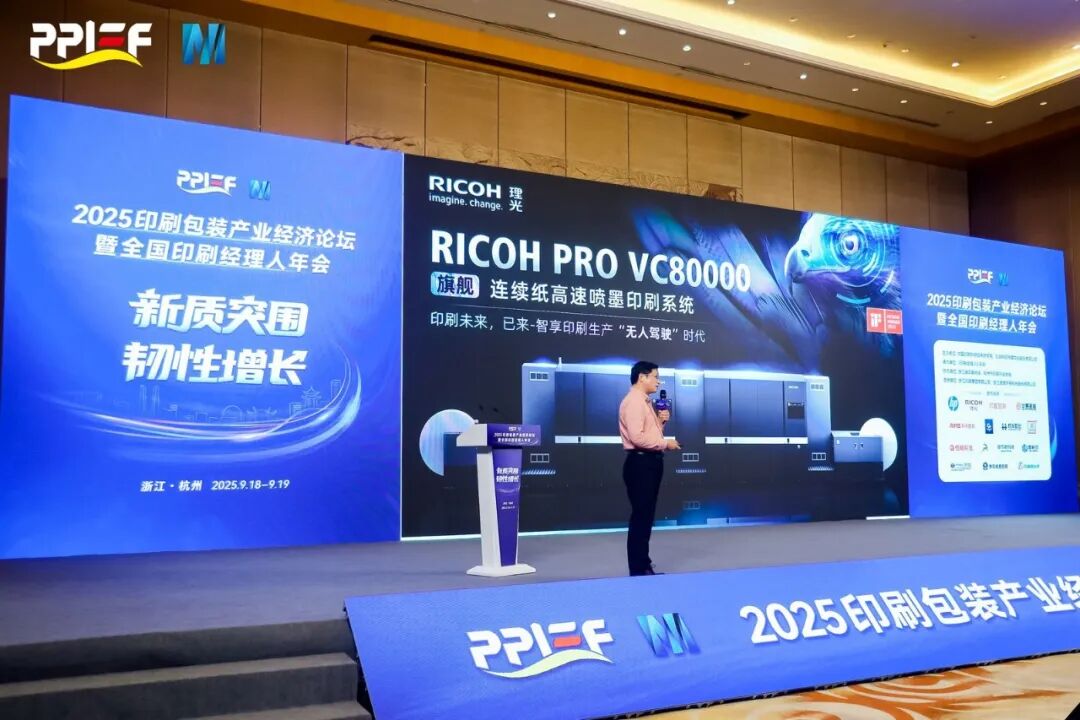 Industry opinion leader of Ricoh (China) Investment Co., Ltd. Production Printing Division&
Shao Guangming, Director of Large Commercial Printing Product Solutions and Customers, delivered a speech at the annual meeting
Ricoh Solution: Helping Indian Enterprises Seize New Opportunities
As a globally renowned digital solution provider, Ricoh has maintained steady growth despite the global economic downturn. In the fiscal year 2024, Ricoh's sales reached 2.5 trillion yen, demonstrating strong risk resistance capabilities. Among them, in the Chinese market, the market share of mid to high end production-oriented digital printing equipment ranks first.
In the field of green development, Ricoh has always been at the forefront of the industry. Ricoh is one of the earliest companies to implement ESG concepts and is also the first member of Japan to join the RE100 renewable energy initiative. Currently, both the Dongguan RMC factory and the Shanghai Jinqiao factory have achieved 100% renewable energy supply. In the globally authoritative EcoVadis supply chain sustainability assessment, Ricoh's performance is equally impressive: it ranked in the top 5% in 2024 and jumped to 1% in 2025, demonstrating its leading position in the field of sustainable development.
In addition to significant achievements in the field of environmental protection, Ricoh also continues to lead in product technology and innovative research and development. Its high-end inkjet solution, which was heavily released at the China Print exhibition, confirms this point. The world's first B2 single sheet high-speed inkjet system, RICOH Pro Z75, which uses water-based ink and supports automatic double-sided printing, has achieved an important breakthrough in speed and medium adaptability; The RICOH Pro VC80000 continuous paper high-speed inkjet system, which won the iF Design Award, has achieved milestone progress in the mass production of copperplate paper with micrometer level image restoration and real-time production monitoring capabilities.
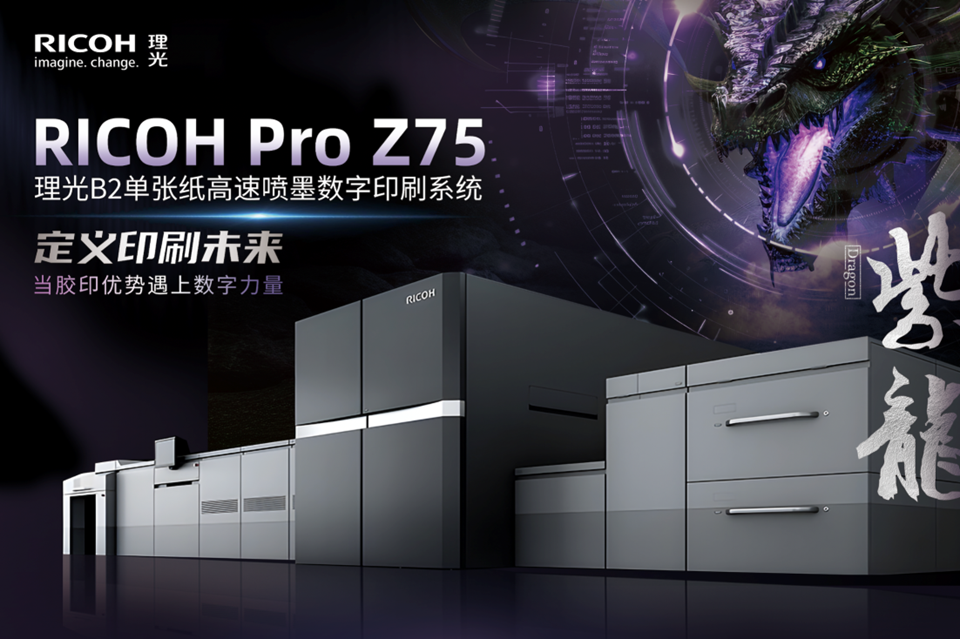
RICOH Pro Z75 Ricoh B2 Single Sheet High Speed Inkjet Digital Printing System
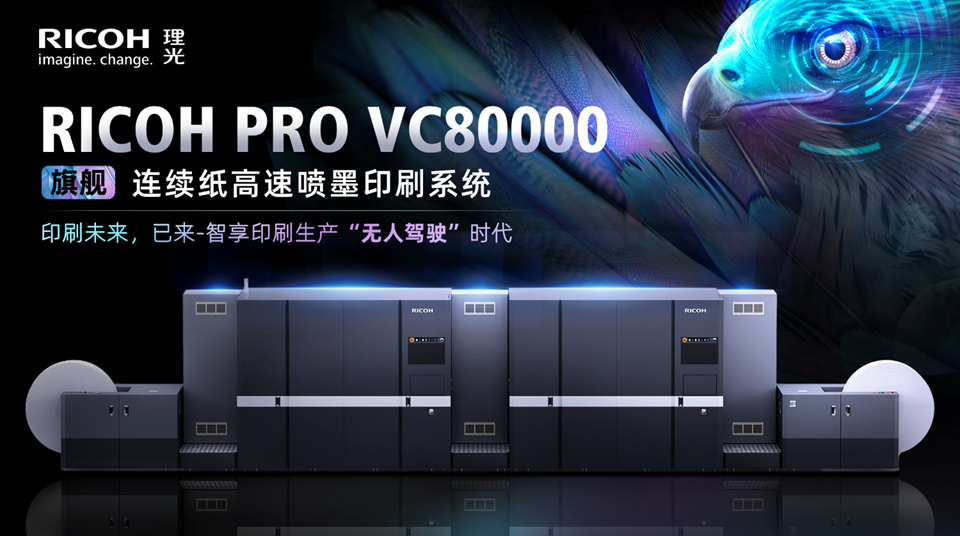 RICOH Pro VC80000 Ricoh Continuous Paper High Speed Inkjet Printing System
Ricoh's technological advantages are being translated into actual achievements for customers in the digital field on a global scale. Taking Taiwan Jianhao Digital Cloud Factory as an example, through comprehensive digital transformation, it achieves refined management of equipment start-up rate, water and electricity consumption, and other processes. The workshop has almost no visible people, but the output value is very high, outlining a clear blueprint for the future of smart factories in the industry. In addition, companies such as Shanda Printing and Guangzhou Yincai have significantly improved production efficiency and opened up new business areas by introducing Ricoh digital equipment.
The future of the printing industry belongs not only to digital printing, but also to inkjet printing. Faced with the changing times, printing enterprises can only actively embrace technological changes, fully unleash the powerful potential of digital printing, shift the focus of competition from "involution" to "innovation", and jointly explore a new future of high-quality and sustainable growth.