


AI practical application of a leading mass publishing company
The wave of artificial intelligence has now swept across the publishing industry. From writing, editing, proofreading, to topic selection, marketing, and user service, almost every aspect is being redefined. In this deep transformation, CITIC Publishing Group has attempted a more forward-looking and systematic path: not to replace people with AI, but to extend the vitality of books with AI. So, a series of intelligent publishing projects quietly began. Since its establishment nearly three years ago, CITIC Publishing Parallel Publishing Laboratory has been actively exploring the comprehensive application of AI in the publishing field. Since 2025, with the rapid improvement of big model capabilities, AI innovation achievements have become more significant, especially in creative design and deep processing and disassembly of book text, which has shown us new possibilities for content innovation.
Cover change: AI makes books stand out at first glance
In the process of book publishing, the cover is often seen as the "starting point of sales", carrying the important task of conveying the temperament of the content and stimulating readers' interest. However, traditional cover design has a long cycle, limited creativity, and strong subjectivity, often becoming a bottleneck in the publishing production process, especially in the context of intensive topic selection and accelerated market pace. This link has become one of the key issues restricting the rapid launch of new products.
The 'AI Visual Design Enhancement Project' is an important task for us this year, with the aim of comprehensively improving the efficiency of book design and visual expression system through AI. Our AI designer has developed a full process cover design assistance system, which achieves intelligent transformation from creativity to finished product through four key stages, and has completed pilot projects in some new book designs, entering the standard product platform construction stage.
Creative generation stage:
The 'co creation partner' of AI and responsible editors
Taking "Why Customers Buy and Buy Again" as an example, this book focuses on "consumer psychology" and "behavioral suggestion". The initial design keywords include "impulse buying", "subconscious persuasion", "repetitive decision-making", and "shopping metaphor". On the basis of analyzing book titles, subtitles, and content summaries, AI systems automatically generate prompt word matrices, covering visual images such as "eyeballs", "arrows", "cash receipts", "shopping carts", "e-commerce flash purchase tags", etc.
In the initial design stage, the AI system generated multiple composition suggestions, including virtual shadows in the storefront, wallets being "sucked in", and patterns with eye contact following the product path. After multiple rounds of AI screening and collaborative comparison with the editing team, the composition of "the front of the red shopping bag carries all the information, and the bag mouth is lifted by one hand" was finally finalized.
This cover is highly symbolic: the shopping bag is the most popular and intuitive consumer carrier, and the red color reinforces the psychological suggestion of "desire driven". Printing the title directly on the front of the shopping bag not only enhances the reading efficiency of information, but also creates a strong sense of display and impact. AI also participated in bag body light and shadow shaping, font ratio control, and offline display testing simulation in this scheme, ultimately ensuring that it has consistent appeal on online thumbnails, bookstore bookshelves, and social media posters.
The cover takes less than three days from conception to implementation, while the traditional manual design process takes at least two weeks. This successful case demonstrates that under the leadership of designers, AI can efficiently assist in style exploration, image generation, layout optimization, and multi scene adaptation, giving a book a psychological tension that makes people stop at first glance.
Cover of 'Why Customers Buy and Buy Again'
Base map generation stage:
AI Becomes the 'Quick Painter'
If "visual creativity" is the soul of cover design, then "base map drawing" is a crucial step in turning inspiration into reality. In the traditional publishing process, this step is precisely the most time-consuming and testing of execution - from conception to writing, a cover usually requires designers to search for materials, draw sketches, and make adjustments, with a cycle often lasting 1-2 weeks. The emergence of AI has revolutionized everything.
Taking the popular science work "Decoding Bioelectricity" as an example, this book focuses on the phenomenon of bioelectricity and the revolution of neuroscience, with cutting-edge topics and abstract concepts, posing a high challenge to the visual expression of the cover. The designer initially proposed creative keywords such as "current", "neuron", and "energy field", hoping that the image would have a sense of futurism, blurriness, and scientificity.
After receiving these words, the AI image generation system performs semantic comparison with the original book abstract through NLP models, automatically completes a series of prompt phrases, such as "neural wave in darkness", "electric haze", "future signal flow", and calls Midjourney for multiple rounds of image generation. The built-in style tags in the system guide the model to lean towards the combination of "technology+abstraction+freehand", and within a few hours, dozens of cover image candidates were produced in bulk.
The final adopted base image is one of the works that features "pink and blue currents dancing against a black background", exuding a strong sense of tension and mystery. This image is not derived from a single image material, but is entirely synthesized by AI based on keywords in the visual semantic space. Its composition precisely aligns with the core theme of the book: 'The Hidden Energy Flowing in the Human Body'.
Book Cover of Decoding Bioelectricity
After the cover of "Decoding Bioelectricity" was launched, it quickly received recommendations from multiple platforms, with a significantly higher click through rate than similar popular science works. Its strong aesthetic perception and high information matching make the book stand out at the first glance and become a "visual anchor" in the hearts of readers.
This is precisely the biggest change brought about by AI cover design: not only does it shorten the design time, but it also makes the creative implementation process full of possibilities and explorations - the cover of a book is no longer the "output" at the end of the process, but a part of content expression, becoming the first highlight of knowledge dissemination.
Cover font and layout stage:
AI led design of 'perceptible rational beauty'
In the cover design of 'Positive Negotiation', almost all aspects of the title font, size, color, as well as the combination of subtitles and recommended phrases are completed by AI. AI not only automatically selects sans serif fonts with rational temperament based on the tone of the book content, but also determines the layout and color matching strategy of the text based on the color composition and visual center of the background image.
The entire typesetting process is output by AI as standard HTML structural code, which is automatically integrated with the base image to ensure that the text information is visually clear and prominent, while not excessively interfering with the main image representation of the cover. The system also automatically adapts multiple versions based on different display platforms, such as online thumbnails and offline physical bookshelves, to ensure that the cover has the best readability and dissemination in multiple scenarios.
Through this intelligent process, responsible editors and designers are liberated from the repetitive labor of manual alignment and trial and error, and only need to focus on whether the expression is accurate and whether it matches the overall style, truly transferring the creative space to more efficient AI assistance.
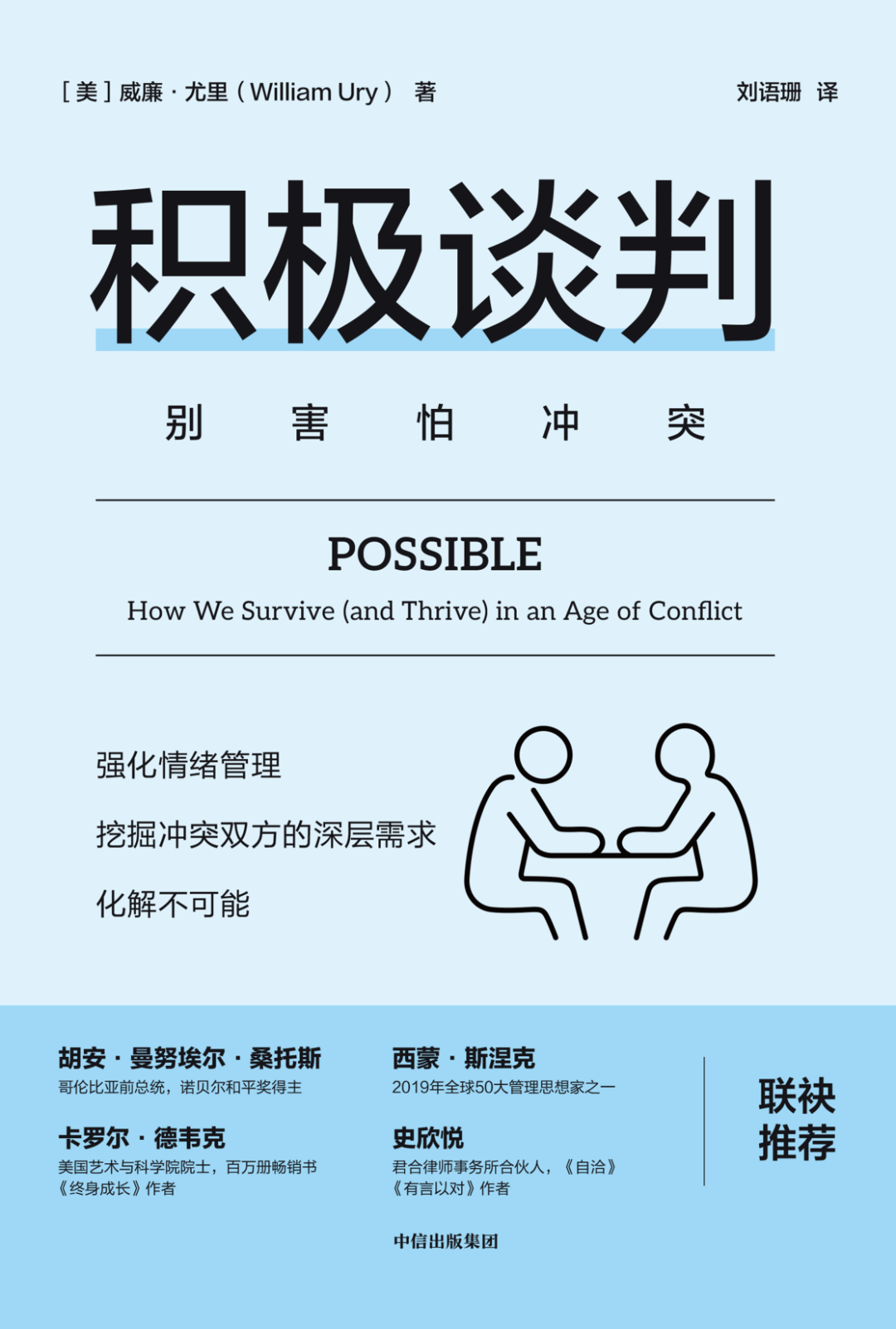
Book Cover of 'Positive Negotiation: Don't Be Afraid of Conflict'
Marketing material generation:
AI generates multi platform promotional materials with just one click
After the cover is finalized, the AI system will automatically generate social media materials such as posters, vertical cover pictures, booklist cards, WeChat official account first pictures, Little Red Book Jiugongs, which greatly reduces the workload of art editors. Taking "Seeking Help is Not Weakness" as an example, on the night of its release, AI completed 8 sets of promotional materials in different styles, and the marketing team released them on 6 channels within 24 hours, achieving a 32% year-on-year increase in reading conversion rate.
At the same time, AI can also track the click through rates of images on different platforms, optimize the next round of cover or material generation parameters in reverse, and gradually build a data loop of "content visual user preferences".
In the past, it often took several weeks or even months for a cover to go from copywriting, imagery to visual sketches. Nowadays, with the help of AI design assistants, creative generation can produce visible results within 10 minutes, cover drafts can be finalized within 24 hours at the fastest, and supporting materials are automatically generated synchronously. This "AI collaborative design" model is not a compromise to lower quality, but a systematic improvement of content expression and market adaptability through intelligent means, bringing true structural innovation to the design system of the publishing industry.
The Change of Knowledge: Making Books Flow Like Knowledge
The way readers read today has quietly changed. According to the 2024 National Reading Survey, over 80% of users are accustomed to digital reading, but less than 10% actually read complete books. People crave knowledge, but in fragmented attention structures, they find it difficult to calm down and read a heavy book. This is the biggest contradiction faced by the publishing industry: users still crave systematic and authoritative knowledge, but no longer obtain it by "reading a book".
The core task of CITIC Publishing's "Knowledge Essence" project is to use AI technology to break down the content of books into the smallest understandable, callable, and combinable knowledge units, to "break down" the entire book into smaller parts, and then "reconstruct it according to needs". It is no longer based on chapters or page numbers, but is guided by "user questions" and structured around "knowledge nodes", providing users with logically clear and on-demand customized content services.
Behind completing this task is an AI driven multi-level technological system. Firstly, the book content is broken down into fine-grained text fragments, each of which is semantically understood and structurally summarized by a large language model, automatically extracting core viewpoints, posing key questions, and labeling them with multidimensional tags such as theme, industry, and knowledge type.
Next, through the mechanism of knowledge graph construction, these atomized knowledge units no longer exist in isolation, but are organized into a dynamic 'knowledge network'. The system will identify causal, analogical, deductive, and comparative relationships between units, forming a "semantic bridge" between content. When users ask questions, the system can recall multiple relevant knowledge points in seconds and generate a cross book, cross domain, and structured answer - not only with viewpoints, but also with sources; Not only theory, but also practical cases.
At the same time, we have also integrated speech synthesis and multimodal generation capabilities, allowing these knowledge units to be transformed into 15 minute audio interpretations, 3-minute video explanations, and even mobile friendly forms such as charts and interactive Q&A. From 'reading a book' to 'acquiring a set of knowledge', it no longer takes 4 hours, but may only take 4 minutes.
AI Editor:
Knowledge essence becomes the 'intelligent assistant' for planning work
The essence of knowledge has quietly reshaped the logic of editing work. In the past, editors needed to quickly understand the content, tone, and market performance of a historical publication by repeatedly reading the original text, searching for information, and relying on the experience of others; Nowadays, the essence of knowledge provides editors with an efficient and structured cognitive entry point.
After entering the "Essence of Knowledge" system, the content of each book will be broken down into callable knowledge units, accompanied by multidimensional labels (such as theme, industry, knowledge type, applicable scenario), and form a visual content map. When planning a topic, editors no longer need to start from scratch, but can quickly locate classic viewpoints and blank areas in existing books by searching for relevant topics. For example, when planning topics related to "organizational change," the system can display aggregated views of relevant knowledge nodes from "Naval's Encyclopedia," "From 0 to 1," and "Elon Musk's Biography," to assist in determining market segmentation and content density.
Furthermore, the system will count which knowledge tags are frequently cited and which viewpoints are consistently active among different user groups, forming a "knowledge heat map" to help editors gain insight into real reading interests and potential trends. This shifts content planning from traditional "experience intuition" to "data-driven", improving the accuracy of topic selection while also accelerating planning efficiency.
At the same time, 'knowledge essence' can also help editors extract clear and powerful content selling points before the book is published. By comparing the dissemination paths of knowledge points in similar books with user feedback, the system can automatically generate marketing recommendations, social communication language materials, AI assisted cover copy, etc., making sufficient preparations for the marketization of books.
With the support of "knowledge essence", editors are no longer just "polishers" of content, but also operators of knowledge assets and participants in value reconstruction. This not only enhances the professional depth of content planning, but also broadens the role boundaries of publishers in the era of intelligence.
The Future of Publishing: Collaborative Creation between AI and Humans
In our view, the essence of the "Knowledge Essence" project is not to replace editors or authors with AI, but to assist them in achieving "knowledge expression" and "value transmission" in a more efficient way.
In the future, editors can no longer comb through the material structure of a book from scratch, but instead search for clues from the "knowledge map" provided by AI; The planner no longer envisions topics in isolation, but accurately captures opportunities from user needs and tag trends; Readers no longer passively accept book recommendations, but actively generate their own reading paths centered around the problem.
When the cover of a book is more touching due to AI, and the content of a book is more accessible due to AI, what CITIC Publishing depicts is not only a vision of intelligent books, but also a collective leap of the publishing industry towards the future. In this transition, books are no longer just 'read', but can be 'mobilized'. Knowledge is no longer just dormant on pages, but flows, connects, and spreads like water between users' questions.
In the era of information explosion, we believe that structured information - knowledge - can reach users and convey ideas in new ways; We also firmly believe that publishing will use the power of calm waters to inherit culture and influence the progress of human civilization.