


Owing 8.7 billion, the century-old conifer pulp leader Mercer plans bankruptcy reorganization, with Hongmu Capital possibly taking over
According to several insiders, Vancouver, Canada-headquartered global commodity pulp leader Mercer International is seriously weighed down by persistently high wood fiber raw material prices, soaring energy costs, and continuous cash outflows from operations. The company is now making substantial preparations to file for Chapter 11 bankruptcy protection under U.S. law, and could seek court protection as soon as the coming weeks.
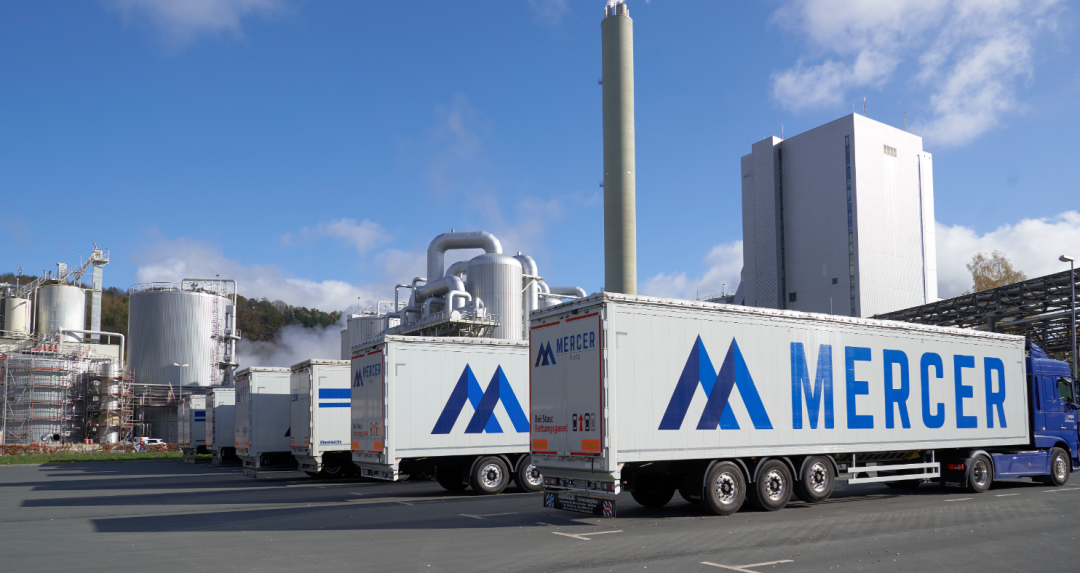
Insiders point out that Mercer International is likely to formally file for restructuring with the Texas bankruptcy court, but the final plan has not yet been finalized, and last-minute adjustments to the terms may not be ruled out. Once the company officially initiates bankruptcy restructuring, a creditor consortium led by Rosewood Capital Management, a giant in distressed asset and credit investment, is expected to fully take over this century-old multinational paper giant through a debt-for-share exchange.
With $1.3 billion in debt under heavy pressure, Redwood Capital presses to secure controlling stake step by step
The trigger for this restructuring storm directly stemmed from the high leverage on the balance sheet.
Financial data shows that by mid-2026, Mercer International's long-term interest-bearing debt on its books has reached approximately $1.3 billion (approximately RMB 8.7 billion). In recent quarters, bulk pulp spot prices have remained flat, but material and maintenance expenses on the production side have continued to climb, causing the company's operating cash flow to suffer severe erosion and completely losing the ability to cover large interest expenses solely through endogenous cash parity.
Against this backdrop, sharp capital hunters have long been lying low in advance. Redwood Capital, a well-known opportunistic credit investment institution on Wall Street, has been aggressively acquiring Mercer International's liquidity-distressed bonds at deep discounts in the secondary market over the past few months. Currently, Redwood Capital has risen to become one of Mercer International's largest core creditors and has led the formation of a special creditors' committee holding majority voting bonds.
Market analysts generally point out that Mercer International's choice of Chapter 11 bankruptcy restructuring rather than Chapter 7 bankruptcy liquidation is mainly to "strip unbearable debt burdens without shutting down or suspending daily production and customer obligations."
Under this judicial framework, existing common shareholders' equity would typically be significantly diluted or even wiped out, while Redwood Capital and its creditor alliance would leverage their senior creditors to directly convert them into controlling stakes in the restructured new company, becoming the de facto controller of this transatlantic pulp map.
European wood fiber shortages with $29 million in non-cash impairment
The micro-level causes of Mercer's liquidity exhaustion were fully exposed in its Q2 2026 financial statements.
Financial reports show that in the second quarter of 2026, Mercer International recorded a negative EBITDA of 21 million USD, almost identical to the loss of 20.9 million USD in the same period of 2025, showing a sharp deterioration compared to the positive 7.8 million USD in the first quarter of 2026.
The company recorded a net loss of $76 million for the quarter, and with a net loss of $52 million in the first quarter, the cumulative net loss for the first half of 2026 has reached $128 million.
During the quarter, the company was forced to make $29 million in non-cash asset impairment provisions, with the focus concentrated on depreciated commodity pulp inventories and high-cost purchases of wood fiber raw materials.
Juan Carlos Bueno, CEO of Mercer International, analyzed in the financial report that global economic uncertainty has led to very weak willingness for end-use paper mills to restock, and the actual settlement price of pulp showed no rebound elasticity in the second quarter.
The most devastating blow comes from the structural raw material crisis within the European paper supply chain. Bueno bluntly stated that regional supply of logs and wood chips in Europe remains tight, while European biomass power plants, driven by decarbonization subsidies, are fiercely competing with paper mills for leftover sawmill scraps.
The aggressive buying by energy giants has driven up the market transaction price of wood residues, forcing Mercer International's European pulp mills to bear extremely high marginal procurement costs, ultimately devouring gross margins.
A modern capacity of 2.3 million tons and Germany's "only local seed" strategic barrier
Even on the brink of bankruptcy in terms of financial capital, Mercer International still faces extremely high scarcity and heavy asset barriers in the global pulp and paper industry from the perspective of physical manufacturing engineering and industrial location.
As the world's core industrial supplier of premium softwood bleached sulfate pulp (NBSK) and hardwood bleached sulfate pulp (NBHK), Mercer International has an annual pulp production capacity of approximately 2.3 million tons.
Among these, high-strength, long-fiber high-quality NBSK capacity accounts for as much as 88%, with the remaining 12% being NBHK. Its production and sales network is deeply rooted in Europe, North America, and Asia's high-consumption hubs mainly in China.
More importantly, Mercer International is the "only" local NBSK pulp manufacturer in Germany, the largest pulp importer in Europe. This unique geographical location gives it an irreplaceable local supply advantage over major European tissue paper, premium packaging paper, and specialty paper mills.
Its extensive manufacturing network mainly relies on four highly modern, ISO-certified flagship mills running smoothly: Stendal Pulp Mill in Germany, Rosenthal Pulp Mill in Germany, Selgal Pulp Mill in Canada, and Peace River Pulp Mill in Canada.
Beyond its core pulp business, Mercer International has also made significant forward-looking investments in circular economy projects. Its four bases together have a total of 375 MW of self-sustained clean energy generation capacity, achieving 100% steam and electricity self-sufficiency at each plant, while continuously supplying green electricity to external public grids.
In addition, the factory has deeply developed full-component cascade utilization technology for black liquor, stably extracting and exporting high-quality crude tall oil annually as a primary raw material for high-end bio-based chemicals and advanced biofuels.