


31.8 billion! L'Oréal's biggest acquisition of the year is set
L'Oréal's biggest acquisition of the year has finally been finalized.
On March 31, L'Oréal and Kering jointly announced that L'Oréal Group has completed its acquisition of Kering Beauté. According to the previously disclosed agreement between the two parties, the total amount of this transaction is 4 billion euros (approximately 31.8 billion RMB), covering the acquisition of the Creed brand, as well as a 50-year license for Kering Group's iconic brands.
This is the largest transaction in L'Oréal's history, far exceeding the 2023 acquisition of Aesop for 2.525 billion USD (approximately 17.3 billion RMB). With the integration of Kering Beauté, L'Oréal's presence in the high-end beauty sector will further expand.
Last October, when news first broke that L'Oréal was acquiring Kering's beauty division, it came as somewhat of a surprise to the public. The surprising part was that Kering Group had only decided to operate its beauty business independently for two years, yet it turned around and sold the business; and in the past, L'Oréal rarely acquired multiple brands in a single deal.
Although it seemed unexpected, it was not entirely without precedent. In recent years, whether it was relaunching the Prada beauty line, acquiring Aesop, or securing the Miu Miu brand's beauty licensing, L'Oréal's ambitions in high-end beauty, especially in the perfume sector, have become very clear.
L'Oréal also has a deep-rooted relationship with Kering Group. As early as 2008, L'Oréal acquired YSL Beauty and Perfume business from Kering. Under L'Oréal's successful management, YSL Beauty's sales have now nearly reached 3 billion euros.
It is precisely based on the success of YSL that L'Oréal and Kering Group reached another deal regarding the beauty business. Gucci Beauty, which also belongs to Kering and has been performing strongly in the beauty and perfume sector, has therefore become one of the focal points of this acquisition.
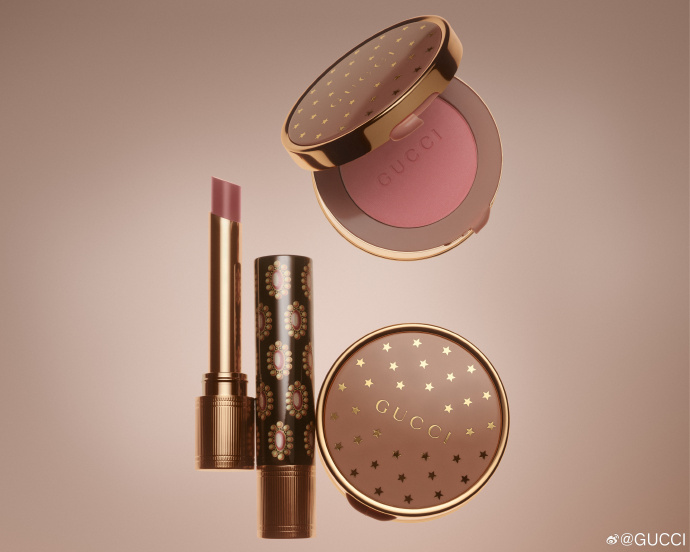
▍Gucci Beauty Product Reference Image
According to the agreement, after Coty's license for Gucci beauty and fragrance products expires, L'Oréal will have exclusive responsibility for the research, development, production, and distribution of Gucci fragrances and beauty products for a period of 50 years.
It is reported that Coty's license with Gucci is scheduled to expire in June 2028. As a key brand in Coty's premium beauty portfolio, Gucci Beauty has not disclosed specific sales figures, but its performance has always been strong. According to foreign media reports, the brand's beauty and fragrance business is estimated to be between 500 million and 1 billion euros.
With this acquisition of Kering Beauty, the industry has been abuzz with discussions about L'Oréal's intention to turn Gucci Beauty into the 'next YSL.' Although it is too early to say for sure, L'Oréal's ambition in the luxury beauty sector is already evident.
Another major highlight of this acquisition is that L'Oréal will also bring the high-end fragrance brand Creed under its umbrella. Public records show that Creed was founded in London in 1760 and is the world's largest independent high-end fragrance brand. Data disclosed when Kering acquired the brand in 2023 show that for the full year ending March 31, 2023, Creed's revenue exceeded 250 million euros (approximately 1.971 billion RMB). Even after joining the Kering Group, Creed's performance has continued to be impressive.
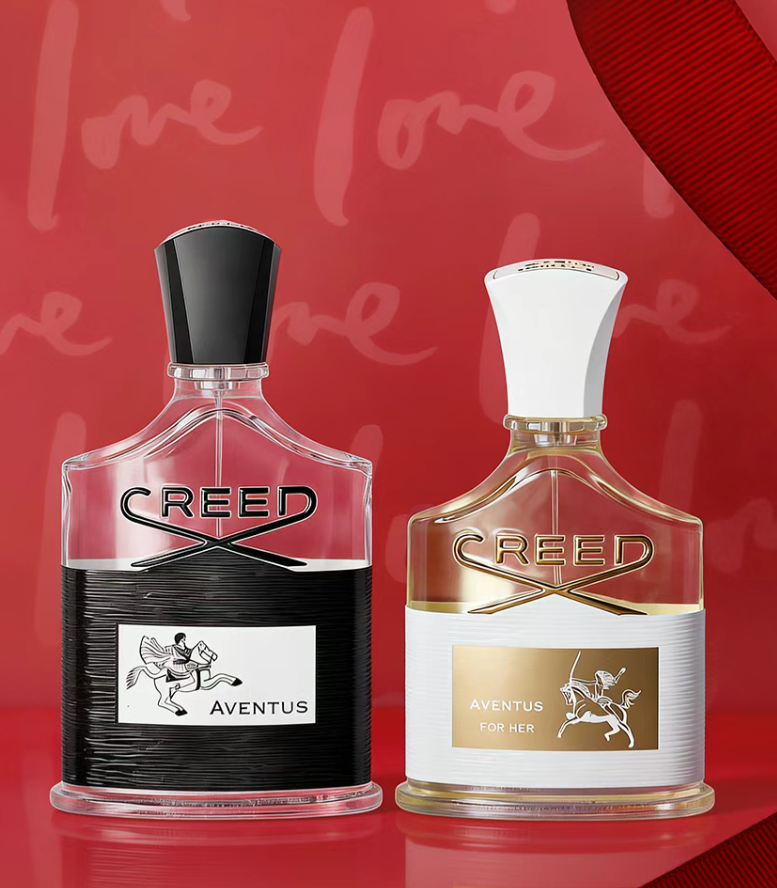
▍Creed perfume data map
It is understood that Creed entered the Chinese market in 2021 and has opened 19 boutiques in the mainland and settled on online platforms such as Tmall and Douyin. In Kering's previous plans, accelerating Creed's development in the Chinese market is also one of its important goals.
For L'Oréal, the addition of Creed will further consolidate its layout in the field of high-end perfumes. L'Oréal previously said that after joining L'Oréal's high-end cosmetics department, Creed will further accelerate its expansion in the global market. L'Oréal Group CEO Ye Hongmu said bluntly: "Through the acquisition of Creed, we will establish a leading position in the fast-growing niche fragrance field. "
In addition, L'Oréal will also license the beauty and fragrance business of several of Kering's iconic brands, including Bottega Veneta and Balenciaga, for up to 50 years.
It is worth noting that Kering Beauty also owns the Alexander McQueen, Pomellato and Qeelin brands. However, these brands were not mentioned in this deal, does this mean that L'Oréal is also making trade-offs? In this regard, Qingyan immediately asked L'Oréal China for confirmation for details, but as of press time, there was no reply.
Outside of beauty, the two parties will establish an exclusive joint venture to explore business opportunities in the field of health and longevity sciences.
What kind of card is Kering Beauty, which is favored by L'Oréal, at present?
The entry of luxury brands into beauty is not new, but compared with giants such as LVMH, Kering is still a new recruit in this track. In fact, it is only in 2023 that it has really made up its mind to operate the beauty business independently.
At that time, the global luxury market was facing growth pressure, and the leading groups represented by LVMH were accelerating their expansion in the beauty field. It is in this context that Kering has chosen to enter the beauty track.
In 2023, Kering set up its first beauty department and hired Raffaella Cornaggia, a former Estée Lauder executive and veteran with 30 years of experience in the beauty industry, as CEO of the beauty department, demonstrating its determination to deepen its cultivation in the beauty track.
Soon after the establishment of the beauty department, Kering quickly launched the acquisition of the high-end fragrance brand Creed, and since then formulated a relatively clear "battle map": on the one hand, optimize Creed's organizational structure, such as appointing a new CEO of the brand to strengthen its leading position in the field of high-end niche fragrances; on the other hand, it has begun to restart the beauty or perfume lines of its brands such as Baodiejia, and gradually build a diversified brand matrix.
From the perspective of brand distribution, Creed represents expertise and heritage in the high-end niche fragrance sector, while Bvlgari and Balenciaga are anchored in the fashion luxury perfume segment, characterized by understated and refined styles. Additionally, with Gucci covering both perfume and makeup categories, it combines both fashion appeal and mass influence. These three forces form a brand matrix with clear positioning and distinctive styles.
After a series of strategic moves, Kering Group has established a certain foundation in the beauty sector. According to its financial report, in 2024, Kering's beauty division revenue reached €323 million (approximately RMB 2.643 billion), a year-on-year increase of 421%. The report highlighted Creed, noting that its outstanding performance was a key driver of the division's growth.
Entering 2025, this growth trend continued. In the first three quarters of 2025, Kering's beauty revenue was €238 million (around RMB 1.895 billion), maintaining steady growth and further confirming that its high-end beauty, particularly fragrance, strategy is beginning to yield results. It is this gradually formed beauty portfolio that ultimately caught the attention of L'Oréal.
In the global beauty market, high-end beauty has become a key battlefield for the giants. However, amidst fierce competition, the growth pressure on luxury beauty has also become evident for several major players, and L'Oréal is no exception.
A review of L'Oréal's financial reports over the past three years found that, although its premium cosmetics business maintained low single-digit growth, its growth rate has consistently been the slowest compared with other major segments such as the Skin Science division. For example, last year, this division's sales reached €15.59 billion (approximately RMB 124.137 billion), basically flat compared with the previous year, with a LFL (like-for-like) growth of 2.8%, ranking the lowest among all divisions. For L'Oréal, injecting new vitality into the plateaued high-end beauty division and seeking new growth opportunities has become urgent.
However, the high-end beauty division is not without highlights. L'Oréal's 2025 financial report mentioned that the perfume category continued to show double-digit growth, and perfume products remain an important driver of company growth.
Against the backdrop of the global perfume market moving toward a scale of €500 billion, L'Oréal's strategy of heavily investing in the perfume sector has long been evident. Whether it is the rare investment in Chinese perfume brands Wenxian and Guanxia, or the announcement last November to add €60 million (about RMB 478 million) to its Gossy factory in northern France to double its perfume production capacity, L'Oréal's moves in the fragrance sector have been accelerating.
This acquisition of Kering Beauty by L'Oréal, directly targeting the high-end fragrance brand Creed, will inject new vitality into the high-end beauty division and is considered by L'Oréal as an "important milestone."
Ye Hongmu stated, "This will consolidate our global leading position in beauty and high-end beauty. Over the next fifty years, we will work together to write a new chapter for these iconic brands and unlock their tremendous growth potential."
"This acquisition marks an important milestone for L'Oréal's premium cosmetics division," emphasized Cyril Chapuy, President of L'Oréal's Premium Cosmetics Division.
It is worth noting that one week before L'Oréal's acquisition of Kering Beauty was finalized, news of Estée Lauder merging with Puig also generated industry attention, a move similarly targeting the high-end beauty, especially perfume sector.
Meanwhile, Unilever, while streamlining its food and mass personal care sectors, is also continuously strengthening its "beauty" label, making high-end beauty a strategic focus.
As the top ten global beauty companies increasingly target high-end beauty to consolidate their positions, it also indicates that competition in the high-end beauty segment is quietly entering a new cycle.