


The latest development process of flexo plate making technology
From production efficiency to printing quality, from environmental protection requirements to cost control, label printing puts forward higher requirements for flexo printing plates and printing technology. To meet these requirements, flexible plate and equipment suppliers are constantly innovating. We are pleased to see that in the past 10 years, the development of flexo printing technology has developed by leaps and bounds, even in the past 3 years when the new crown epidemic is raging, the research and development and promotion of flexographic plates and plate-making equipment have not stopped, through the continuous analysis and research of customer needs, flexographic plates and plate-making equipment have launched new products, many of which have been applied in label printing production, and have achieved good market feedback. In this article, the author expounds the innovative application of flexo plate making technology in the field of label printing in combination with the latest plate-making technology and equipment launched by his company for readers.
1. Application of improved flat top dot printing plate in the field of label printing
Since the emergence of equipment-independent flat top dot printing plates, this type of product has been widely used, and users can use existing plate making equipment to make flat top dot printing plates with plates with built-in flat top dots. At present, the major flexible plate suppliers in the market have launched flat top dot printing plates and are constantly innovating. Taking DuPont's new generation of EasyR series plates launched in 2021 as an example, this plate further improves the print resistance and printing quality of the plate while retaining the performance of the original Easy plate, as shown in Figure 1.
Fig.1 Comparison of plate outlets before and after the EFXR improvement of Easy thermal plate
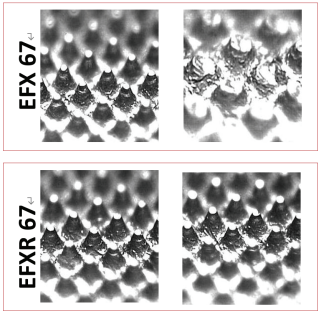
Figure 1 Scratch test of Easy thermal plate EFXR67 before and after improvement, it can be seen that the flat-top dot printing plate before the improvement has a drop problem after multiple scratches, while the improved Easy thermal plate EFXR67 has stable and complete dot performance under the same test conditions. In more production tests, some users also said that the print resistance rate of the new generation of flat-top dot printing plates can be increased by 50% or even more than before. In addition to this, the improved new generation of EasyR series plates also showed excellent print quality in numerous printing tests. Figure 2 shows the proofs printed by domestic label printing companies using the new generation of EasyR series printing plates.
In the enlarged figure 2, you can see that the fine high-gloss dots are printed full and uniform, which can fully meet the market's demand for high-end flexo labels, and the effect of locally enlarged high-gloss dots is shown in Figure 3.
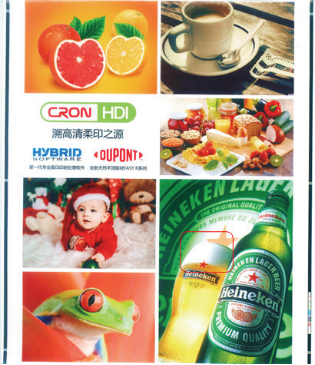
Fig.2 Narrow printing sample of a new generation of thermal plates
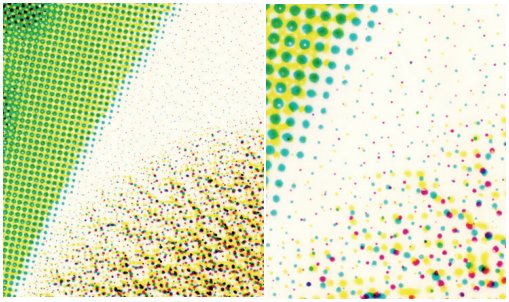
Figure 3 Locally enlarged highlight dot effect
In the process of label printing, there are often many incomplete and unstable dots in the highlight area that has graduated to zero, and these unstable small dots will be deformed under the action of printing pressure, so that the dots not only get ink at the top, but also print the ink accumulated on the shoulders of the dots under the pressure, forming strip dots at the highlights, making the highlight areas that have graduated to zero look more stiff, causing breakage problems. As shown in Fig. 4, the linear extremely high brightness region without dot compensation suddenly enlarges the dots.
Zooming in on this gradient area in Figure 4 shows that the dots in the highlight area are irregularly shaped, as shown in Figure 5.
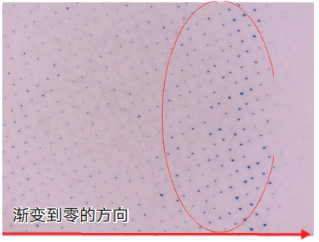
Figure 4 Common flexo gradient to zero fracture problem
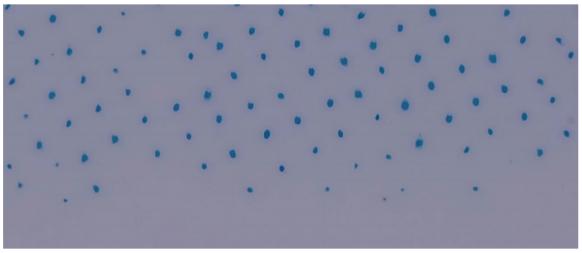
Fig. 5 Irregular highlight effect causes hard mouth
It is precisely because of the long-term existence of this kind of problem that flexo printing is extremely difficult to reproduce the highlight effect, especially in the pre-press retouching, color separation and plate making, there are corresponding countermeasures. Making flexo more natural highlights has almost become an important goal pursued by flexo printing for a long time.
The small dots on the upgraded flat-top dot printing plate are more stable and can bring better highlight effects (as shown in Figure 6), which solves the common problem of highlight gradients from the perspective of the plate and reduces some prepress workload. In addition, the latest EasyR thermal plate can also stably carry 15μm dots, which is about 1% of the dot size at 190lpi, breaking through the conventional 1% dot size at 175lpi, and stable dots can bring good repeatability and high stability printing performance, as shown in Figure 7, the dot diameter printed with this plate is 23μm, and only 2% of the dot size at 175lpi.
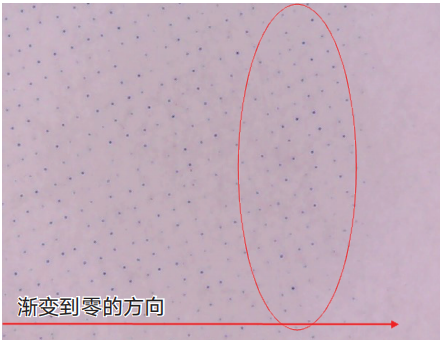
Fig.6 Printing performance of EFXR high-gloss dots on the improved flat-top dot printing plate
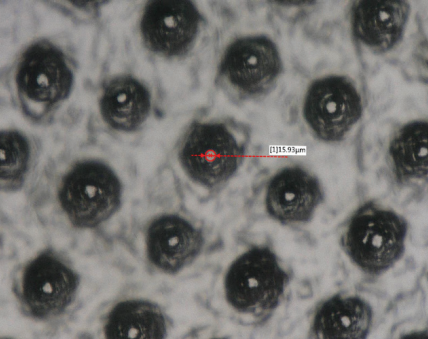
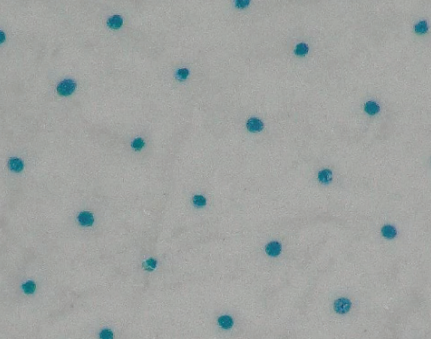
Figure 7 The latest thermal plate EFXR can produce dots with a diameter of less than 20 μm and stably complete label printing.
2. Application of Specialized Plates for LED (Light Emitting Diode) Exposure Units
The continuous development of LED technology has driven the ongoing advancement of flexographic plate-making technology. LED exposure technology features stable energy output, which can completely resolve the problem of energy fluctuations in traditional exposure units. However, due to various reasons, the current mainstream LED exposure units still use platform scanning for exposure. As shown in Figure 8, it compares the exposure of the same type of flexographic plate using LED systems and traditional exposure units. It can be seen that the LED light source is mounted on a movable lamp strip, which reciprocates on the table driven by a motor. The advantage of scanning-type exposure units is a significant reduction in the cost of LED exposure units, but it also introduces other issues, such as exposure parameter settings. Figure 8 shows the amount of UV light exposure received at specific graphic positions on the plate in each process. Since LED systems usually employ scanning-type exposure, the graphic areas are exposed multiple times during the process, and the UV energy intensity each time is much higher than that of traditional exposure units.
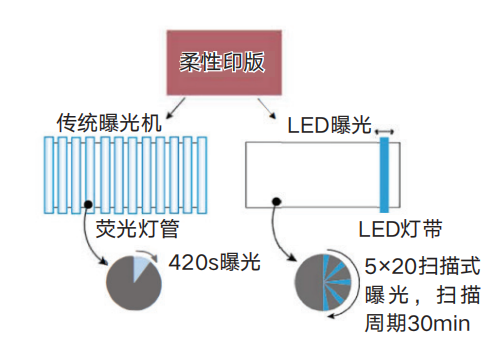 Figure 8 Comparison between Traditional Exposure Machines and LED Exposure Machines
Under the two exposure modes, the photosensitive resin undergoes two completely different cross-linking processes. Traditional exposure machines involve continuous exposure, while LED exposure machines using platform scanning use intermittent exposure. During the exposure process, once the LED light has passed, the curing of the graphic areas is affected. Compared to continuous exposure, the exposure time of most LED platemaking machines needs to be extended, so flexible plate suppliers and equipment manufacturers invest significant resources to optimize plate-making parameters for LED exposure, so that the performance of plates made with LED exposure can reach or exceed that of plates made with traditional exposure. The most common issues involve adjusting exposure settings, such as the output energy of the exposure machine, scanning speed, and the number of scans.
Additionally, although using high-energy UV output can shorten the exposure time, it may come at the cost of plate quality. The combination of high output and short exposure time often causes the smallest dots to enlarge, the angles of line and letter shoulders to widen, and the dot surfaces to become concave. These phenomena can lead to a decrease in printing exposure latitude and print quality. Therefore, to avoid these problems, longer LED exposure times are often required. These challenges are akin to achieving a crispy exterior on a steak while ensuring the inside is properly cooked. In technical terms, it means achieving fine printing elements and surface microstructures while allowing most of the resin to undergo full photopolymerization, producing a stable printable plate.
If the photosensitive resin plate formula is optimized for LED exposure from the beginning, fewer compromises are required in terms of production efficiency and quality. Optimized flexible plates combined with experienced application support staff can achieve optimal results. In the second half of 2021, DuPont specifically adjusted and optimized plate formulas for LED-UV exposure, launching a new series of photosensitive resin plates called Cyrel® Lightning. This series of plates effectively addresses a range of problems that conventional flexible plates encounter under LED exposure machines.
This series of plates has customized LED UV photosensitivity characteristics, enabling a balance between surface curing and overall curing. This innovation allows fast surface curing and effectively reduces the inhibition of resin polymerization caused by oxygen during LED exposure intervals. At the same time, by fine-tuning the plate's UV absorption properties, this series of plates achieves full overall curing. The recently launched Cyrel® LSH plates have a reduced exposure time of 42% compared to DPR plates, while retaining the DPR plate's fine highlights and excellent mid-tone reproduction capability. For LED exposure technology, the company will continue to launch LED exposure-special plates suitable for solvent-free systems, such as LFH, which inherit many advantages of LSH and, combined with solvent-free plate washing technology, are expected to gain wider user preference.
3. Application of Thermal Plate Making Equipment
With the increasing environmental consciousness of printing companies in China, the high efficiency, safety, and environmental advantages of solvent-free systems are gradually being recognized, and the installed base in China is steadily growing. As shown in Figure 9, the successful installation of DuPont Cyrel® 2000TD equipment worldwide demonstrates the high quality and reliability of the latest generation of solvent-free plate-making systems. Currently, in addition to common narrow web label printing, many users in advanced flexographic markets are also using wide web flexographic presses for label printing.
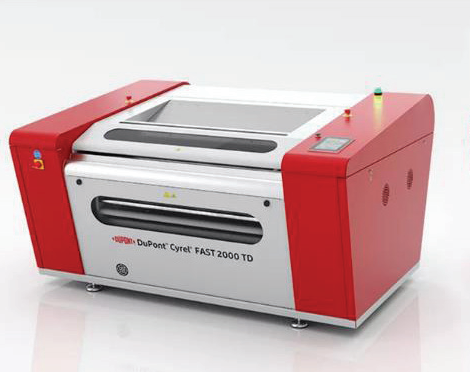
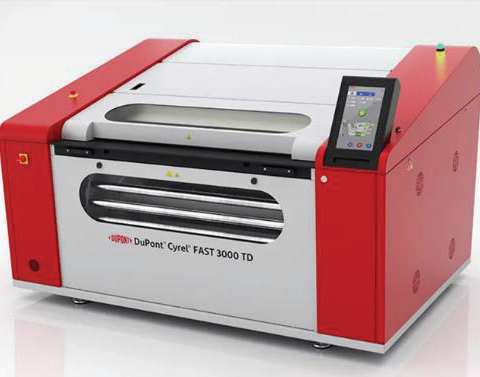
Figure 9: The widely praised 2000TD and the 3000TD launched in 2022 have elevated the quality level of thermal plates to that of solvent-based plates.
The solvent-free platemaking system 3000TD, launched in 2022, has brought solvent-free platemaking technology to a new level in terms of efficiency and quality. The maximum plate size that the platemaking machine can handle reaches 1270×2032mm, meeting the needs of most users for large-format plates. Due to the adoption of numerous new technologies, compared to the previous generation of large-format thermal platemaking systems, the latest 3000TD platemaking machine has greatly improved in quality. Combined with the latest thermal plate materials, solvent-free technology can fully match the quality of traditional solvent-based platemaking. At the same time, the 3000TD platemaking machine features an ergonomically designed operation panel, with significant improvements in temperature and pressure control, exhaust emissions, and environmental noise. In addition, according to DuPont's updated product lifecycle assessment report, compared to solvent-based platemaking, this thermal platemaking system can save 56% of non-renewable energy consumption while reducing greenhouse gas emissions by 38%.
4. Application of Automated Platemaking Equipment
To address common safety, efficiency, and accuracy problems in flexographic plate cutting, automatic plate-cutting machines have gradually gained the attention of users in recent years. As shown in Figure 10, the Kongsberg X20E is an example. This automatic plate-cutting machine not only shortens plate-cutting time but can also simulate seamless sleeve printing effects, enhancing the stability of high-speed printing, as shown in Figure 11.
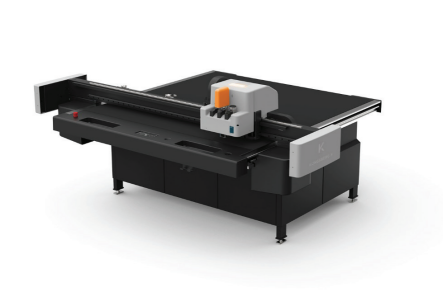
Figure 10 Kongsberg X20E installed at DuPont Shanghai Customer Technology Center in September 2022
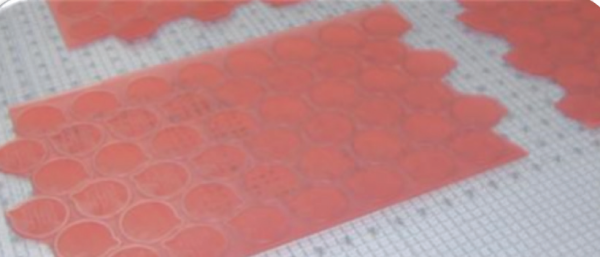
Figure 11 shows an interlaced plate cut completed by the automatic plate cutting machine, which can simulate the printing effect of seamless sleeves while also improving the stability of high-speed printing.
5. More Environmentally Friendly Plate Washing Solvents
For solvent users, the company I work for has upgraded the formula of the eco-friendly solvent Flexosol-i and launched the latest generation of eco-friendly solvent, Flexosol-X, which is more environmentally friendly and has overall better performance. Compared with the eco-friendly solvent Flexosol-i, Flexosol-X has better usage and recycling stability, requires less time for plate washing and drying, and can further reduce energy consumption. At the same time, the VOC emissions of eco-friendly solvent Flexosol-X are reduced by 57%, fully meeting the stricter European Union environmental standards for solvent use.
Technological development will not stop. It is believed that more flexographic plate and equipment suppliers will continue to work on improving flexographic quality, increasing plate-making efficiency, and enhancing product sustainability, providing even better products and technology for flexographic label users and supporting the long-term development of Chinese label printing companies.