


Small Brochure, Big Knowledge: A Complete Guide to Common Types of Digital Printing Folds
With the complete lifting of the pandemic restrictions, the domestic market is gradually recovering. Major organizers are hosting exhibitions and events, increasing opportunities for offline interaction, and promoting the prosperity of the market economy. As an effective promotional tool, brochures are often the first choice for many printing companies, as they are not only convenient and portable but also capable of conveying a large amount of information and showcasing corporate culture. So, what kind of brochure should be selected? What are wallet folds and accordion folds? What common issues are encountered with brochures? Let's take a look together.Common Types of Brochures
1. Wallet Fold
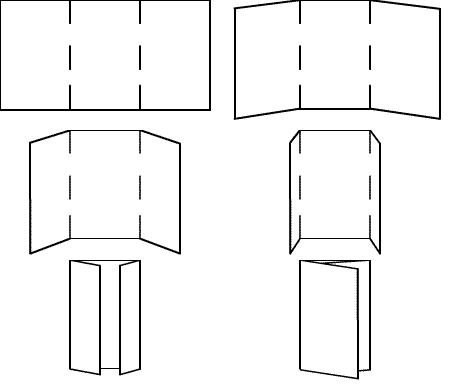
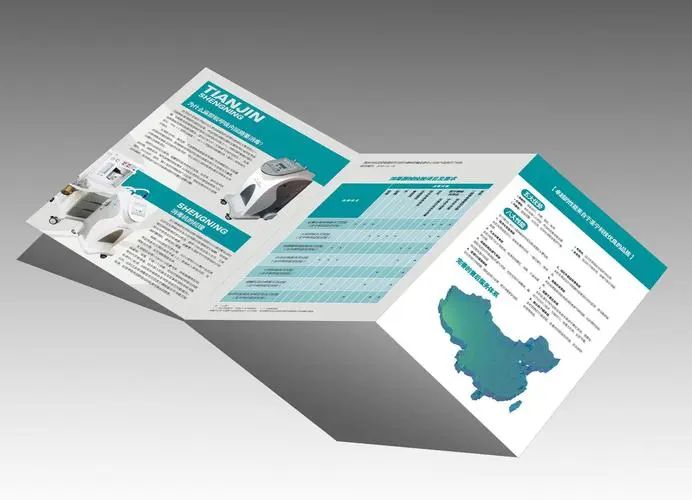
The wallet fold is the simplest inward folding method, also commonly known as a tri-fold, and is the most commonly used folding method by businesses.
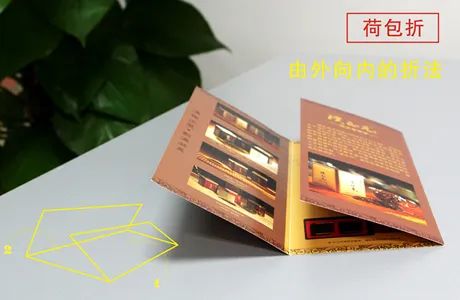
2. Accordion Fold
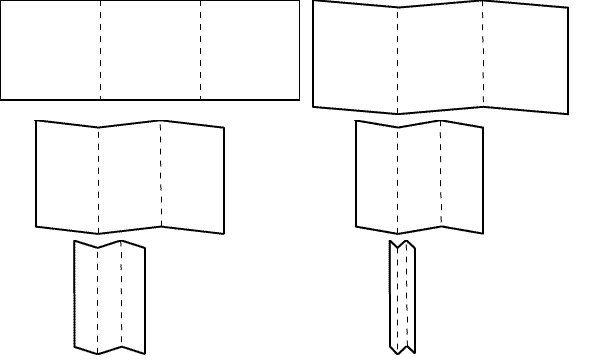
Accordion folds, also called fan folds, involve folding back and forth alternately inward and outward, resembling the way a folding fan is folded. The previously mentioned pouch fold (tri-fold) can also be folded in this manner.
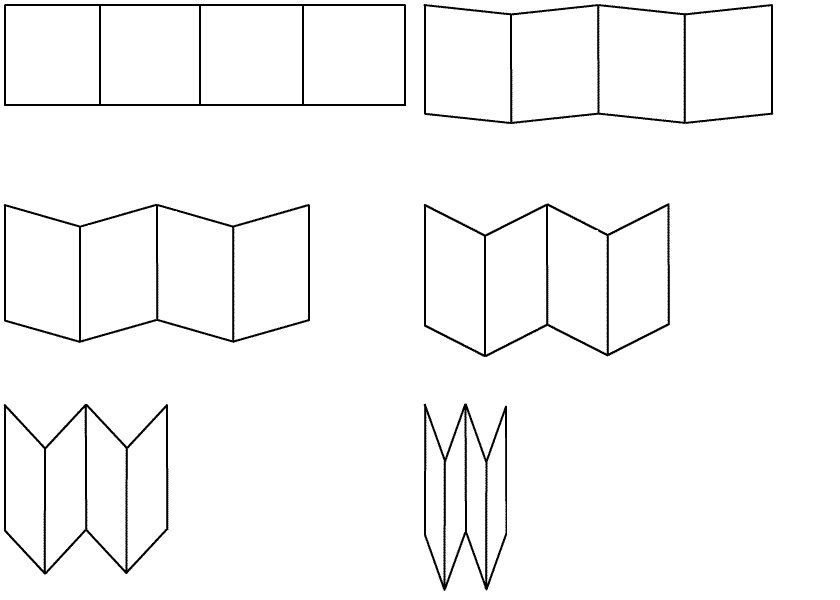
Accordion folds usually have up to six folds, but can be as long as 15 folds or 16 pages. However, most companies choose six folds or fewer, as this is the most cost-effective and also the most aesthetically pleasing.
3. Fold in half
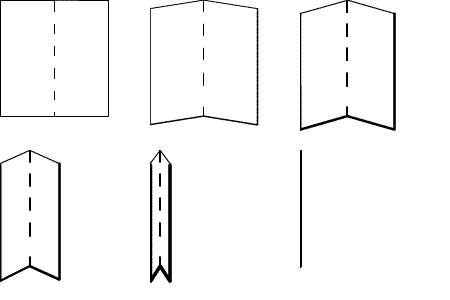
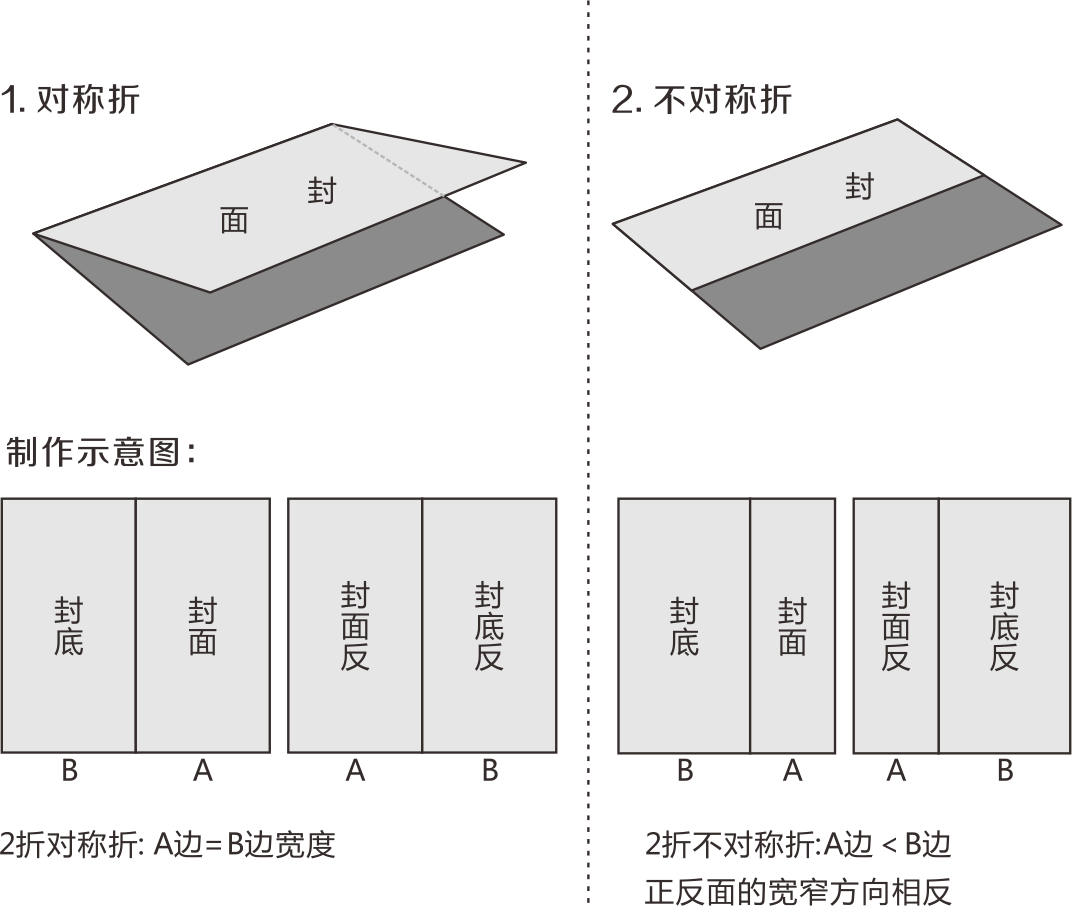
Folding in half is very simple; after printing on both sides, just fold along the line. There is only one crease, making the design simple and versatile. Depending on the position of the fold, it can be either symmetrical or asymmetrical.
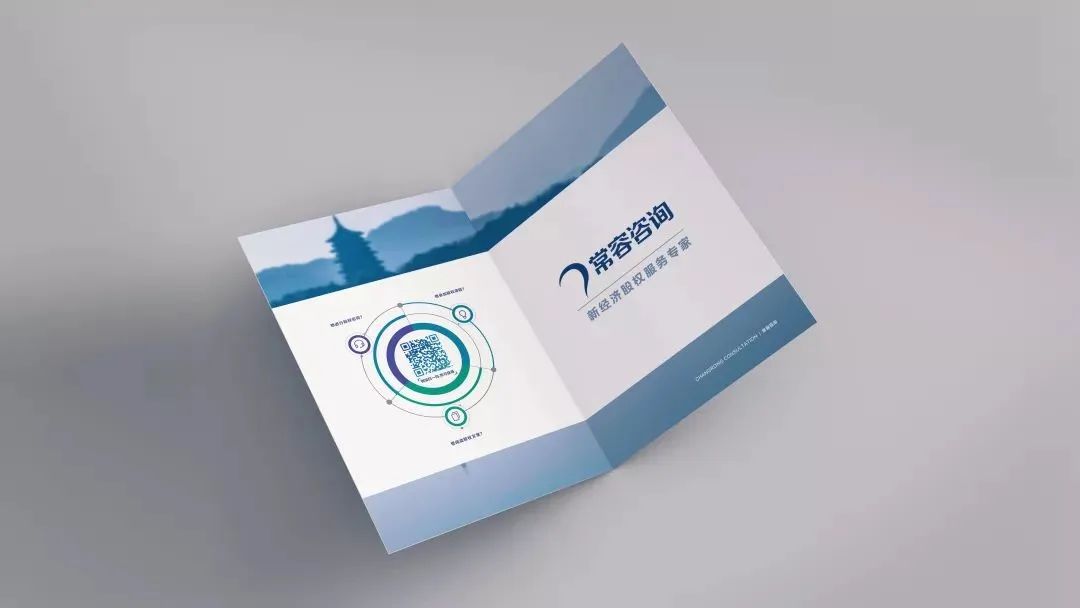
Due to their lower budgets and simple operations, simplicity and plainness are very noticeable characteristics of each of them.
4. Cross Fold
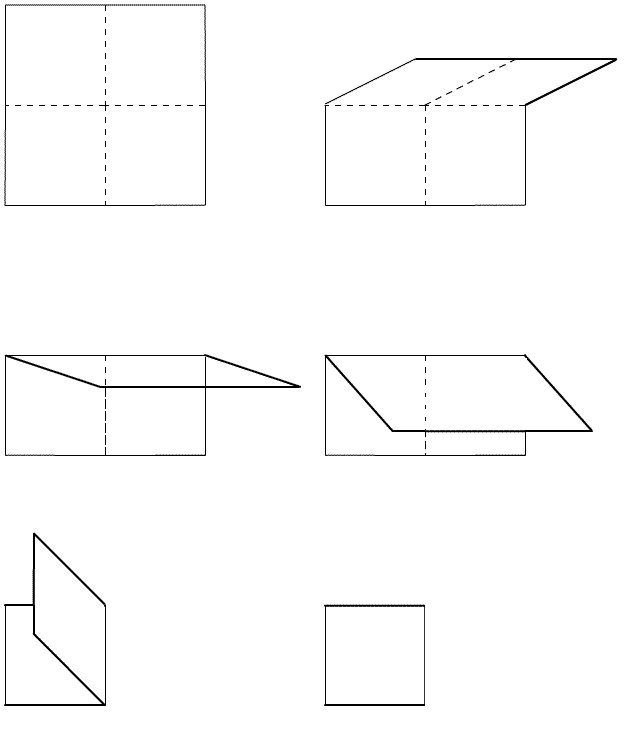
The cross fold is actually not very common; it is usually only chosen by companies that have such requirements. This fold is first folded left to right, then vertically folded, so when we unfold the brochure, we will see a cross-shaped crease.
5. Gate Fold
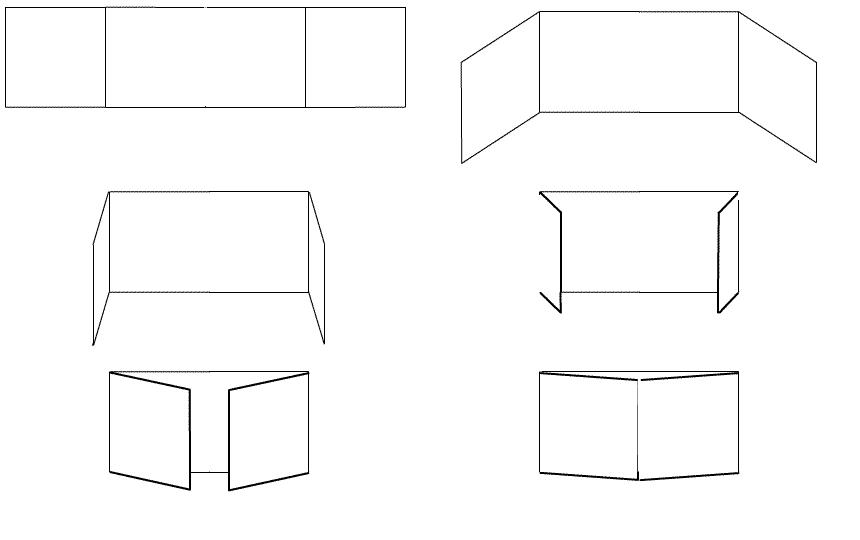
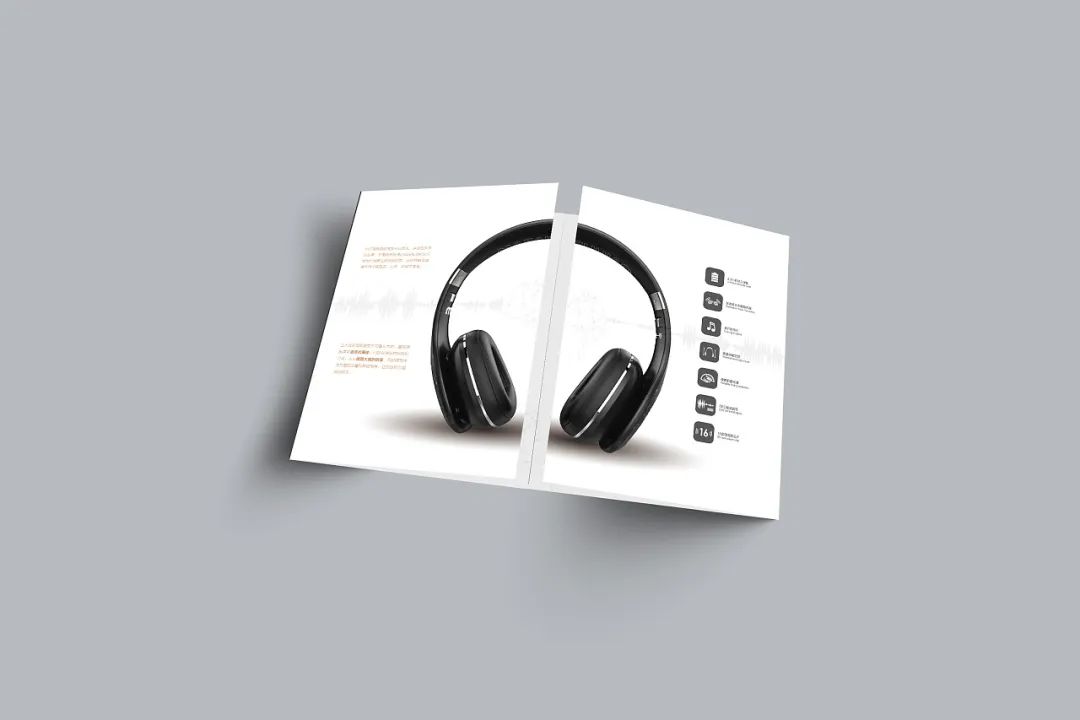
Fold the brochure along the quarter-fold line, folding inward from both the left and right, just like two doors.
6. Close the door and fold again
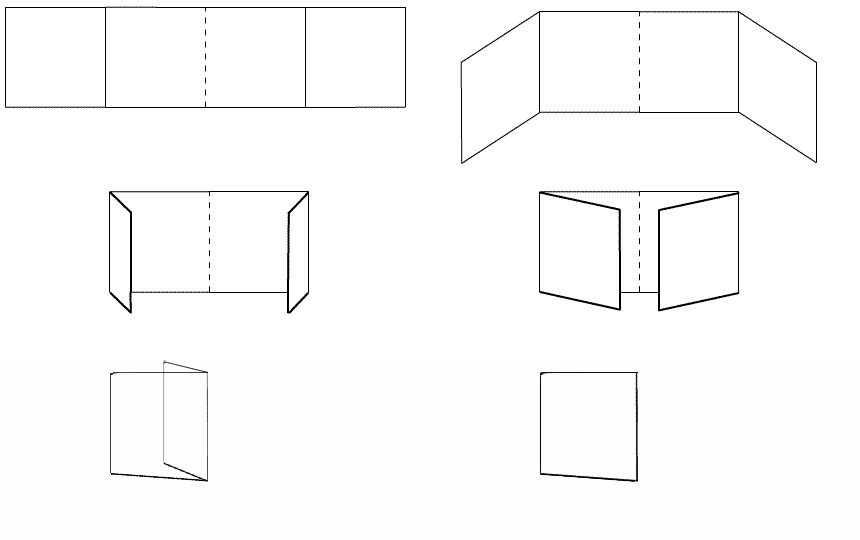
After making the aforementioned gate fold and then folding it again, you will get three creases when unfolded. It is important to note that a gate fold and folding the gate fold again are not the same thing. Printing companies should clarify the company's requirements; otherwise, if a two-crease gate fold is produced and the entire staff has to fold it manually, it would be quite troublesome.

7. Frog Fold
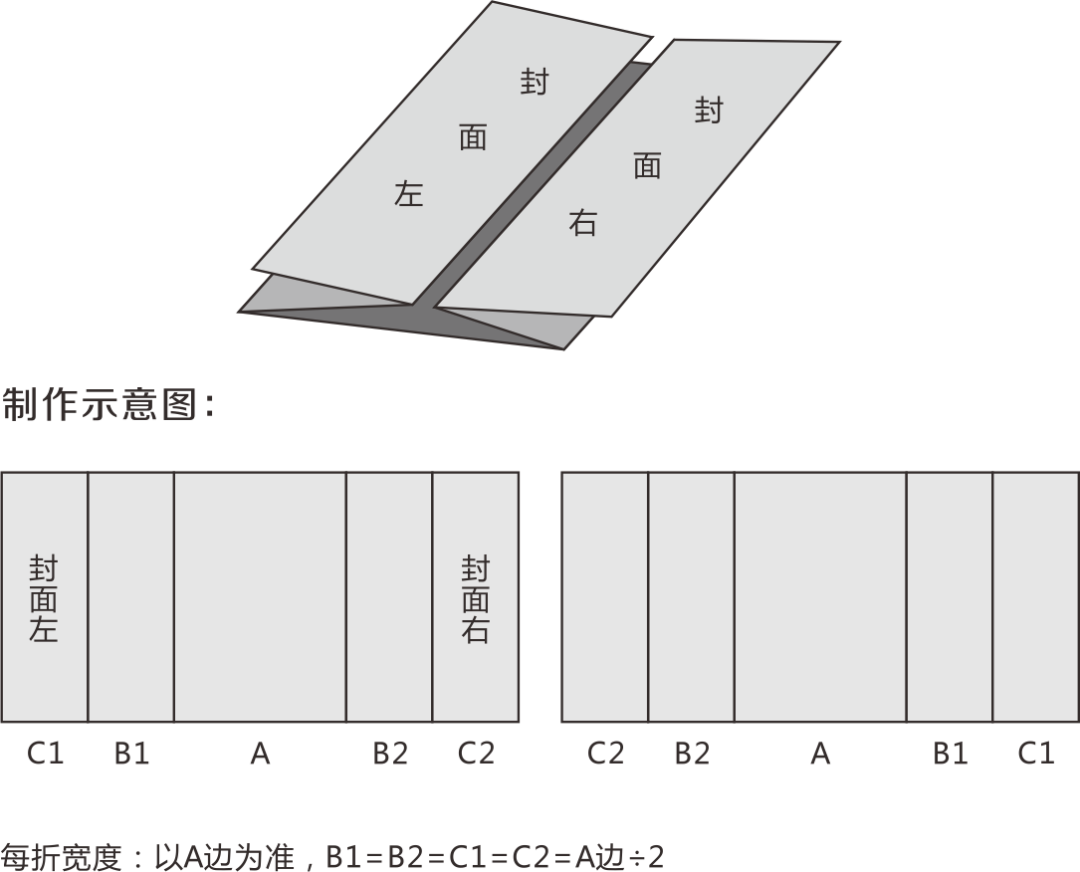
The frog fold resembles a jumping frog or a butterfly with spread wings, also known as the 'butterfly fold.' Its style is unique, and the craftsmanship is exquisite. It usually focuses on the design of the middle section when unfolded, giving people a sense of surprise when opened.
8. Pagoda Fold
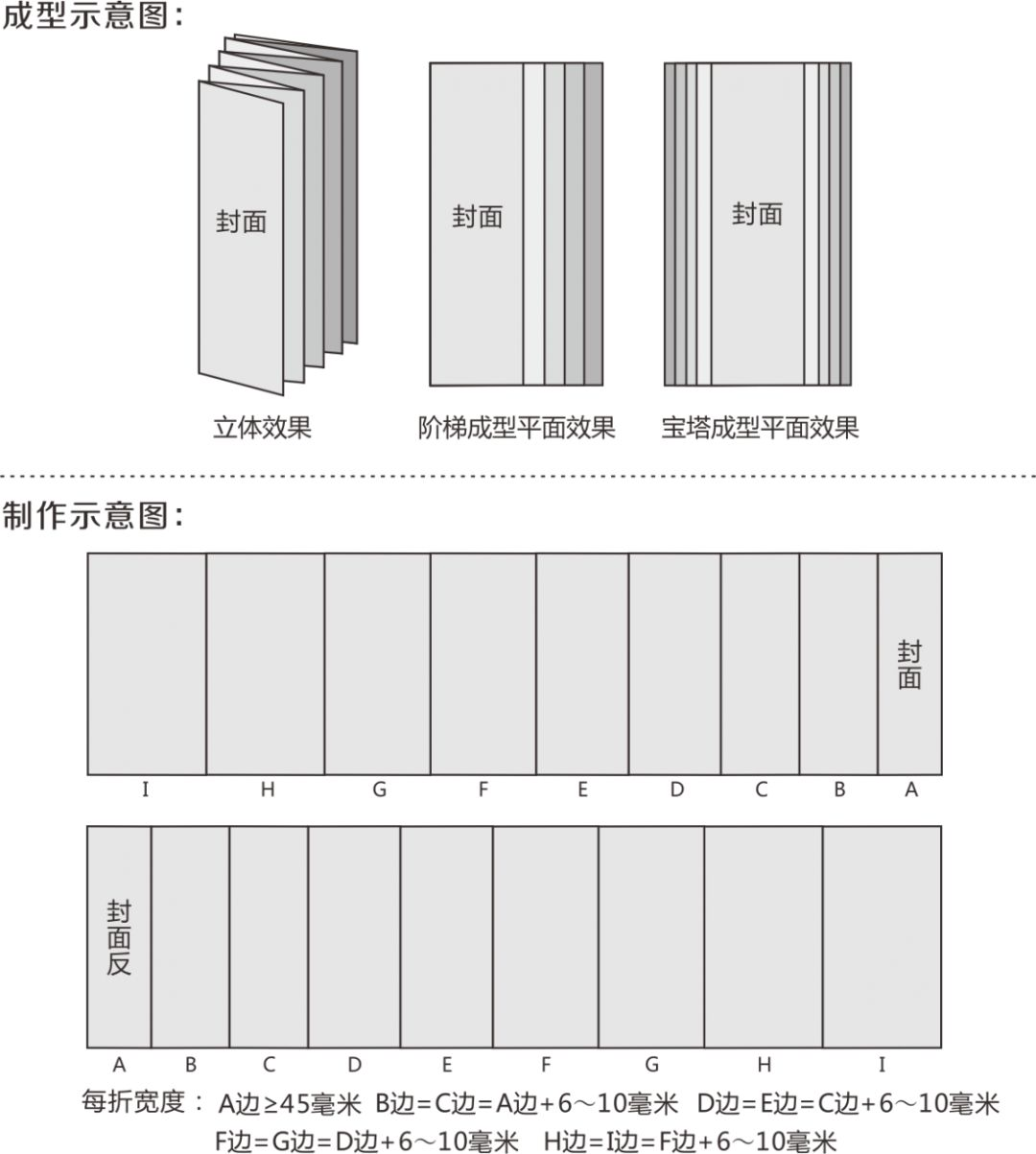
The pagoda fold, also known as the step fold, features a distinctive style and looks like a pagoda. It is refreshing to see and clearly displays the key points of promotion without needing to be unfolded!
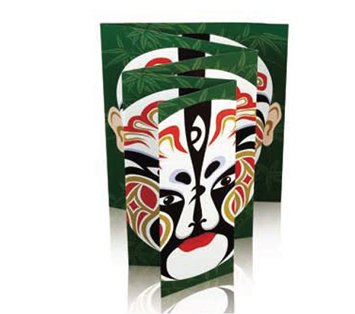
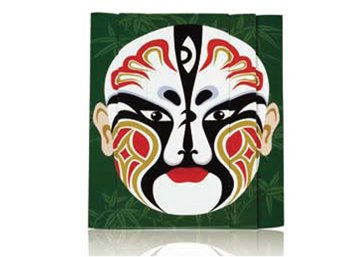
The three-dimensional pagoda-like structure of the foldable tower is full of liveliness. At the same time, the content is systematically organized, with layers of pages gradually unfolding, giving a sense of gradual immersion. Similarly, when the foldable pages are closed, the rigorous construction and rich layers of the pagoda-fold product are bound to impress, presenting a complete and unified visual.
Common Folding Problems01Powder Falling Off After FoldingDuring fixing, the toner melts due to heat and solidifies on the paper surface, forming the printed image. These fused toners only remain on the surface of the paper, making it easy to fall off due to friction when folding. This phenomenon is especially severe in continuous-feed folding machines with high-platform paper feeding. Scratches on the surface of printed materials may occur. Using a process where lamination is done before folding can effectively prevent this issue. With improvements in toner formulas in digital printing technology, this problem is gradually being better resolved.02Creases at Fold LinesAfter folding, it is common to see "burst" marks at the fold lines, which greatly affect the appearance of the printed material. This is because the paper loses moisture, becomes more brittle, and its strength decreases due to high-temperature baking, resulting in cracks after folding.
If the folding direction of the finished product can align with the grain direction of the paper (folding direction parallel to the paper grain), it can better reduce the tearing of paper fibers, but it cannot completely prevent paper tearing. Especially for printed products that are full-coverage and dark-colored, the contrast with the white paper fibers makes it easy to see fiber tearing after creasing, exposing white edges, as shown in the picture below.
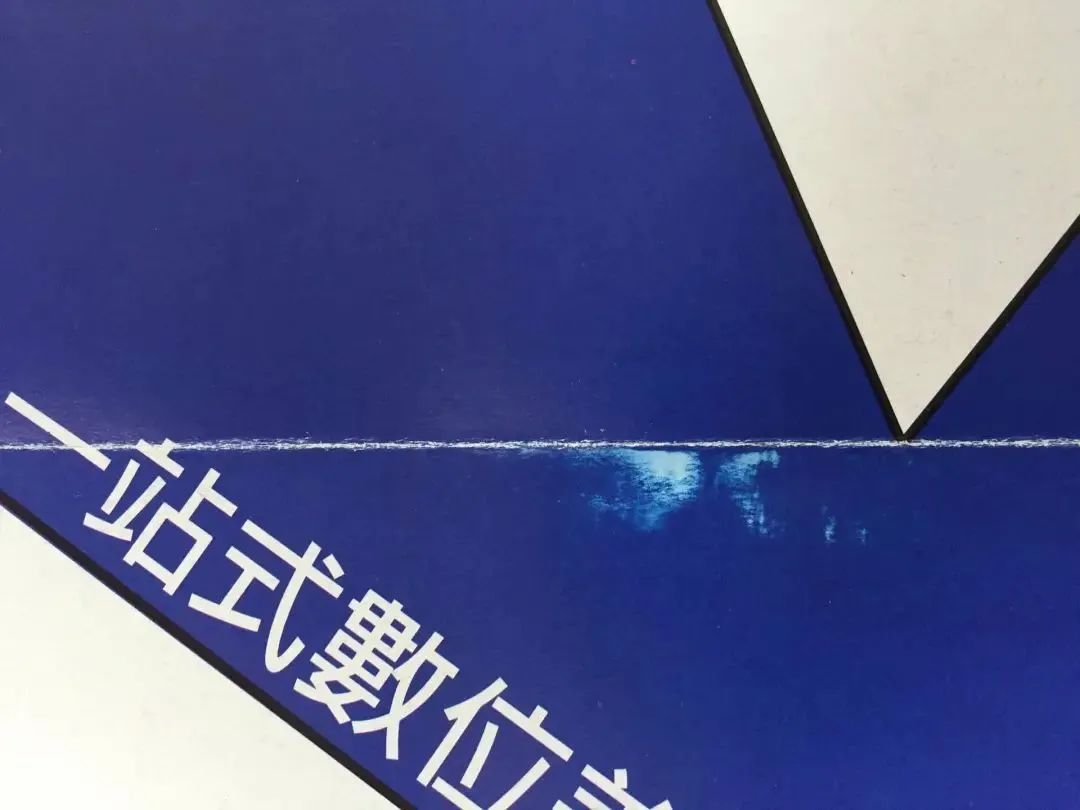
To address the aforementioned issues, printing companies are actively seeking solutions. First, placing the printed materials indoors and using the natural humidity in the air to condition the paper before folding can effectively alleviate tearing problems caused by reduced moisture content in the paper. Second, scoring or folding along the grain direction of the paper can somewhat prevent tearing, but folds made perpendicular to the grain will still result in breakage. Additionally, for stacks of paper exceeding 16 sheets, scoring the paper first allows an impression of the folding direction on the surface before actually folding, thereby reducing the risk of tearing. However, scoring is not a magical solution. Regardless of whether the paper is scored beforehand, the act of folding inevitably damages the paper surface to some extent, and fold lines are more or less visible.
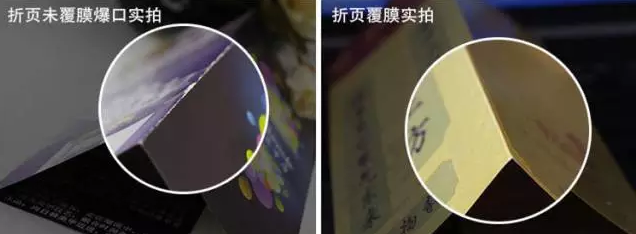
The optimal method is to laminate the printed materials first, and then crease and fold the paper. Lamination can make the surface of the printed materials smoother and glossier, enhancing the vibrancy of the images and text, giving them a more three-dimensional feel. Products with creases, such as folded brochures and album covers, often use lamination; this not only protects the vivid colors of the print but also ensures that the color, paper texture, and crease lines remain consistent, making the product appear more high-end.