


Is color management a 'waste of effort'? In fact, it's just that the frontend management wasn't done properly!
As the core technology system of color reproduction, color management is of great value to the printing and packaging industry to achieve color consistency in the whole chain from image acquisition, processing to output through standardized processes. But in fact, many enterprises do not achieve the expected results after applying color management, and some even put the software and hardware of color management on the shelf, causing a lot of waste. So many people call color management an "IQ tax". The reasons for this trouble are as follows:
(1) The existing color management technology is mainly suitable for static scenes, requiring every participating equipment, substrate, ink, and even objective factors such as speed, temperature, and humidity to be in a standard state, and it is difficult to meet these requirements in actual production.
(2) Color management technology involves multiple professional fields, and the professional quality of operators is highly required. Some industry practitioners lack systematic color management knowledge and are not proficient in key links such as equipment calibration and ICC profile production, resulting in the color management system not being able to play a full role.
(3) The accuracy and stability of some equipment are insufficient, resulting in deviations in color conversion. Most practitioners have a better understanding of the above reasons and have certain countermeasures. But why are there still many companies that don't use color management well? That's because the front-end management of color management is actually more important.
What is front-end management of color management?
What is front-end management of color management? In fact, it is literal. In a press, color management can help achieve color consistency across all types of printing equipment, but only "consistent". As for whether this "consistency" is what the customer wants, color management can't do anything about it. Therefore, some effort needs to be put into the front end of color management to make it play its best role.
The most important thing in color management is the ICC standard, and printing is one of the industries with the most standards. Each order has different standards: with old samples, with other prints, with digital samples, with computer displays, with mobile phone displays...... Varied. There are also some customers and designers who follow the color on the spot, then the standard is the customer's vision, and this standard is dynamic, sometimes after adjusting a variety of effects, the customer tells you to choose the first version of the effect. In the face of this situation, most printing factories are helpless, so returns, revisions, and frequent proofing are repeatedly reduced, which not only causes great waste, but also causes customer satisfaction to get worse and worse, resulting in customer loss.
In response to these phenomena that everyone does not want to see, the author has been researching countermeasures since 2017, visiting a large number of end customers, including many first-line brands, and found that there is actually a problem with our standards. For example, when the customer placed an order, he gave a print, saying that it was chasing the sample, and when we spent a lot of effort, we finally got very close, but the impression left by the customer was that "these two printing factories are at the same level".
When the author once chased the printing sample order, he found that the portrait in the printed sample brought by the customer was blue and the fruit picture was gray, so he asked the salesman to communicate with the customer and ask the customer if the portrait could be made more rosy and the fruit fresher. The customer not only agreed but was also very happy, saying that it would be best to print something good. In this way, the printing standard has been successfully changed from "chasing printing samples" to "based on samples, and the characters and fruit drawings have been improved on the original basis", which greatly reduces the difficulty of operation. Later, we followed this approach no matter what kind of order we made, and more than 90% of our customers accepted our advice and customer satisfaction increased. This is the front-end management of color management, that is, the ICC standard is brought forward to the end customer. No matter what kind of printing needs, there is only one standard: to follow the needs of customers.
How to meet the needs of customers?
"Customer needs" is a very vague concept that is difficult to quantify, which leads to poor operability. However, after so many years of trying, the author has summarized some detailed standards that are more operable and must be followed in the front-end processing of color management.
01/ Brand attributes: Colors need to be strengthened to identify and match tonality
(1) Core color locking: brand logo colors and standard colors must be restored 1:1, such as Coca-Cola red, Starbucks green, etc., try to use spot colors to avoid color shifts.
(2) tonal matching: For example, FMCG products mostly use highly saturated colors (dark but not light, fresh but not dark) to attract consumers' attention; Maternal and infant products mostly use soft colors (light but not dark) to convey a sense of warmth.
02/ Scene adaptation: The color needs to be adapted to the function and audience
(1) Functional adaptation: food packaging is mostly warm colors, which is easy to stimulate appetite; Daily chemical products mostly use refreshing and cool colors to convey a sense of cleanliness.
(2) Audience adaptation: children's products mostly use bright contrasting colors, which are in line with children's aesthetics; Older products often use high-contrast colors for easy identification.
Once you understand these criteria, combined with print hue, gradation, and saturation, the front-end processing has a rule to follow. According to customer requirements, the actual printing effect will be almost 100% deviated, but we need to grasp the direction of deviation: hue bias is corrected and brighter, the level bias is stronger, and the saturation bias is higher.
As shown in Figure 1, the mineral water label is mainly based on cool colors such as blue and dark blue, and when formulating printing standards, it is necessary to prefer cool colors, that is, try to be bluish to avoid redness or purple (focus on adjusting the hue).
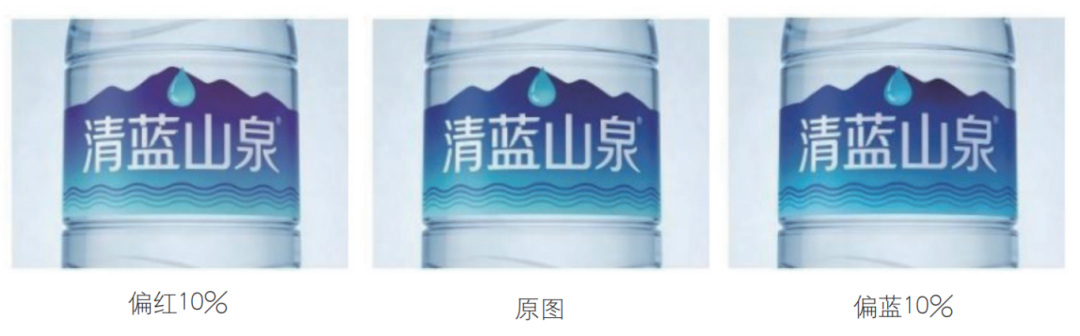
Figure 1 Mineral Water Label Design
As shown in Figure 2 with the camera design, based on the customer's original draft, try to enhance the depth as much as possible to avoid a reduction in layering.
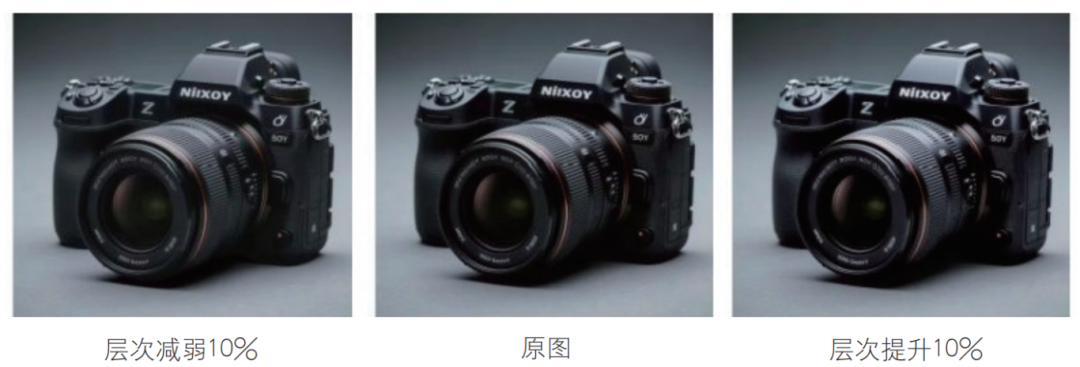
Figure 2 Camera Pattern
As a professional in the printing industry, one should have a basic sense of aesthetics. When setting standards in the front end for different clients with different requirements, it is important to try to meet aesthetic demands. Upgrading printing standards such as matching physical samples, digital proofs, and computer color proofs to meet client needs is essential. Once the front-end standards are established, combining them with color management technology ensures color consistency from digital proofs to printed products, thereby improving efficiency, satisfying clients, and achieving a win-win result.