


Eight major upgrades to the gravure press make solving paper, ink, and other issues this easy!
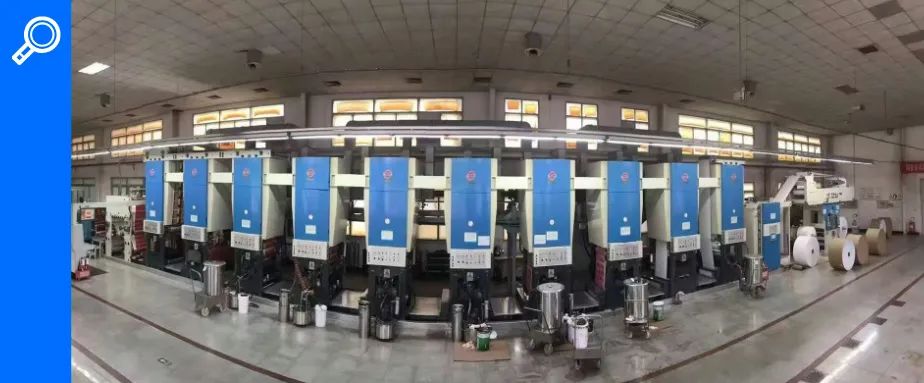
Systematic Breakthroughs in Equipment Upgrades
Traditional gravure printing presses face multiple challenges in cigarette packaging printing, including paper stability, ink control, and safety protection. Problem-oriented and focusing on the four dimensions of 'quality, efficiency, safety, and environmental protection,' eight core upgrades were carried out on cigarette pack gravure presses to build a comprehensive technical upgrade system covering the entire printing process.
01/ Paper Pre-treatment
To address the common issue of inconsistent flatness at the head and tail of paper rolls, an automatic paper flattening control system was added before the paper feeding tension, as shown in Figure 1, forming a closed-loop control to replace manual adjustment. This system links the flattening servo motor with the roll diameter ultrasonic sensor and can accurately set flattening parameters within the 0-30 range. While ensuring stable tension, it allows the paper to be transported completely flat. After the upgrade, the incidence of paper curling and deformation after slitting decreased by 80%, laying the foundation for high-precision registration in subsequent printing processes.
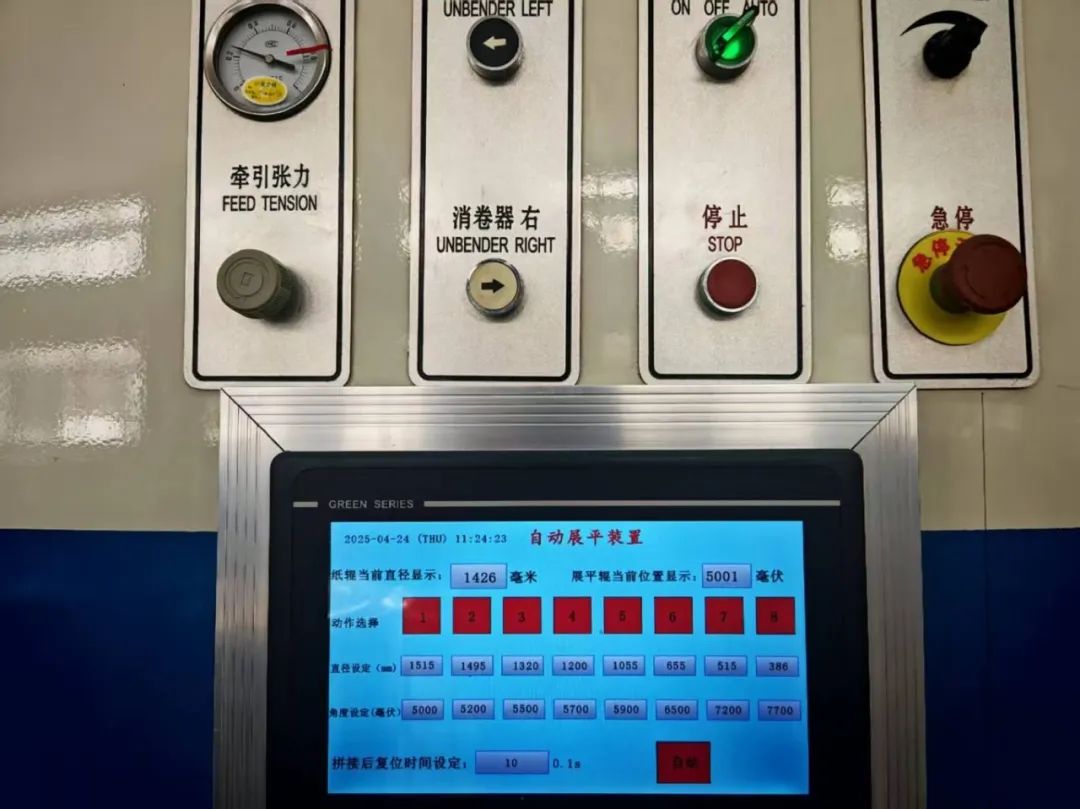 Figure 1 Automatic Flattening Control System
02/ Doctor Blade Pressure Control
Upgraded the doctor blade pressure control from the rough 'mechanical + air pressure' adjustment to a dual-cylinder pressure regulator for precise control, keeping the blade pressure within 0.7~1 bar. This improvement reduces printing faults like blade lines by over 30%, and by improving pressure uniformity, the lifespan of the Taishan Red General gold ink doctor blade is extended by more than 40%, reducing machine downtime for blade replacement and significantly lowering paper waste and blade consumption costs.
03/ Ink Fountain Temperature Control
Developed a cooling device for the printer ink fountain, as shown in Figure 2. It uses a threaded coil sealed structure linked with a process water refrigeration system to precisely control the ink temperature at 26℃ ± 2℃. This device effectively solves issues caused by high ink temperature (especially in summer) such as frequent plate clogging, spotty printing, and trailing. Printing operation becomes much easier, and especially for high line screen pack printing (above 175 lines/inch), combined with electrostatic ink transfer, it achieves 100% dot gain restoration for 3% halftone dots.
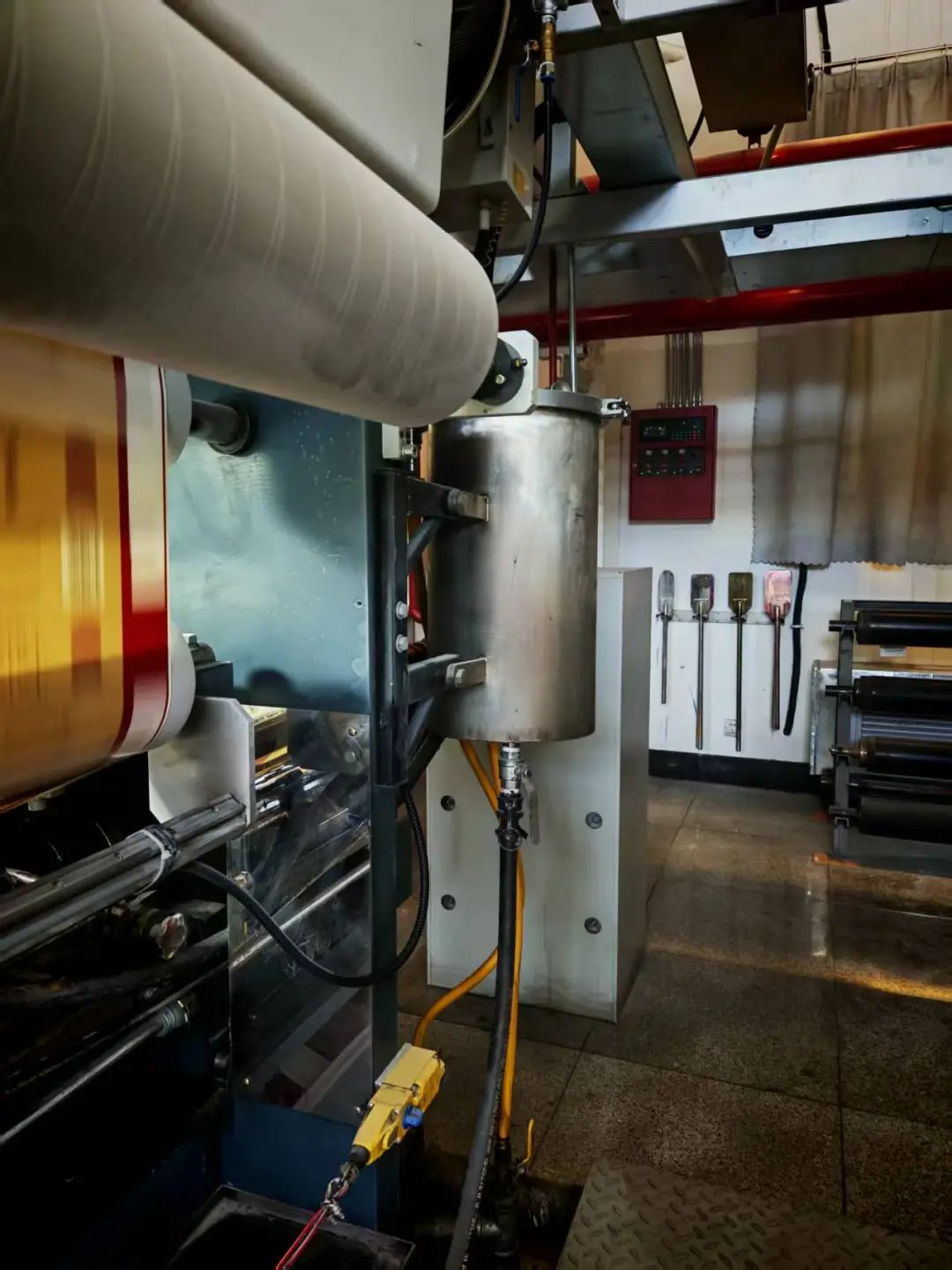
Figure 2 Ink Groove Cooling Device
04/ Anti-Splash Ink Technology
To tackle the common industry issue of ink splashing during high-speed printing on cigarette pack gravure presses, a high-speed anti-splash ink device with a clutch-type printing plate roller was developed, as shown in Figure 3. Through the combined action of a pneumatic clutch and the cleaning and sealing structure on the plate end face, the control console manages everything centrally. It completely prevents ink splashing at a printing speed of 200 meters per minute and automatically disengages when the machine stops. This device not only ensures the product's appearance quality but also makes operation more convenient, solves the cleaning problem caused by ink contamination on the equipment, and improves the 6S management level on the production floor.
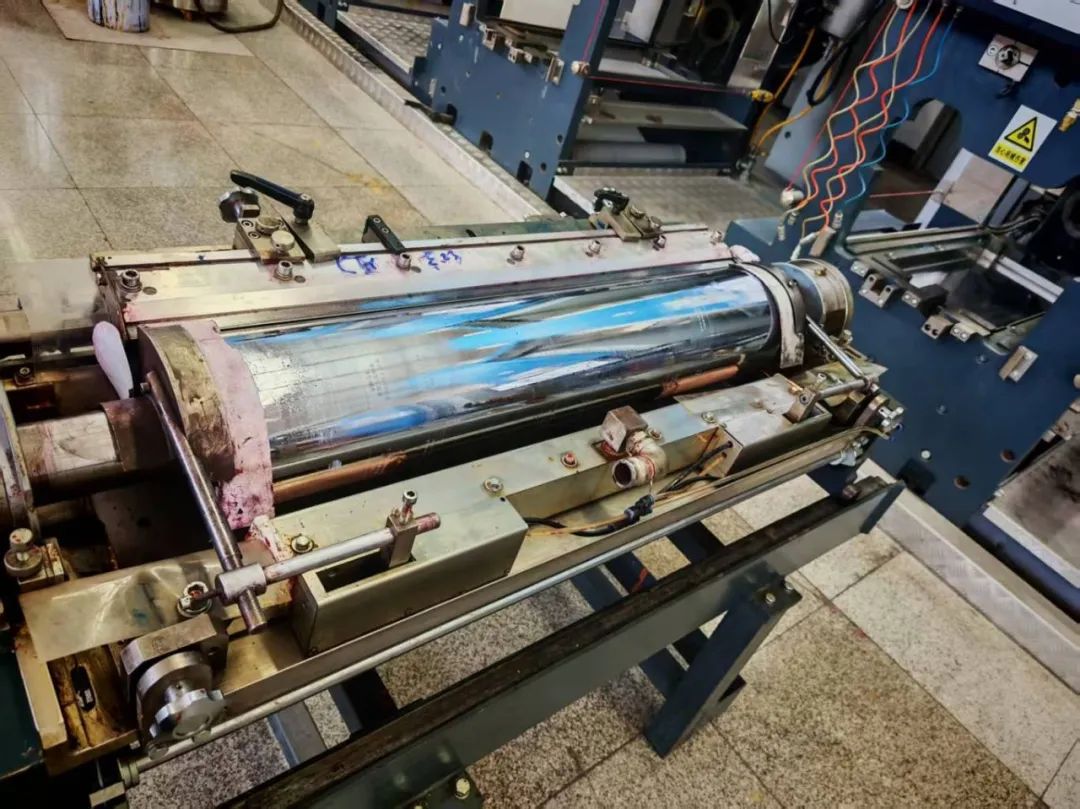 Figure 3 High-speed anti-splash ink device with a clutch-type printing roller
05/ Automatic cleaning device for gravure printing doctor blade edges
A doctor blade edge automatic cleaning device and control system have been developed, as shown in Figure 4. It integrates scanning detection with intelligent control. The scanning head identifies the position of the splicing tape on the paper roll, accurately calculates the time the joint reaches the printing point, and triggers the doctor blade automatic cleaning device in sync. This device enables dual-mode control ("manual/automatic") from the central console, reducing the blade cleaning time per shift by 70%, eliminating safety risks from manually approaching high-speed moving parts, and preventing waste caused by delayed manual operation. This project is a first of its kind both domestically and internationally.
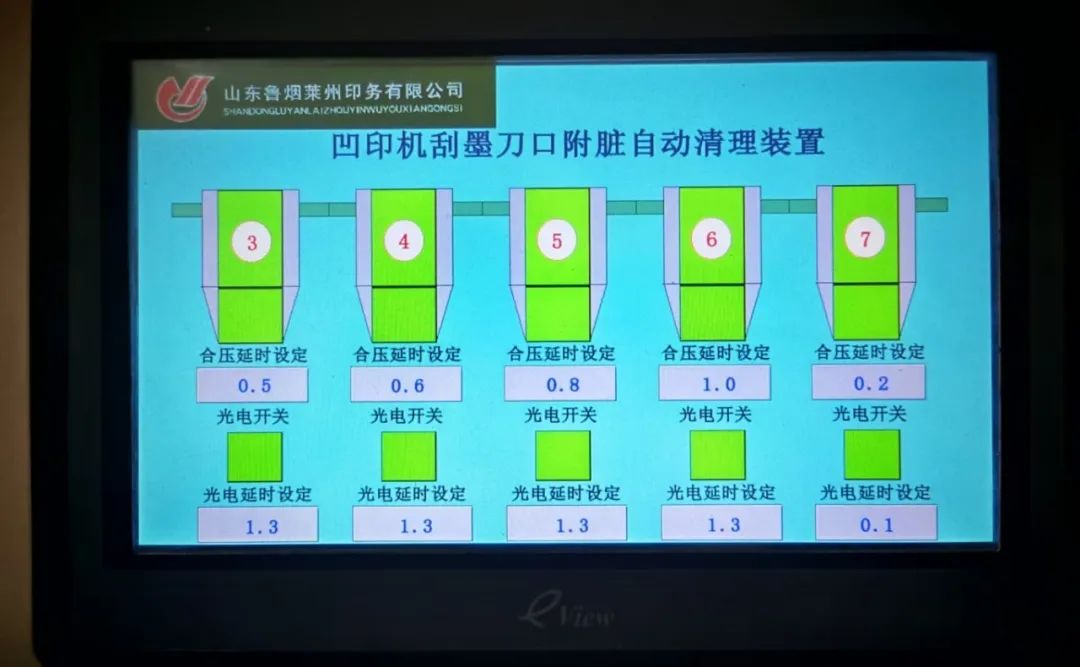 Figure 4 Automatic Doctor Blade Tip Cleaning Device and Control System
06/ Process Integration
Integrate a connected embossing device within the printing press so that printing and embossing processes are completed simultaneously, shortening the production cycle by 25% and reducing product waste.
07/ Plate Changing Efficiency
By combining a rail-type hoisting frame with an electric lifting mechanism, an intaglio plate changing device was developed, as shown in Figure 5. It changes the traditional manual plate lifting (which required 2–3 people) into a single-person operation. The plate cylinder can be installed and adjusted outside the equipment in advance, doubling plate changing efficiency while cutting the manual workload in half, significantly reducing labor costs and improving efficiency.
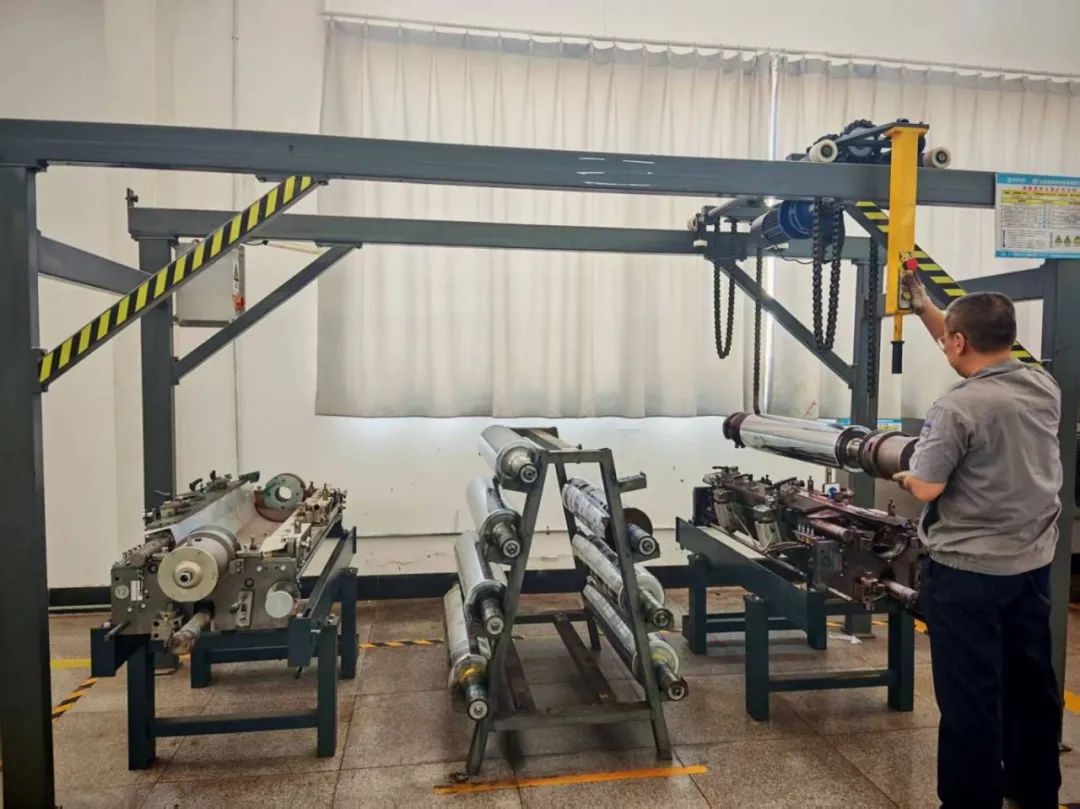 Figure 5 Gravure Plate Changing Device
08/ Safety Protection
To address fire risks caused by static accumulation in the gravure workshop, a three-level prevention and control system was established.
(1) Environmental Control: The workshop humidifiers maintain humidity at 53%±3%; to ensure stable operation, the humidifiers now recycle condensate generated from the gravure press steam heating instead of using tap water, solving the nozzle clogging issue from tap water and saving nearly a thousand tons of water annually. By adjusting the central air conditioning intake in the production area, the production space is kept under mild negative pressure ventilation.
(2) Equipment Setup: The inlets and outlets of the press ovens are maintained under mild negative pressure to reduce combustible gas concentration around the ink trays. Exhaust gases from the ovens are transported through pipelines to RTO devices for combustion treatment.
(3) Intelligent Control: A logic system for the static roller was designed as "constant speed power-on + delayed pressure release." When the equipment is stopped normally or an emergency stop occurs, the high-voltage static system cuts off first, and the static roller releases pressure after a 3-second delay, completely avoiding arcing of tens of thousands of volts at the moment of pressure release, eliminating static fire risks. Since implementation, there have been no safety incidents caused by static electricity.
Renovation Results
The eight major renovation measures work synergistically, driving a qualitative leap in equipment performance.
01/ Quality
The product defect rate dropped from 3% to 1.5%; rates of uneven ink, dry plates, cutting lines, and tailing defects decreased by 60%; first-pass inspection success rate for cigarette packaging printing increased to over 98%.
02/ Efficiency
Capacity increased by 26%, auxiliary time for plate changing and machine adjustments decreased by 50%, equipment run continuity improved noticeably, and overall equipment efficiency (OEE) rose from 60% to 78%.
03/ Safety
High-risk operation positions reduced by 3, and static fire risk dropped to zero.
04/ Intellectual Property
A total of 5 invention patents and 6 utility model patents have been filed, forming an innovative closed loop of "equipment renovation-patent deployment-technology output."
These achievements have been highly recognized by Shaanxi Beiren, the equipment manufacturer. The related technologies have been promoted in enterprises under Shandong Tobacco, becoming a benchmark for intelligent upgrades of domestic gravure equipment.
Future Outlook
Facing the dual carbon goals and the trend toward green packaging, the company will continue to innovate in three main directions using cigarette gravure presses as a platform.
(1) Integration of Green Printing Processes: Explore compatibility of eco-friendly materials such as water-based inks with existing equipment, promoting a green, low-carbon transformation of cigarette printing.
(2) Digital Upgrades: Build real-time monitoring systems for equipment status and product quality to enable predictive maintenance and traceable quality control.
(3) Collaborative Innovation: Collaborate with equipment manufacturers and material suppliers on integrated solutions of "equipment-process-materials" to support high-quality development in the gravure industry.
More than a decade of equipment renovation practice has proven the strong potential for technical iteration in domestic gravure equipment. We are willing to work with industry peers to solve common challenges through continuous innovation, contributing to the upgrade of domestic printing equipment from "usable" to "better and smarter." ...