


Are there frequent issues with indentation lines on wine boxes? Why not try this trick!
In daily production, I have found that after gluing the color surface of a wine box, the indentation lines on the color surface exhibit the following issues: if the protrusion of the crease line is too deep, after applying glue with a gluing machine, the indentation may not be fully filled, resulting in empty glue after the wine box is formed; If the protrusion of the crease line is too shallow, pre-folding is required during forming. Generally, crease lines are often too deeply raised, resulting in incomplete glue and hollow glue after color finishing. Double crease lines are more likely to occur because the crease lines are spaced closer. In this article, I will address such issues by improving the molding effect, reducing the time needed for die-cutting adjustment and enhancing indentation line stability.
Before the improvement, our company generally used 23.8mm blade threads matched with 22.9mm pointed crease lines. Depending on the color finish thickness, the base mold was selected with 0.3~1.0mm crease strips, and the back of the blade plate used base mold with base adhesive to compensate for pressure. This approach has the following issues:
(1) The indentation strip must be matched and bonded according to the blade indentation lines, transferring the indentation from the blade plate to the base mold. If the position is double-indented, installation is difficult due to the width of the indentation strip itself. The indentation strip must be installed in two installments via the die indentation line. For dies with many indentation lines, transferring the indentation strip via the plate indentation requires a significant amount of time to install. Since the indentation strip is installed by bonding the strip to the indentation line of the blade plate and then transferring it to the base mold, this method may result in the edge of the indentation strip not being fully bonded. After die-cutting, the edges of the decorative crease lines will appear stepped, affecting the aesthetics and gluing of the finish.
(2) Use crease strips to match different thicknesses of color surfaces; the thickness of the crease strip used must be adjusted at any time. If the die-cutter lacks experience and does not properly control the thickness of the indentation strip or the pressure of local backing paper, indentations may be too deep or too shallow after die-cutting. At the same time, due to the compatibility between the crease strip and the color finish itself, the time required for base repair tape to apply the base tape is also relatively long.
(3) Edges or debris falling into the grooves of the indentation strip can easily cause indentation holes or cause batch scrap; The indentation strips are made of plastic and have a relatively short service life.
(4) When forming the wine box color finish, if the adhesive is applied too deeply, the indentation line will not be fully applied, resulting in empty glue on the wine box; If the crease line is too shallow, when manually forming the box body, all crease lines must be pre-folded, requiring extra labor, and the pre-fold may not fully crease at the crease, causing the paper color to be wasted.
(5) For color surfaces with many plates and indentations, the required machine setup time is relatively long; some die dies may need 4~6 hours for machine adjustment.
Choose different types of crease lines based on paper thickness
Through my analysis, I found that the common materials and thicknesses for wine box color finishes are mainly 150~250g/m2 specialty paper with a thickness of 0.17~0.28mm; 215~275g/m2 silver card paper with a thickness of 0.26~0.34mm; For colored surfaces with thick coatings like brushed film or starry film thickness, the overall thickness of the color surface can even exceed 0.5mm.
Generally speaking, the thickness of the paper and the height of the crease line need to be matched. The thicker the paper, the shorter the indentation line height; conversely, the thinner the paper, the higher the indentation line height. The original pointed indentation had a height difference of 0.9mm between the indentation and the blade line, relying entirely on indentation strips and backing paper to coordinate die-cutting indentations. The indentation strips are made of plastic, have a short service life, and the height difference between the tip indentation and the blade line is too large. The die-cutting method results in poor indentation stability.
The author selected a 23.4~23.6mm pointed indentation to match the 23.8mm cutting line, reducing the height difference between the tip indentation and the blade line, keeping the height difference at 0.2~0.4mm. The thickness of die-cut color surfaces is generally 0.2~0.3mm, which greatly shortens the height difference between the indentation line and the blade line and further improves the stability of die-cut indentations. Due to the installation method and height of the indentation strip, there is an urgent need for a base die material that can replace the indentation strip.
Adjust the base mold
When using indentation strips in the base mold, there is a problem where the double indentation positions are difficult to install, making installation time-consuming and labor-intensive. The height of the crease strip is generally 0.3~1.0mm, the middle groove width is generally 1.2~3.0mm, and the indentation strip itself is generally 5.5mm wide. Handling double indentations is particularly troublesome. One side of the double indentation must be pressed out first, then the crease strip must be reinstalled, and then another crease strip must be installed urgently before the other indentation strip is pressed out using a die-cutting machine. After adjusting the height of the indentation strip, finding a stable base die material becomes the biggest limitation for die-cutting; materials that are too soft or too hard are clearly not suitable. The author chose to use 23.4~23.6mm indentation lines, with a height difference of 0.2~0.4mm compared to 23.8mm blade lines. After removing the thickness of the color finish, the material thickness to replace the base die needs to be chosen between 0.1~0.3mm. The change in base die material thickness is relatively small, further improving die-cutting stability.
Therefore, I selected a Teflon patch with a thickness of 0.18~0.30mm. As shown in Figure 1, first attach the Teflon patch in one piece to the bottom mold, then use a die to cut the bottom mold in a void. After pressing out the shape of the blade and crease lines on the base mold, use the blade to remove any areas other than die-cutting. Using this die-cutting method, crease strips are pressed out by hard pressing. The comparison of finished products with different indentation effects is shown in Figure 2.
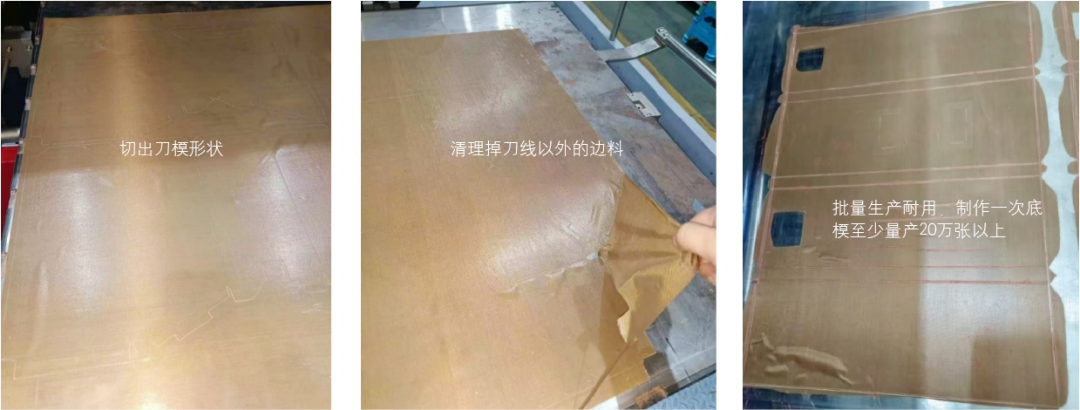
Figure 1: Method of Installing Teflon Patch on the Bottom Mold
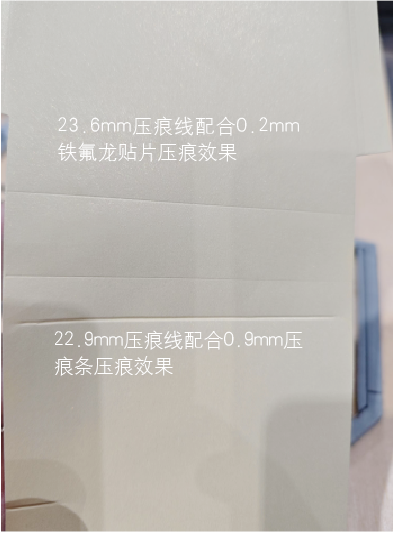
Figure 2 Comparison of Finished Products with Different Creasing Effects
After improving the hard creasing mode die-cutting, the back crease lines are smoother, the overall excessive protrusion of the crease lines is improved, and the edge steps almost disappear. This makes it easier to apply glue in later processes, and the front folds can be folded correctly. After shaping the printed side, the issue of empty glue is significantly improved. At the same time, the installation time for the base die is greatly saved - what used to take an estimated 4–6 hours to install crease strips can now be done in 1 hour. Once the base die pressure is even, the pressure paper can be adjusted with backing paper, requiring only minor local adjustments, which also saves time for manually adding backing paper. Additionally, Teflon patches are installed as a whole, which provides more even pressure compared to crease strips and extends the die-cutting lifespan.
This article optimizes the die-cutting crease lines and base die through related improvements. Crease lines with sharp tips of 23.4–23.6mm were chosen to replace the 22.9mm ones, and Teflon patches with a thickness of 0.18–0.30mm were used instead of 0.30–1.00mm thick crease strips. This solved the glue issue at the crease, reduced the time needed for die plate adjustments, and improved die-cutting stability.