


2030 Netherlands Packaging 'Shift': Metal Cans 12.2%, Cardboard -0.6%, How Should Brands Position Themselves?
In 2025, the total Dutch packaging market will reach 29.9 billion units and is expected to grow moderately to 30.8 billion units by 2030, with a compound annual growth rate of 0.6%. Under the push of the EU's strict circular economy regulations, rigid plastics will remain the largest packaging material, but the decline of cardboard, the rise of glass in non-alcoholic beverages, and the explosive innovation of recyclable materials are reshaping the packaging landscape in the Low Countries.
1. Market Overview: A Steady but Changing Dutch Packaging Landscape
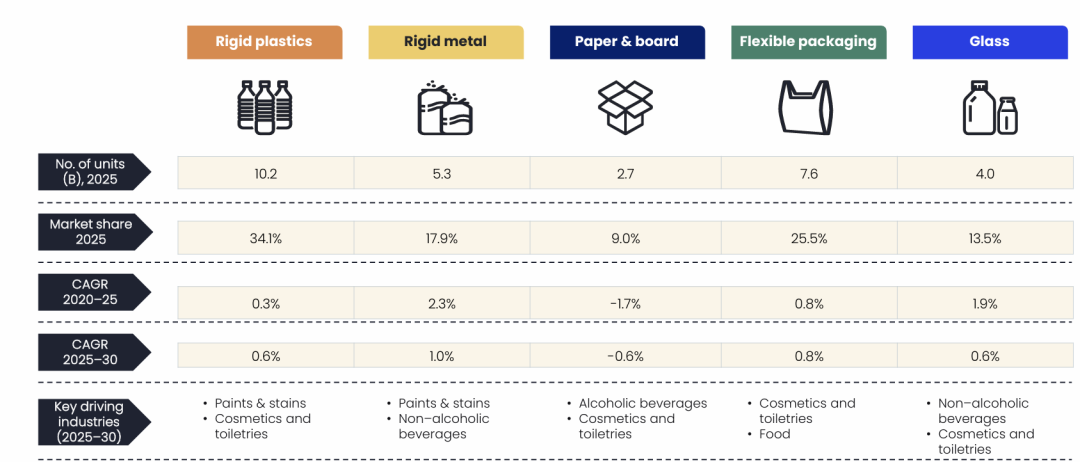
In 2025, the five major packaging materials in the Netherlands each have their share: rigid plastics lead with 34.1%, followed by flexible packaging at 25.5%, rigid metals at 17.5%, glass at 13.5%, and cardboard at 9%. In terms of growth rate, rigid metals will become the fastest-growing material from 2025 to 2030 with a 1% compound annual growth rate, while cardboard faces a negative growth pressure of -0.6%.
Market Share and Growth Rate of Packaging Materials: Rigid plastics have the largest share, but rigid metals grow the fastest.
II. Terminal Industry Landscape: Food and Non-Alcoholic Beverages Are the Absolute Mainstays
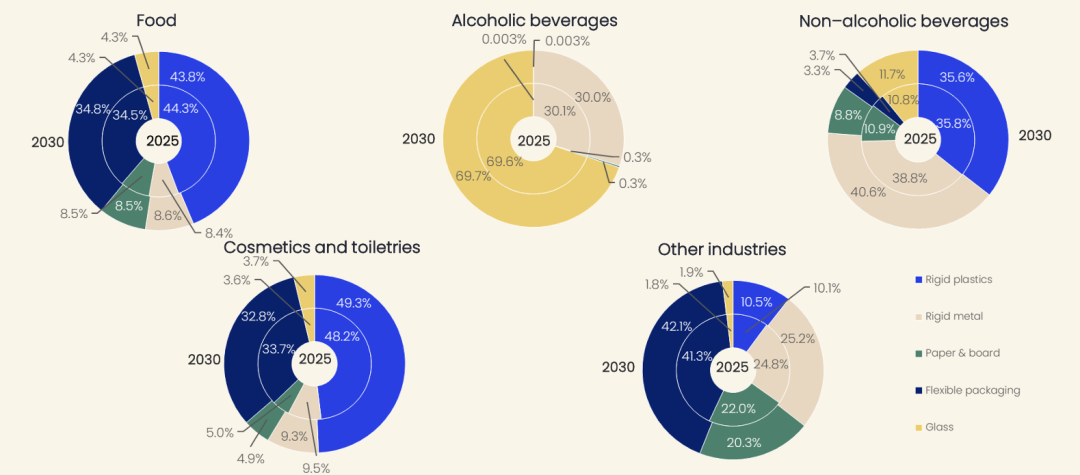
The food industry is the largest 'customer' of Dutch packaging, consuming 17.6 billion packaging units in 2025 (accounting for 58.8%), with non-alcoholic beverages coming in second at 5.1 billion units (16.9%). Interestingly, different industries have very different material preferences: food favors rigid plastics (44.3%), non-alcoholic beverages prefer rigid metal cans (38.8%), while alcoholic beverages are dominated by glass (69.6%).
📊 Packaging material usage share by industry: food uses plastic, beverages use metal cans, beer and wine use glass.
III. Breakdown of the Five Major Materials One by One
Rigid Plastic: Consumption is expected to reach 10.2 billion units in 2025, with dairy and soy products contributing 60.2% of the share. However, the Netherlands will mandate from 2025 that single-use plastic beverage bottles contain at least 25% recycled plastic, increasing to 30% by 2030, which is a double-edged sword for the market.
Rigid Metal: Behind the volume of 5.3 billion units is consumers' preference for "portable, lightweight, recyclable" cans. Notably, the use of metal cans in flavored alcoholic beverages is expected to soar at a compound annual growth rate of 12.2%-closely aligned with the global RTD (ready-to-drink cocktails) trend.
Cardboard: The only material with negative growth, primarily due to a decline in tobacco product consumption. Within the food industry, demand for cardboard for pasta and instant noodles is growing at 5.7% per year, reflecting a clear trend toward eco-friendly alternatives.
Flexible Packaging: In the total of 7.6 billion units, baked cereal products account for 44%. The cosmetics and personal care category will become the fastest-growing segment for flexible packaging with a compound annual growth rate of 1.1%.
Glass: Beer and cider account for 79.8% of glass use in the alcoholic beverage segment, while soft drinks are expected to be the fastest-growing sub-segment for glass at a 2.5% annual growth rate-as premiumization and health trends rise, glass-bottled soda and kombucha are returning to mainstream shelves.
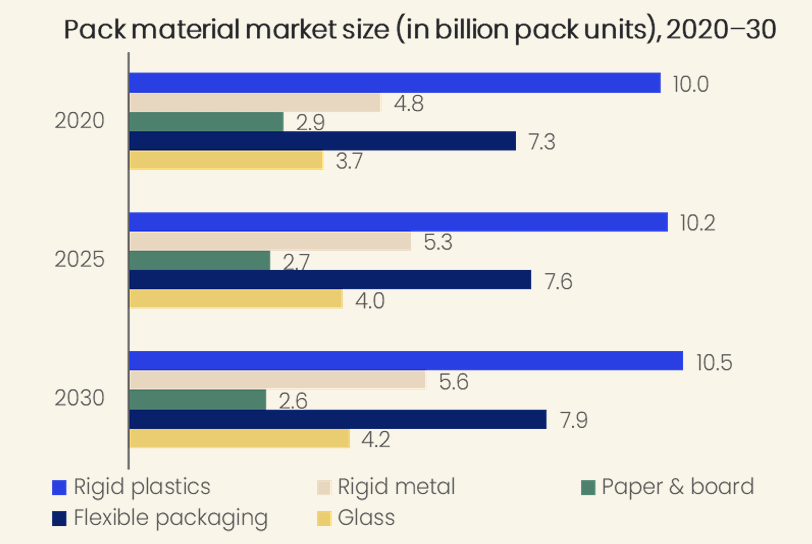
📊 Evolution of Consumption of the Five Major Packaging Materials from 2020 to 2030: Rigid plastic remains in first place, while cardboard is slowly declining.
4. What do consumers want? Four keywords
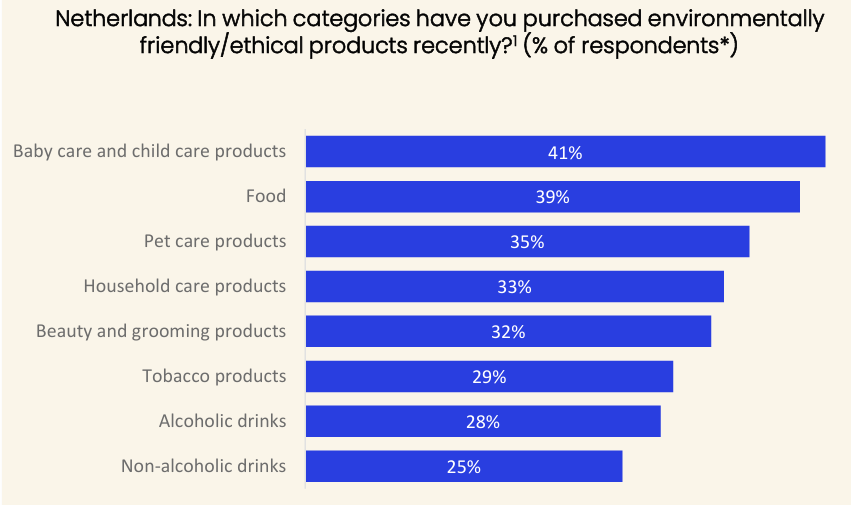
GlobalData's Q1 2026 survey shows that Dutch consumers have four major demands for packaging: convenience (80% consider it important), sustainability (71%), recyclability (70%), and digital connectivity (47%). Baby care and food have become the two product categories that consumers purchase as "eco-friendly products" most frequently, accounting for 41% and 39%, respectively.
📊 Ranking of eco-friendly product purchase categories among Dutch consumers: baby products and food are the main battlegrounds for eco-friendly consumption.
5. Regulatory-Driven Transformation: EPR and Deposit Return Systems
The Netherlands' Packaging Waste Decree sets recycling targets for 2030 of 55% for plastics, 86% for glass, and 85% for cardboard. The Deposit Return System (DRS) covers all plastic bottles and metal cans under 3 liters, with a maximum deposit of €0.25 per bottle and a target recycling rate of 90%. These strict requirements force brands to redesign their packaging.
6. Innovation Cases: Two Paths for Local Brands
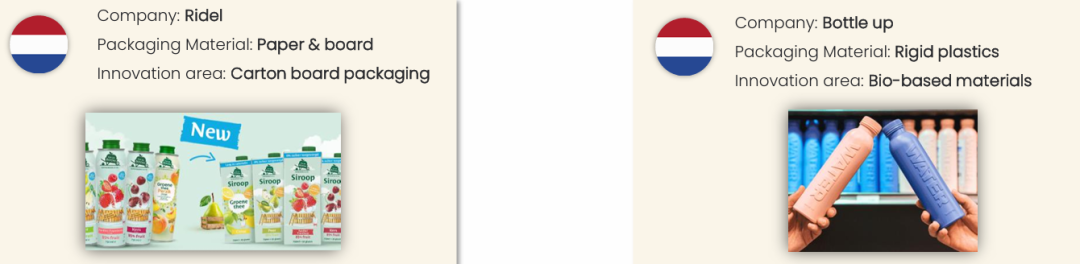
Ridel switched Van de Boom syrup from metal cans to SIG Terra forest-based polymer cartons, with 95% of the material sourced from renewable forest resources. Another Dutch domestic brand, Bottle Up, launched 100% sugarcane-based bioplastic bottles, completely eliminating fossil-based materials. These two cases represent the two typical strategies of 'plastic reduction' and 'material substitution.'
The Dutch packaging market appears stable on the surface, but at its core, it is accelerating its restructuring under the triple forces of EU regulations, consumer environmental awareness, and brand innovation. For fast-moving consumer goods (FMCG) brands, whoever can first find a balance within the circular economy framework will gain an early advantage in the Dutch market by 2030.
💡 Three Key Insights
Insight 1: The Revival Dividend of Metal Cans
Metal cans for flavored alcoholic drinks are growing at a compound annual growth rate (CAGR) of 12.2%, the highest among all segments. The RTD (Ready-to-Drink) category is a golden track for brands to connect with young consumer groups.
Insight 2: Cardboard's 'Food Breakthrough'
In the overall declining cardboard market, cardboard for pasta and instant noodles grows 5.7% annually, indicating that 'plastic-to-paper' substitutions have real demand potential in dry goods categories. Fast-food brands should plan ahead.
Insight 3: Glass's Counterattack in Soft Drinks
Glass for non-alcoholic beverages grows 2.5% annually, far above the category average. In categories such as premium bottled water, functional drinks, and kombucha, glass is redefining the visual language of 'clean labels.'