


Vietnam has issued a new paper manufacturing strategy, raising the new construction threshold to 250,000 tons, making Chinese paper mills eager to go global
On November 2, 2026, Vietnam's Executive Deputy Prime Minister Pham Gia Thục officially signed Decision No. 2082/QD-TTg, officially approving the implementation of the "Paper Industry Development Strategy (to 2030, with a vision to 2045)."
This strategy sets the overall goal for Vietnam's paper industry to transform from "small, scattered, and extensive expansion" to "full-chain modernization, high environmental intensification, and independent circulation," aiming to improve output,
In terms of quality and product structure, it fully matches the surging domestic industrial manufacturing and domestic demand, while strengthening the export competitiveness of products with international comparative advantages.
Through policy guidance and the establishment of scale thresholds, this strategy systematically outlines a complete policy framework for Vietnam's paper industry over the next 5-20 years regarding capacity thresholds, forest and pulp base construction, waste paper circular economy, outdated machinery elimination mechanisms, and industrial cluster layout over the next 5-20 years.
The 2030 quantitative leapfrog target: pulp output will increase by an average of 10% annually, and the threshold for new paper mills will be set at 250,000 tons
In response to the increasingly severe domestic supply-demand mismatch and pulp import bottlenecks, this strategy sets rigid quantitative indicators for the growth slope and the scale of real project investments before 2030:
From the perspective of macro output and foreign trade targets, Vietnam's entire paper industry aims to achieve a compound annual growth rate of over 10% in total paper and pulp output by 2030, aiming to fundamentally reverse supply-demand imbalances and significantly reduce dependence on imported wood pulp and base paper by significantly expanding domestic capacity; At the same time, leveraging export-oriented manufacturing advantages, the goal is to achieve a compound annual growth rate of at least 4% in paper product exports by 2030.
Regarding the entry standards for production base and incremental factories, the strategy clearly rejects inefficient overlapping construction and comprehensively strengthens scale economy indicators: encouraging domestic and foreign capital to invest in building 5 to 10 new modern paper mills with an annual capacity exceeding 250,000 tons; Focusing on investing in 2 to 5 large-scale pulp mills with an annual capacity of 200,000 tons or more, addressing Vietnam's long-standing micro supply chain shortcomings of "paper but no pulp"; Special support is given to invest in 2 to 5 high-end paper or high value-added specialty paper production enterprises with advanced coating and precision forming processes and requiring large-scale capital investment.
Supply-side elimination and capacity red lines: Gradually phase out small machines starting from 2030, exempting special high-grade paper from the quota
Alongside the large-scale support for large-scale modernization projects, the Vietnamese government has for the first time explicitly set a medium- and long-term phase-out and production reduction schedule for low-end, high-energy-consuming, and small-scale machines, using institutional measures to force supply-side mergers and restructuring in the industry.
Starting from 2030, the strategy will comprehensively encourage small and retail paper mills to undergo equity restructuring and mergers, and to relocate uniformly into planned industrial clusters. For the most severe process homogenization of major paper products, the strategy sets strict single-line entry thresholds:
Small-scale rectification starting from 2030: For pulp, bulk packaging paper, and ordinary printing and writing paper, if the capacity of a single production line is less than 5,000 tons per year, it will be classified as a key consolidation, renovation, or elimination;
Starting in 2040, the threshold will be raised by leapfrogs: starting in 2040, the red line for eliminating outdated production capacity will be fully raised, with single-line capacity for pulp, bulk packaging paper, and ordinary printing and writing paper strictly limited to below 20,000 tons per year; Single-line capacity for ordinary household paper will be capped below 5,000 tons per year, completely ending the survival ground where small paper machines rely on environmental protection and illegal discharge to survive;
Exemption constraints for high-tech value-added paper types: To encourage technological breakthroughs, the strategy specially stipulates that high-grade coated paper (such as premium white cards and coated coated plates) and various industrial and consumer specialty paper products will be completely exempt from the above capacity floor limits, thereby guiding capital and engineering technology to concentrate in the high-end materials sector.
This gradual phase-out roadmap will prompt Vietnam's paper industry to undergo a round of intensive consolidation and reshuffling over the next 10 to 15 years, with workshop-style small paper mills lacking environmentally friendly power plants and centralized pollution control facilities being rapidly phased out.
Breaking the Raw Material Shortfall: Three Major Forest Pulp Core Zones in Northern and Central Regions, Sprinting Toward 60% Waste Paper Recycling Rate
Insufficient self-sufficiency in raw materials and fibers has long been a fatal weakness restricting the security of Vietnam's paper industry chain. The strategy has launched a dual combination of "fast-growing plantations + EPR waste paper recycling" on the raw material supply side:
On the supply side of virgin wood fiber, the strategic plan focuses on three key areas: the north, central, and Xiyuan (Central Highlands), focusing investment on building at least three large core paper raw material forest areas. By leveraging local natural resource endowments, special regional plans are rapidly introduced to cultivate large-scale artificial fast-growing high-yield forests dedicated to papermaking, locking in low-cost timber supply from the source and providing sustainable fiber raw material supply for large pulp islands over 200,000 tons.
On the secondary fiber recycling side, facing uncertainties in imported waste paper policies and fluctuations in international shipping costs, Vietnam has officially established a waste paper recycling defense line focused on internal circulation:
Rigid recycling rate target: The strategy requires that by 2030, the domestic waste paper recycling rate across Vietnam society must reach over 60%, fundamentally alleviating the shortage of waste paper raw materials faced by packaging and paper mills;
Fully implement the extended producer responsibility system: legally mandate organizations and individuals producing and importing various products and packaging domestically to earnestly assume legal recycling and resource utilization obligations, using economic and legal means to force enterprises to jointly fund and build standardized recycling and sorting networks;
Improve national standards for recycling and import compliance policies: accelerate the formulation of national technical standards and safety regulations for waste paper recycling, sorting, and deinking reuse; and fully draw on regulatory trends from developed countries in Europe and America, dynamically revising and standardizing the import inspection and supervision systems for various paper raw materials.
Spatial agglomeration and green closed loop: Three major industrial clusters in the north, south, and central China concentrate on pollution control and optimize investment costs
To eliminate the damage caused by scattered and disorderly arrangements to natural water bodies and the environment, and to reduce infrastructure and compliance costs for small and medium-sized manufacturing enterprises, the strategy proposes a "cluster area intensive development" model in industrial spatial planning:
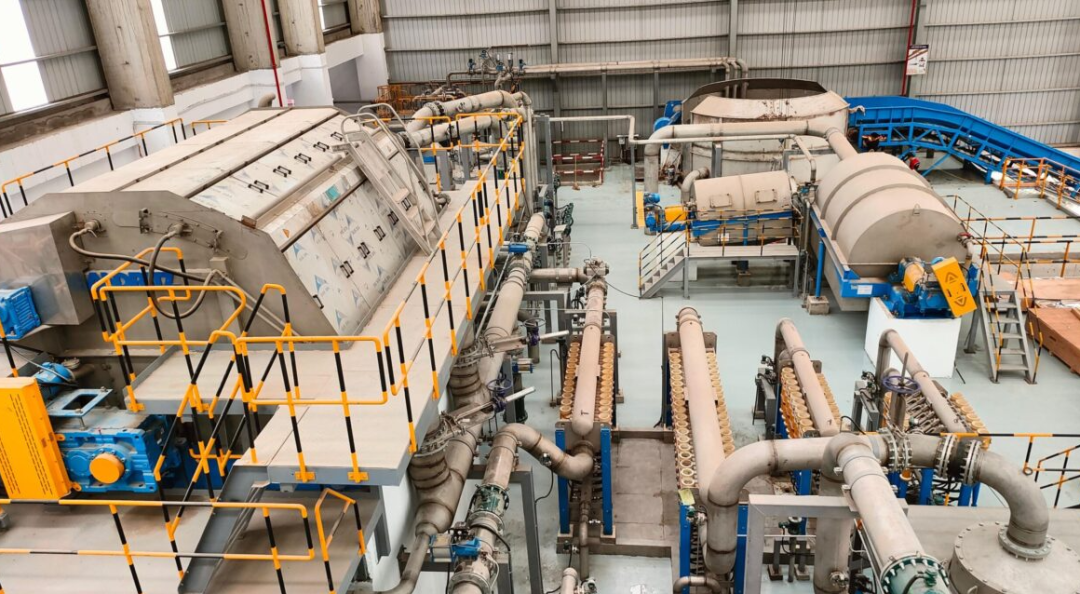
The government encourages and plans, across the northern, central, and southern economic regions, to build at least three modern specialized paper industry clusters.
The establishment of these clusters aims to address the high infrastructure barriers that small and medium-sized paper companies face when operating independently:
Shared heavy industry infrastructure: The clusters will centrally equip large-capacity high-voltage substations, efficient combined heat and power steam networks, industrial water supply systems, and deep-water logistics terminals, significantly reducing the upfront fixed asset burden for individual companies.
Achieving large-scale centralized environmental management: The clusters will integrate biochemical treatment of paper wastewater, water reuse, black liquor concentration and combustion, comprehensive utilization of paper sludge, and solid waste incineration into a unified environmental management hub. This not only leverages economies of scale to drastically lower energy consumption and chemical costs per ton of wastewater, but also eliminates the risk of illegal or accidental industrial wastewater discharge.
Five strategic pillars for implementation: Focus on Industry 4.0, green transformation, and global supply chain integration.
To ensure the 2030 and 2045 long-term targets are met, Vietnam's paper strategy has outlined five systematic support action plans:
In terms of policy improvement and foreign investment attraction, all levels of government will introduce targeted incentives, focusing on attracting top international capital and equipment technology to upstream pulp production, biomass new materials, and environmentally friendly green projects, accelerating the integration of local Vietnamese core companies into the global first-tier supply chains of multinational consumer goods and electronic packaging giants.
In market expansion and brand upgrading, special trade fairs will be used to strengthen direct connections with potential multinational customers, promote full-scale integration of the paper industry with cross-border e-commerce platforms and digital supply chains; domestically, the "Vietnamese people first use Vietnamese goods" initiative will be promoted to position local paper at a high-quality standard.
For advanced human resources and Industry 4.0 empowerment, the strategy emphasizes alignment with international responsible business practices and full value chain due diligence standards, establishing a labor and environmental protection system compliant with multinational procurement audits; at the same time, industry associations, top domestic and international research institutes, and companies will jointly cultivate talent, focusing on core skills such as automated equipment control, digital workshop scheduling, and original design of paper-structured packaging under the Industry 4.0 scenario.