


Seaweed Coating AmFiber! See how global packaging giants are promoting 'responsible paper over plastic' from Amcor's perspective
In a report called the latest '20230 Corporate Plastic Agenda' released by the Ellen MacArthur Foundation, a nonprofit dedicated to accelerating the global transition to a circular economy, soft plastic packaging is listed as the most systemic obstacle to solving the global plastic pollution issue.
According to the foundation's staggering data, around 25,000 pieces of soft plastic packaging leak into the ocean every second worldwide; without systematic intervention, this number could skyrocket to 20 trillion by 2040. Given the extremely low recycling rates and high leakage risks, replacing traditional plastics with paper-based flexible packaging is becoming a key focus area for over 1,200 companies and institutions worldwide.
The systemic dilemma of soft plastic packaging: low recycling rates, high leakage rates, approaching policy regulation
Within the circular economy framework, traditional soft plastic packaging has always been a 'tough nut to crack.'
Rob Opsomer, Head of the Ellen MacArthur Foundation's Plastics Program, points out that addressing soft plastic packaging is a complex systemic task - its alternative solutions come with higher R&D and production costs, heavily rely on changes in public behavior, and require deep coordination across industries and borders.
Opsomer warns: 'Governments worldwide, regardless of political stance, are introducing increasingly strict regulations. Companies actively engaging in circular innovation will gain a favorable position, helping to shape rules and ensure continuous market access. Conversely, those who hesitate face a huge risk of being directly disrupted by the market.'
The foundation's CEO, Joe Murphy, also called on LinkedIn for policymakers to take bold and strong intervention measures to create a fair competitive environment, support the scaling up of circular business models, and generate new economic and employment benefits while tackling climate change.
'Paper for plastic' can't be done blindly: six mandatory standards for responsible paper-based flexible packaging
Although shifting soft packaging from plastic to paper is an inevitable trend, the Ellen MacArthur Foundation specifically emphasizes that without a scientifically responsible approach, 'paper for plastic' could trigger new ecological crises - such as deforestation for paper, excessive water consumption, and secondary chemical pollution from non-degradable coatings and inks.
To avoid 'solving one problem while creating another,' the foundation clearly defines six core standards that responsible paper-based flexible packaging must meet:
- Raw material sourcing: must come from sustainably managed forests or recycled fibers, avoiding deforestation risks;
- Production process: low carbon emissions, low water use, strict control of industrial wastewater;
- Packaging performance: good physical strength and barrier capabilities to reduce food waste;
- Local recyclability: able to seamlessly fit into existing local paper recycling streams without clogging paper mill equipment;
- Chemical safety: complete removal of harmful chemicals like PFAS, ensuring ink and coating safety;
- Biodegradability: harmless degradation in natural environments or composting conditions.
The foundation aims to work with global supply chains to promote the large-scale commercialization of paper packaging technologies that meet these standards.
Practical implementation by giants: Amcor partners with startup Kelpi to explore 'seaweed bio-coating + AmFiber'
To fulfill its commitment to eliminating plastic waste, global packaging giant Amcor has been the first to respond to the foundation's initiative, fully pushing innovations in barrier coatings for paper-based flexible packaging.
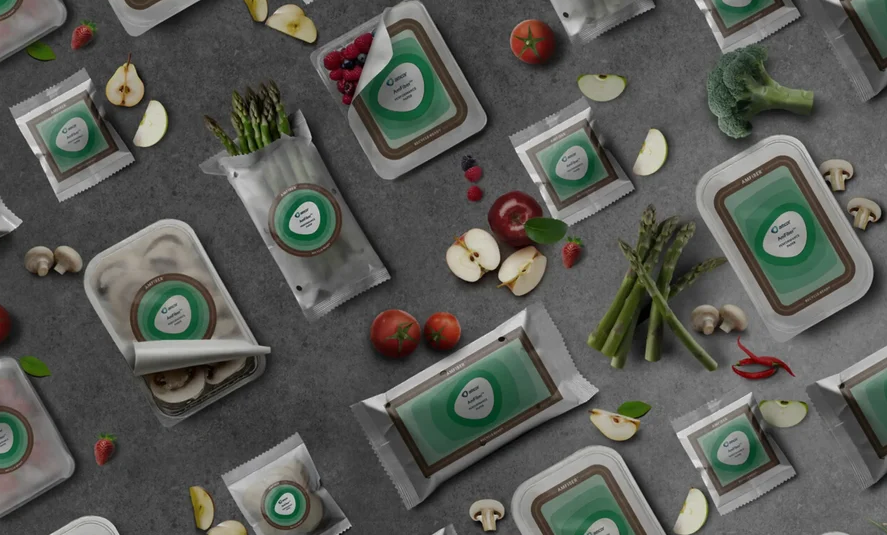
Currently, Amcor has formed a deep strategic partnership with the UK-based frontier startup Kelpi:
Technical breakthroughs: The two sides are testing and developing Kelpi's new coating technology. This technology uses bio-based seaweed materials as a substrate, aiming to provide paper with excellent oil resistance, waterproofing, and gas barrier performance;
Recycling compatibility: The seaweed coating is not only naturally non-toxic and biodegradable but also fully compatible with existing paper recycling processes, solving the deadlock of traditional plastic/aluminum foil composite coatings that cannot be recycled;
Commercial rollout: Amcor plans to fully evaluate this seaweed coating and integrate it into its AmFiber fiber-based packaging solutions to meet the strict requirements of high-speed operation, high barrier performance, and full recyclability.
David Clarke, Amcor's Chief Sustainability Officer, said, "Amcor's AmFiber high-performance paper-based packaging is gaining strong recognition in the market. We recently launched the 'Takeoff Challenge,' focusing on advancing paper-based packaging technology innovation and offering selected startups co-development opportunities and potential investments of up to $500,000."
From the ecological crisis of 25,000 plastic items entering the ocean every second, to the Ellen MacArthur Foundation's top-level design for responsible paper packaging standards, to Amcor leveraging seaweed coatings to enhance AmFiber's technology- the gears of the global packaging industry are turning faster.
Driven by both regulatory pressure and consumption upgrades, the era of single-use, non-recyclable flexible plastics is coming to an end; responsible paper-based flexible packaging, with high barrier performance, chemical safety, and full recyclability, is set to become the main battleground for global packaging giants over the next decade.