


Make 'invisible' ultraviolet light appear instantly? What kind of revealing mystery does a single label actually hide!
In daily life and industrial scenarios, ultraviolet (UV) rays act like an 'invisible intervener,' quietly affecting skin health, food quality, medical safety, and cultural heritage protection. Mysterious skin redness after a summer beach trip, uncertain sterilization effects after hospital UV disinfection, the subtle 'sunlight taste' developing during dairy transportation, and the aging and brittleness of outdoor gear after prolonged sun exposure-all these issues trace back to UV radiation that is invisible to the naked eye.
Nowadays, a small, portable UV radiation indicator tag is gradually entering public awareness. It requires no power to operate and can convert the 'invisible' UV dose into a 'visible' visual signal through simple color changes, providing convenient and efficient UV monitoring solutions across multiple fields. At the heart of this innovation lies the breakthrough in UV indicator ink technology.
PART 01
The Evolution of UV Indicator Technology
Early UV monitoring mainly relied on traditional photochromic materials. Represented by spiroprins, these substances would rapidly change from colorless to purple under UV light, but the color would fade shortly after leaving the UV environment. This 'instant response but non-persistent' characteristic can only reflect UV intensity at a specific moment, yet it cannot record cumulative radiation, making it insufficient for real-world applications that require 'total exposure monitoring,' such as determining whether daily sun exposure exceeds safety limits or whether food has been subjected to excess UV during transportation.
With technological advancements, the 'chemical reaction-type' indicator system has become the industry standard. Its key breakthrough is the visualization of cumulative UV dosage through irreversible reactions. The 'epoxy resin + ferrocene' combination is currently the mature and efficient core formula. The color-changing principle is clear and precise: under UV light, the epoxy groups in the epoxy resin molecules absorb light energy and undergo ring-opening reactions, transitioning from a stable structure to an active state; simultaneously, the cyclopentadienyl structures in ferrocene molecules absorb UV energy, enhancing reaction activity. The two react further in an electrophilic substitution reaction, producing brown-black alkylated ferrocene. Since ferrocene is originally bright orange, as the UV cumulative dose increases, the reaction degree deepens, and the tag color gradually transitions from orange to light brown, ultimately becoming dark brown, with the depth of color visually representing cumulative UV exposure.
PART 02
UV Radiation Indicator Tag Design
To help users judge UV doses more intuitively and accurately, the tag in Figure 1 adopts a 'color-changing area + reference area' design. The reference area is pre-printed with colors corresponding to different radiation levels in the color-changing area, typically including orange (initial color, indicating no or very low UV exposure), light brown (intermediate color, indicating moderate exposure, requiring caution), and dark brown (final color, indicating excessive exposure, requiring immediate protective measures). When using the tag, users simply compare the color in the color-changing area with the reference area to quickly determine whether the cumulative UV radiation is within a safe range, without the need for professional equipment.
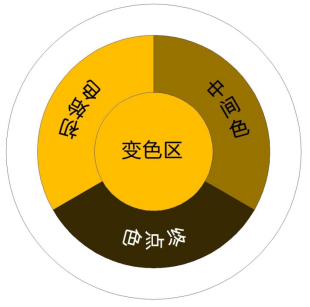 Fig.1 Schematic diagram of radiation indicator labels
PART 03
Application Cases of UV Radiation Indicator Labels
Cosmetics industry: sunscreen effect "visible"
In the realm of cosmetics, UV radiation indicator labels have become an essential tool for sunscreen brands to enhance user experience. Brands usually stick labels on the back of sunscreen bottles or trial packs, and at shopping mall counters, consumers can put the trial device under the spotlight that simulates ultraviolet rays, and in just a few tens of seconds, the color of the label will be significantly deepened, intuitively verifying the presence of ultraviolet rays, and making the "invisible sunscreen demand" perceptible.
After purchase, consumers can stick the label on their arms, collars or mobile phone cases, and in daily activities, when the color of the label is close to the light brown of the reference area, it indicates that the effect of sunscreen is weakened and needs to be reapplied in time; When the color is close to dark brown, it warns that the sunscreen is ineffective, and stronger sun protection measures are required, such as avoiding the sun or replacing high-multiplier sunscreen.
Relevant trial data shows that the skin sunburn rate of users with label reminders has decreased significantly compared with the group without reminders, and the brand's user satisfaction and repurchase rate have also increased.
Medical field: "visualization" of disinfection standards
In hospitals and other medical places, ultraviolet disinfection is an important means to prevent nosocomial infections, but traditional disinfection methods often face the problem of "light on≠ disinfection is enough" - it is difficult for medical staff to judge whether ultraviolet light covers all key areas and whether the radiation dose meets sterilization standards.
The emergence of UV radiation indicator labels provides an efficient solution to this problem. During the disinfection process, when the ultraviolet radiation dose meets the sterilization requirements, the label color will change from the initial white to red. Medical staff do not need to rely on instruments or manual records, but only need to observe the color of the label to quickly confirm whether the disinfection is up to standard, and avoid nosocomial infection caused by incomplete disinfection or missing areas. After the introduction of such labels in a hospital, the number of omissions in disinfection has been reduced to almost zero, and the infection rate in the hospital has also been significantly reduced compared with before, adding an important guarantee to medical safety.
Food packaging: quality protection "with early warning"
High-end dairy products (such as fresh milk and yogurt) are extremely sensitive to light, and ultraviolet rays will cause vitamin decomposition and fat oxidation in dairy products, resulting in a "sunshine smell" that affects the taste, and in severe cases, it will also reduce the nutritional value of the product and even cause deterioration.
In order to solve this problem, some dairy companies attach "faded" ultraviolet radiation indicator labels to the outside of dairy product shipping boxes. The pigment in the label will change color with the ultraviolet exposure time, the color will gradually change from the initial orange to brown, when the cumulative light reaches 8 hours, the label will completely turn dark brown, intuitively reminding the staff that "the shipping box has been exposed to excessive ultraviolet rays, and the storage position needs to be adjusted immediately or the transportation speed should be speeded up".
Pilot application data shows that after the use of this label, the number of consumer complaints about dairy odor has decreased by more than 50%, effectively ensuring product quality and reducing loss caused by light.
Outdoor equipment and cultural relics protection: life management is "more accurate"
Outdoor equipment (such as hiking bags, tent cloths) is exposed to sunlight for a long time, and ultraviolet rays will accelerate the aging and brittleness of fabrics, reduce their service life, and even affect the safety of use. Equipment manufacturers print cumulative UV radiation indicator labels directly on the outside of the equipment, and set a specific UV dose as a discoloration threshold (e.g., approximately equal to 100 days of exposure in a plateau strong UV environment) based on the UV resistance of the fabric.
In daily use, when the label color deepens from orange to the preset dark brown, it reminds the user that "the equipment fabric has aged significantly and needs to be replaced in time to avoid damage during use".
In the field of cultural relics protection, oil paintings, ancient books and other cultural relics are also sensitive to light, and long-term exposure to ultraviolet light will cause pigment fading, paper brittleness, and irreversible damage. The museum staff hides the ultraviolet radiation indicator label on the back of the frame or inside the ancient book sleeve, and sets the cumulative ultraviolet radiation dose for one year as the discoloration threshold according to the material characteristics of the cultural relics. When the color of the label changes, the staff will promptly lower the lighting in the exhibition hall or adjust the display position of the cultural relics to avoid damage to the cultural relics due to "unconscious" lighting.
After adopting this scheme, the risk of light damage to exhibits is greatly reduced, providing a scientific guarantee for the long-term preservation and inheritance of cultural relics.
PART 04
Although UV radiation indicator labels have shown significant advantages in many fields, there are still bottlenecks to be broken through in current technology. First of all, most labels currently use a "universal dose" design, which cannot provide personalized tips according to the UV tolerance of different populations, such as infants and young children have more delicate skin and are more sensitive to UV rays, and the universal dosage standard may not meet their protection needs. In addition, color judgment is limited by the discrimination ability of the human eye and ambient lighting conditions, and different people's perception of color shades is different, and in dim or strong light environments, judgment errors may occur, affecting the accuracy of monitoring.
To solve these problems, the industry is exploring innovation in multiple directions. For example, wrapping the reaction components in microcapsules through microencapsulation technology can not only extend the storage life of the label, but also improve the reaction accuracy by controlling the rupture conditions of the capsule. Combined with the smartphone mini program, the color is quantified into a specific ultraviolet dose value by taking a photo to identify the color of the label, and personalized protection suggestions are provided according to the user's age, skin type and other information to reduce human judgment errors.
In the future, ultraviolet radiation indicator labels will develop in the direction of multi-functional, intelligent and environmentally friendly: multi-function is embodied in the ability to simultaneously monitor UVA, UVB and other ultraviolet rays in multiple bands, providing more accurate data for different scenarios; Intelligence realizes real-time transmission and early warning of ultraviolet dose data by linking Internet of Things devices, such as automatically sending reminders to the user's mobile phone when the label detects that the ultraviolet rays exceed the standard; environmental protection requires labels to use degradable materials and environmentally friendly inks to reduce the impact on the environment during production and use, in line with the green development trend.
With the continuous improvement of consumer health awareness and the increase in the demand for ultraviolet management in medical, food, outdoor products and other industries, the application scenarios of ultraviolet radiation indicator labels will be further expanded, so that the "invisible" ultraviolet rays are no longer elusive, and escort people's health, quality of life and industry development.