


Kyocera's new printer head launches with great impact! What application areas can it expand into?
Recently, inkjet printing technology has achieved its latest breakthrough, with Kyocera developing the industry's first industrial inkjet printhead capable of handling high-viscosity materials. This breakthrough relies on Kyocera's independently developed new piezoelectric actuators and fluid channel technology, achieving advancements in both hardware parameters and core technologies.
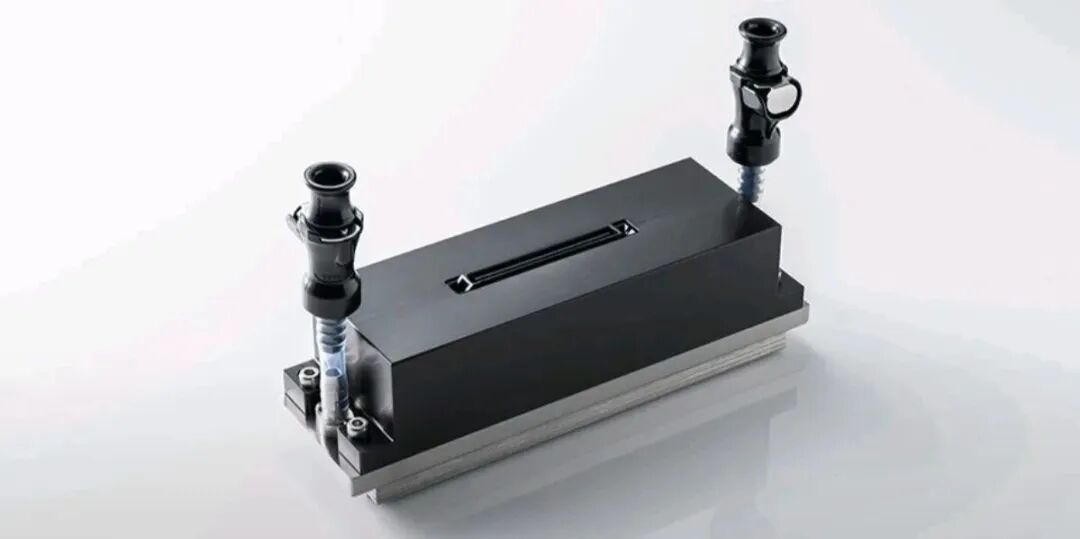 Kyocera Industrial inkjet printhead
At the hardware level, the printhead is equipped with 1584 nozzles, with a resolution of 360dpi ×360dpi, an effective printing width of about 112mm, and can handle materials with viscosities up to 80mPa・s, with an ink droplet volume of up to 280pL.
At the core technical level, the printhead has two major breakthroughs. For one, the new actuator structure allows for higher viscosity and larger droplets. Kyocera has developed a proprietary new piezoelectric actuator structure that enhances injection force using the traditional piezoelectric bending mode, with jetting forces up to 16 times higher than conventional technologies and droplet sizes up to 20 times. Second, in response to the pain point of the industry where high-viscosity materials are difficult to stably spray in circulating printheads, Kyocera optimizes the fluid channel design through proprietary fluid simulation technology to achieve stable injection of high-viscosity materials, which can not only significantly improve production efficiency, but also ensure the consistency of finished product quality, laying the foundation for large-scale industrial applications.
The advent of Kyocera's new printhead not only brings new possibilities to industrial manufacturing fields such as manufacturing processes, spraying and 3D printing, but also allows people to see the cross-border potential of inkjet printing technology. In fact, inkjet printing technology is quietly penetrating into all aspects of life such as automobiles, fashion, home furnishings, packaging, etc., and is used in various rich printing scenarios.
Automotive applications
The once monotonous color matching and texture selection of automotive interiors has ushered in a new change with the empowerment of inkjet printing technology. Today's instrument panels, door trims and center console trims often use inkjet printing technology to deliver realistic textures such as wood grain, carbon fiber and brushed metal effects, along with haptic feedback coatings for an authentic tactile experience. This tactile printing technology upgrades flat printing to a three-dimensional textured surface, which not only improves the interactive experience of consumers, but also enhances the quality perception of products, becoming a key tool for brands to achieve differentiated competition in the market.
Wearable textile applications
The real breakthrough of inkjet printing technology in the fashion field lies in the innovation of functional textiles. With the improved inkjet printhead, conductive inks, printing sensors, and piezoelectric patterns are precisely embedded into the garment fabric. Companies such as DuPont and NovaCentrix are leading the wave of silver nanoparticle inks, and the University of Tokyo has developed a special flexible substrate that can transform fabrics into interface materials that can maintain stable functionality even when stretched to three times their original length. This breakthrough has led to a variety of smart clothing, such as children's jackets that can play audio stories and change colors, and digital camouflage clothing that can achieve concealed camouflage.
Furniture applications
The furniture industry is adopting digitally printed laminates on a large scale. With inkjet printing technology, wood grain, stone or decorative textures can be printed on the film of the coil or directly on the surface of the board. Sealed with an embossed tactile finish and a wear-resistant coating, the finished product is identical to the real material, and is both durable and sustainable.
Companies represented by Yotta and Apache DTF focus on inkjet printing technology with environmentally friendly UV ink and LED curing technology, which can present vivid and three-dimensional relief wood grain effects. Inkjet printing technology is reshaping the design and manufacturing paradigm of decorative surfaces, bringing high-resolution wood grain, custom patterns, and even tactile textures directly to the surface of wood-based panels.
Flooring applications
Inkjet printing technology makes it possible to personalize the floor. MDF meets ceramic tiles, and inkjet printing flooring is born. With UV-curable ink, inkjet printers can perfectly present a variety of styles such as marble, rainforest, and even pop art comics. Companies such as Deshi and Barberan have turned modern inkjet flooring into a creative paradise, allowing users to easily customize the imitation wood grain texture and print lifelike floral patterns on the ceramic brick surface, giving the floor both aesthetics, durability, and unique personality.
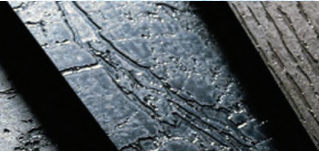
Tactile Effect Flooring Printed by Spain's Baberlan Company
Architectural and Decorative Applications
One of the most stunning applications of inkjet printing technology is in wall panels and garage doors. It transforms otherwise monotonous facades, bringing them to life with impressive textures.
Compared to simple traditional painting techniques, high-tech inkjet printing can render photo-realistic effects such as wood grain, pebbles, and marble on building surfaces, and can even customize patterns like pets or sports team logos. Maibec, a pioneer in this field, proudly calls itself a 'facade creator.' Relying on high-resolution inkjet printing, along with high-fidelity CMYK UV-cured inks and protective coatings, the company provides custom solutions for residential and architectural aluminum exterior panels. Its inkjet exterior panels match traditional painted aluminum panels in terms of fade resistance, surface durability, gloss, and adhesion.
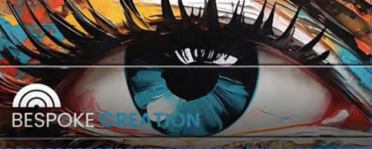
Aluminum exterior wall panels manufactured by Maibec Architectural
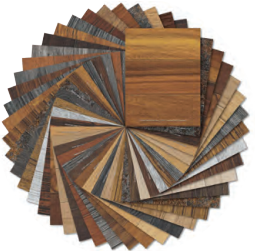
Maibec Architectural's Texture Library
Axpanel, relying on digital inkjet printing technology, combined with four-color CMYK UV-curable inks and protective coatings, can perfectly reproduce image-level vector graphics, 3D effects, and customized patterns on garage doors. Its Z-axis rotation technology enables wrap-around printing on the edges of the door panels, ensuring that even when the garage door is open, there are no blank spots or imperfections at the seams.
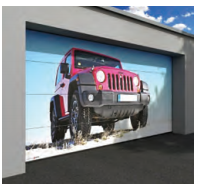
Garage doors made by Axpanel
Diaper applications
Inkjet printing technology has ventured into an unexpected field-baby and adult diapers. With the improved printability of non-woven materials, inkjet printing is used to print vivid and lively character patterns on diapers. Some diaper liners use pressure-activated ink technology, revealing nursery rhymes or animations when bent, adding a parent-child interaction element during diaper changes. The breakthrough of this technology goes far beyond aesthetics. The industry is currently testing functional inks that can respond to changes in humidity or temperature to monitor diaper wetness in real time. Companies like W D and Drylock Technologies are actively exploring scalable production and compostable degradation paths for these technologies.
Toy applications
The toy industry is rapidly integrating the versatility of inkjet printing technology to enhance toy packaging design. This technology has led to the creation of touch-sensitive sound and light plush toys, printed toy sets with wood, metal, or stone textures, interactive books equipped with AR markers that trigger animations, and collectible cards with rare variable images and data. Bricktactical and Eclipsegrafx have jointly launched custom inkjet-printed LEGO pieces, unlocking more creative possibilities for LEGO enthusiasts seeking personalization.
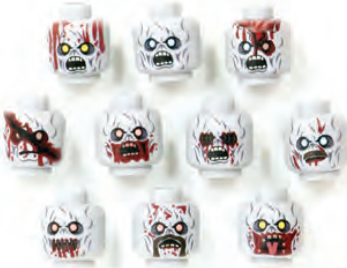
LEGO minifigures customized by Bricktactical using inkjet printing technology
Beverage Applications
Direct to Shape (DTS) inkjet printing technology can directly print full-color images, text, barcodes, batch numbers, and other variable data on the surfaces of curved or cylindrical objects such as beer cans, wine bottles, and mugs. JunoDTS, hinterkopf, and Helix® series inkjet printers offer DTS solutions compatible with a variety of materials including glass, aluminum, stainless steel, and plastic.
Craft breweries, wineries, distilleries, and specialty beverage brands are widely adopting this technology. With high-resolution images, vibrant colors, and advanced decorative effects such as digital foiling and embossed textures, these brands are able to stand out in the market.
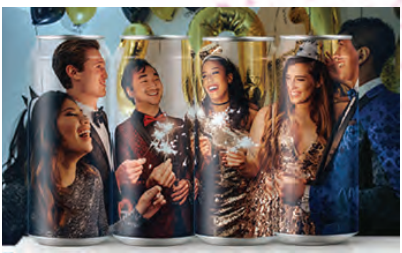
UV Custom Inkjet Printing Can Produced by JunoDTS
From the core sectors of industrial manufacturing to everyday aspects of life such as clothing, food, housing, and transportation, inkjet printing technology is permeating every corner of production and daily life thanks to its exceptional precision, strong scalability, and excellent material adaptability. In the future, with continuous technological iteration and innovation, inkjet printing technology will unlock even more unknown applications. Let's look forward to it!