


Global giant Amcor is betting on the next generation of packaging! How are domestic printing companies planning for AI?
On November 17, 2026, at the Retail CEO Closed-Door Meeting of the China Retail Innovation Conference, Amcor's President of Asia Pacific, She Xin, mentioned in his speech that Amcor is exploring the 'next-generation packaging.' He believes that the future audience for packaging will expand from just humans to include humans, AI agents, and robots, a perspective that has also sparked industry interest in the future direction of packaging.
The intelligent upgrade of downstream consumption and supply chains is continuously advancing, with scenarios like robotic automation, unmanned warehouse sorting, and AI-assisted shopping emerging one after another, bringing changes to the packaging industry as well. How does Amcor view the packaging transformation in the AI era? What practical implementations have domestic printing and packaging companies achieved? And where is the future direction of the industry amid the AI wave? This article will go through these points one by one.
 Packaging is moving from 'serving people' to 'adapting to both humans and machines'
In Amcor's talk, it was mentioned that with the popularity and widespread use of AI technology, future human shopping behavior might be entirely carried out by AI. This means packaging needs to be readable by AI and align with AI's behavioral patterns. At the same time, more and more robots are gradually taking over processes like unpacking and sorting, so packaging structures also need to be adapted to the way robots operate.
Unlike human consumers who often focus on packaging appearance and unboxing experience, AI agents pay more attention to standardized and readable information. Quantifiable data such as carbon footprint, material composition, traceability, and compliance qualifications are key for AI price comparisons and selection decisions. According to She Xin, by 2030, around 25% of shopping activities will be completed by AI agents. Based on this prediction, Amcor is exploring printing carbon footprint and other information directly on product packaging so that more data can be captured by AI systems.
At the same time, advancements in robotics are also driving adjustments in packaging design logic. In scenarios like restaurant kitchens and warehouse sorting, traditional structures like easy-tear openings and screw caps are mainly designed for human hands, relying on finger flexibility and strength perception to open packaging. However, industrial robot arms have clearly different movement patterns and gripping strength compared to humans, so packaging design now needs to accommodate both human handling and machine adaptation. For large-capacity cooking oil products in the US restaurant market, Amcor has started testing packaging structures compatible with robot arms, and these products are expected to appear first in US dining scenarios.
 AI Implementation Practices in Domestic Printing and Packaging Companies
With the digitalization of the domestic printing and packaging industry speeding up, AI technology has extended from design and R&D to production, manufacturing, and operation management. The practices of leading companies are gradually proving the commercial value of AI.
1. AI Empowering Design: Shortening Cycles and Lowering Customization Barriers
The design stage is where AI technology has penetrated early and is widely applied. In the traditional model, design relied on manual communication and repeated prototypes, leading to long cycles and high costs for customized orders. The application of generative AI can quickly produce solutions and adapt to production processes, significantly shortening design cycles and making small-batch customization more feasible.
Among domestic printing and packaging companies, Baixinglong started deploying AI technology early, completing dedicated model training suitable for the packaging and cultural creative industries, and deeply embedding AI tools throughout the creative design process. This not only effectively expands the creative boundaries for designers but also further reduces costs and increases efficiency. Century Kaiyuan, on the other hand, trains intelligent design models based on massive order data, enabling imitation design, generative design, and scenario-based design. With AIGC assisting internal designers, efficiency improves by 30%, saving millions in annual costs while meeting clients' personalized customization needs.
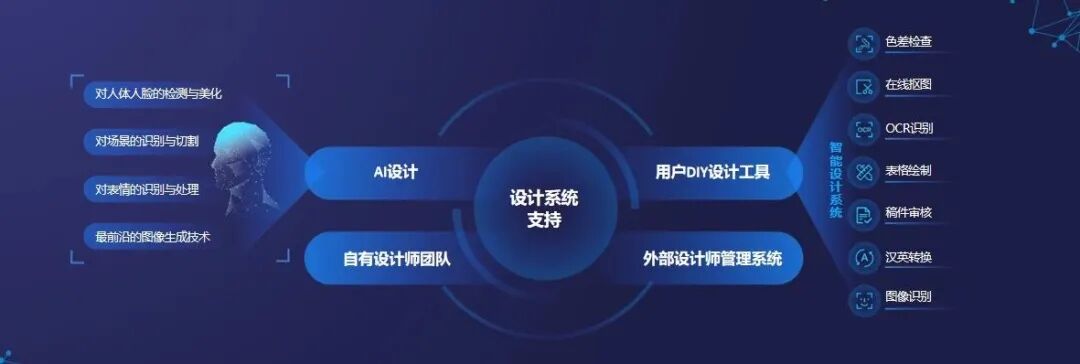 Century Kaiyuan Design System Description
2. AI Penetration into the Production Side: Improving Manufacturing Stability and Efficiency
In the printing and packaging manufacturing process, AI technology has been applied to production scheduling, process optimization, quality inspection, and more. Its main goal is to replace humans in repetitive, highly standardized tasks, showing measurable benefits in improving production stability, reducing operational costs, and boosting delivery efficiency.
In terms of production scheduling, AI is helping to streamline inefficient parts of the traditional manual production process. Dashengda, using the APS intelligent scheduling system combined with AI algorithms, can dynamically schedule multiple workshops and orders while optimizing resources, cutting changeover time down to just 1 minute. Yutong Technology is also exploring AI applications, empowering front-end applications like ERP, SRM, and DHR to drive smarter production.
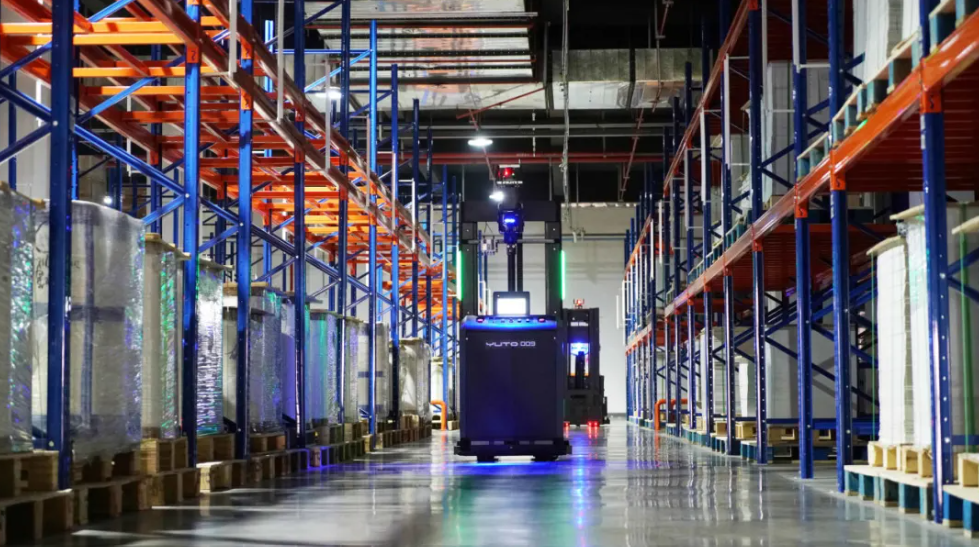
Yutong Technology Smart Factory
In terms of quality inspection, many companies in the industry have already implemented AI intelligent inspection solutions. For example, Jiangsu Phoenix has deployed AI automated online inspection devices, using database algorithms to improve inspection efficiency. Aurrigin has introduced high-speed visual inspection instruments to accurately identify both surface and internal defects and automatically remove defective products, while simultaneously compiling quality data. Shanghai Ailu integrates AI technology to perform online inspection of printing defects based on industrial cameras, machine learning, and manually labeled modeling, enhancing product consistency and stability.
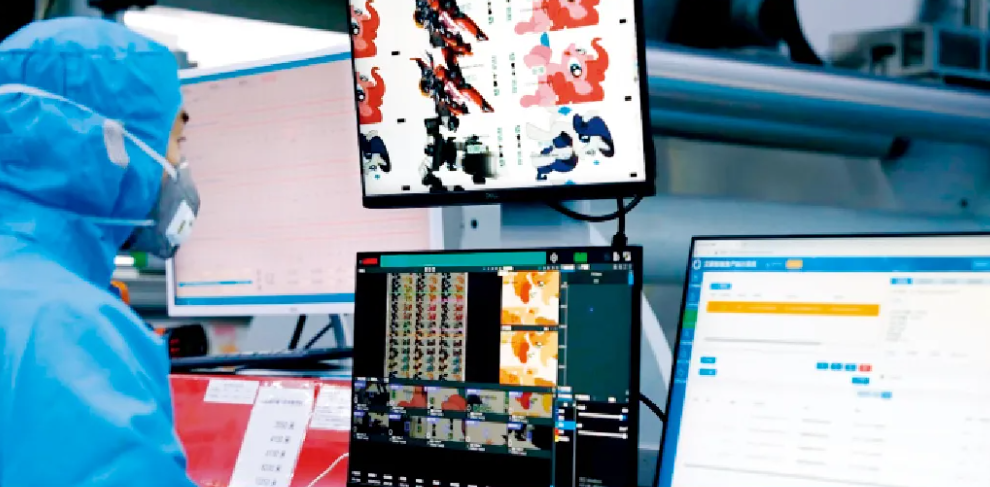
Shanghai Ailu AI Printing Visual Inspection System
3. AI Extended Management and Service: Improving Operational Efficiency
Beyond design and production, AI technology is gradually extending into enterprise operations management and service areas. For example, AI agents (digital employees) are being used to replace humans for tasks like data entry, document verification, and quote generation, covering functions such as sales, finance, procurement, and HR, becoming an important tool for optimizing business efficiency.
Among them, Kunshan Kewang is a representative company in the printing industry for implementing AI management. They have integrated digital employees into their HR management system and established a complete training, assessment, and on-the-job process for digital employees, achieving efficient coordination between digital and regular employees. Yatushi, in their self-developed CRM system, integrates AI technology to manage potential client resources and prospective projects, helping sales staff to follow up efficiently. Century Kaiyuan, through its intelligent customer service model, handles customer inquiries, achieving a 70% labor replacement rate during peak periods with nearly 100,000 orders per day.
 Future Directions of the Industry in the Wave of AI
From the cutting-edge practices of leading companies to multi-point implementation across the whole industry, AI is gradually reshaping the design, production, and management services in packaging. For most companies, AI implementation isn't about a sudden, complete overhaul-it's more suitable to advance steadily in line with their own business pace.
First, companies can start with mature scenarios, taking small, quick steps to avoid blind investments. The core value of AI applications lies in solving real business pain points, rather than chasing technological concepts. Companies can begin with scenarios where the input-output ratio is clear, such as AI quality inspection or auxiliary design, prioritizing issues like low manual efficiency or high error rates. From there, they can gradually extend AI use to production scheduling and supply chain optimization, achieving technology implementation through incremental upgrades.
Second, focus on data asset accumulation to strengthen the foundation for long-term capabilities. The effectiveness of AI relies heavily on industry data and scenario-specific training. Data accumulated in daily production-like process parameters, design cases, and customer requirements-serves as core assets for training industry-specific AI models. Leading companies can gradually build their own data systems, transforming industry experience into algorithmic capabilities. Small and medium enterprises can leverage mature third-party tools to standardize their data over time and extend their capabilities through AI technology, ultimately maximizing the value of human-machine collaboration.
Overall, Amcor's concept of 'human-machine dual adaptation' reflects, to some extent, the evolution of printing and packaging in the AI era. However, AI applications in the domestic printing and packaging industry are still in the deepening stage, and large-scale, full-chain implementation across the industry will take time. For companies, there's no need to blindly follow hype or ignore the trend and wait passively. By implementing AI technologies based on real needs and in line with their own business pace, companies are more likely to advance steadily amid industry transformation.