


Intaglio print 'Furong (Soft Red)' cigarette pack curling
With the establishment and implementation of China's tobacco packaging bidding system, the domestic cigarette packaging industry has gradually fallen into the dilemma of "every move must fall". For more than ten years, the profit margin of the industry has continued to be compressed, and the current operation of tobacco printing enterprises is walking on thin ice, and they are facing a loss dilemma if they are not careful. In this context, many large private enterprises in China have successively divested their cigarette pack printing business and turned to develop new economic growth points. At the same time, in order to survive in the cracks in the market, in addition to continuously strengthening internal cost reduction and efficiency increase, the company has also continued the strategy of "every move must be lowered" in the raw material procurement link, which directly led to serious involution in the domestic tobacco packaging raw material industry. The continuous decline in material prices has directly triggered a hidden decline in material quality, and production process innovation has become the core path to solve this problem. In response to the problem of gravure soft pack cigarette curling caused by changes in material properties, the author's company has formed a set of systematic solutions after innovation and exploration, which is now shared with industry colleagues in order to promote the high-quality development of the industry.
Gravure soft pack cigarette pack curl problem
The "Hibiscus (Soft Red)" cigarette pack small box printed by our company uses 97g/m² coated paper as the base material. Due to the thin thickness (about 0.09mm) of this specification paper, it is limited by its own characteristics, and the physical properties of the raw materials are high in the gravure printing process. However, due to the impact of the tobacco packaging bidding system, the original paper supplier failed to win the bid due to the compression of profit margins, and our company is now using the paper of the new supplier.
The paper production process of the new supplier has obvious limitations: on the one hand, the physical properties of the fiber are insufficient, which is manifested in the uneven distribution of fiber length and insufficient interweaving strength between fibers, resulting in poor stability of the internal structure of the paper; On the other hand, the surface treatment process has shortcomings, such as deviation in the control of sizing amount and insufficient uniformity of coating, which reduces the ability of paper to regulate moisture. The superposition of double defects eventually leads to periodic wavy curl deformation along the transverse direction after the paper is cut into flat sheets by the gravure printing machine (as shown in Figure 1), which has a systematic impact on the whole production process, and the specific problems are as follows.
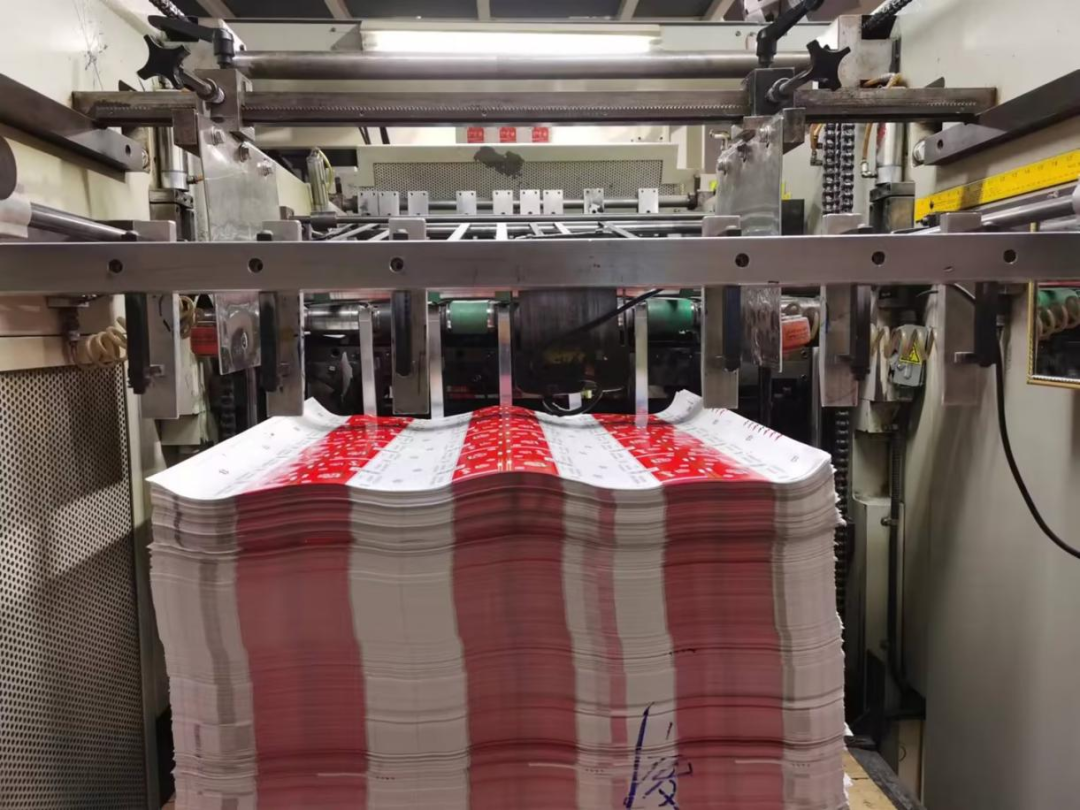 Figure 1 "Hibiscus (soft red)" cigarette pack small box
01/ Production efficiency has fallen off a cliff, and the material loss rate has surged
In the gravure printing process, the severely curled paper cannot form a flat stacking state due to the edge uplifting and the wave deformation in the middle, resulting in frequent paper collection jamming: when running at high speed, the crimped paper is easy to trigger the chain reaction of "stagnation, skewedness, and paper blockage" of paper collection, with a cumulative number of paper blocking times in a single day exceeding 15 times, and each cleaning needs to be stopped for about 30 minutes, and the production efficiency plummets by about 30%; At the same time, the semi-finished paper will produce irreversible defects such as creases and tears in the process of plugging, and the material loss rate of a single batch soared from the original 0.2% to 5.1%, and the material cost increased significantly.
02/ The product qualification rate has dropped sharply, and the labor intensity has doubled
The soft pack cigarette pack needs to be cut, and the crimped paper exposes the problem of positioning loss in the cutting process: when cutting, the wavy curl makes the paper unable to fit close to the cutting platform, and the deviation between the cutting knife line and the positioning reference line is 0.4mm, resulting in the deviation of the cutting size. The amount of waste and defective products increased by nearly 8 times compared with the normal state. In order to reduce waste, the cutting personnel need to be manually flattened, and the cutting production efficiency is reduced; The finished product inspection process needs to be manually leveled, and the labor intensity of inspection is greatly improved.
03/ The packaging adaptability is completely ineffective, and the customer's operation and maintenance costs are high
Although the finished product has been treated by humidity control and cleatting, the internal fiber stress of the paper has not been fully released, and it still shows curling and deformation when loaded into the tobacco factory packaging machine. When the crimped paper enters the conveying track of the packaging machine, it directly affects the production progress of the tobacco factory. In order to ensure the normal use of trademark paper, our company had to send 3 inspectors to the site 24 hours a day to pre-treat the trademark paper by using the "manual reverse bending" method, which greatly increased the cost of customer operation and maintenance, and the brand trust faced severe challenges.
Traditional process solution trials
In order to systematically solve the above production problems, it is found that the printing industry generally has similar paper deformation problems in the production of soft packs, and the industry usually uses the back coating process of soft sheet paper for regulation. Based on this, our company has designed three coating process schemes for improvement and testing for the problem of large wavy curling after gravure printing of "hibiscus (soft red)" cigarette pack small box, as follows.
Scheme 1: Back-coating water-based varnish process
Customize a special water-based varnish coating roller, and use the reverse printing unit of the existing gravure printing machine to apply water-based varnish coating treatment on the back of the paper to enhance the water-locking performance of the paper. Coating system ratio: water-based varnish BH3000 and mixed solvent are mixed according to 1∶1 (mixed solvent is alcohol: water = 1∶2), and the drying temperature is controlled at 90~100°C.
Option 2: Water-based varnish process on the front
Customize a special water-based varnish coating roller to coat water-based varnish (ink viscosity 16±2s, drying temperature 90~100°C) in the gravure first color group, and reduce the difference in water absorption by adjusting the surface properties of the paper.
Scheme 3: Composite coating process
The above-mentioned water-based varnish on the back and water-based varnish on the front are simultaneously implemented to form a dual control system of "back coating water lock + front water control".
After the above three schemes were tested, the curling degree of the paper was only slightly improved, and it still did not meet the normal production requirements, and there was a significant gap with the expected effect. The analysis shows that the industry's conventional process scheme has achieved full coverage testing, but the back coating material is single (only BH3000 varnish) and the main coating material has not been adjusted variables in the test. To this end, the team further focused on the selection of back coating materials and designed a multi-dimensional cross-test scheme.
Scheme 1: Single variable test of backcoating materials
Two types of back-coating inks, C205 (factory A) and Q2105I (factory B), were selected to keep the coating amount, drying temperature and other parameters consistent, and the effects of different materials on the flatness of paper collection were compared and tested.
Scheme 2: Single variable test of frontal coating material
Two frontal varnishes were selected from factory C and D to keep the coating amount, drying temperature and other parameters consistent, and independently tested the regulation effect of the water absorption uniformity and paper collection flatness on the paper surface.
Scheme 3: Composite test of the front and back coating materials
The samples with better flatness in the back coating material test were selected and combined with the front varnish of factory C and D to test the inhibition effect of the composite coating system on the internal stress balance and crimping deformation of the paper.
After the above-mentioned cross-test verification of back-coating/main-coating materials, the wavy curling problem of paper has not been effectively controlled, and the traditional idea of "back-coating/main-coating material regulation" has fallen into a bottleneck. This shows that the curling problem of "Hibiscus (soft red)" cigarette packets cannot be completely solved by optimizing the coating material or process parameters alone, and it is necessary to break through the traditional technical framework and explore innovative solutions.
Thinking and analysis of innovative process solutions
In the face of the technical bottleneck of traditional coating technology and material regulation scheme, the team is deeply aware that to solve the problem of gravure curling of "hibiscus (soft red)" cigarette pack small box, it is necessary to jump out of the traditional mindset of "single material optimization" or "conventional process adjustment" and reconstruct the problem analysis framework with innovative thinking. The breakthrough of innovation is often hidden in the deep deconstruction of the details of the printing process and the structural characteristics of the product - by tracing back the whole production process data and recombing the micro links, we found that the previous analysis ignored two key systemic correlations: one is the implicit impact of pattern design on product wave deformation, and the other is the dynamic adaptation relationship between the characteristics of ink materials and printing process parameters. Based on this, the team innovatively constructed a two-dimensional analysis model of "pattern structure + material properties" to re-examine the essential causes of the curling problem from the intersection of macro design logic and micro material behavior.
01/ Pattern structure characteristics
According to the pattern structure characteristics of this soft pack cigarette pack, the pattern is distributed in strips after the large version, and there is a certain similarity between the product wave deformation law and the pattern arrangement law, which provides a new thinking direction for solving the wave deformation of the product.
02/ Paper ink characteristics
After analyzing the paper and ink types used in soft packs, it was found that there was a big problem in the matching between the physical properties of the paper of the new supplier and the existing ink. The large area ink in direct contact with the surface of the cigarette pack is mainly solvent-based red ink and water-based varnish, and the inks of the two different systems are printed on the flexible sheet paper, which will cause different deformations on the flexible sheet paper, which will cause curling problems.
The implementation and effectiveness of innovative process solutions
01/ Implement specifically
Through the in-depth analysis of the above two factors, it can be seen that the root cause of the wavy curling problem of gravure soft pouches lies in the coupling effect of the physical properties of the new supplier paper and the characteristics of the two types of inks. Based on this, we have developed the following innovative process solutions:
(1) In view of the wavy curl deformation problem caused by the difference in deformation between solvent-based ink and water-based ink in the gravure printing process, the special red ink system is converted from solvent-based to water-based, and the water-based gravure red plate is made.
(2) In view of the problem of upward warping at both ends of the paper collection, the back coating process is used to solve the warping and deformation caused by the reduction of the internal moisture of the paper after passing through the oven.
After the "Furong (Soft Red)" cigarette pack small box is produced by the new process scheme of "water-based special red + back coating", the gravure paper is flat, the paper is flat when the machine knife is cut, and the packaging adaptability of the tobacco factory is normal. The new process solution perfectly solves the curling problem of the "Hibiscus (soft red)" cigarette packet small box, and can meet the production and packaging requirements of the product and the packaging of tobacco factories.
02/ Economic benefit analysis
After adopting the new process, the printing efficiency has been increased by more than 2 times, the cutting efficiency has reached the production quota requirements, and the product qualification rate has exceeded the target output rate by 2.96%. After accounting, the cost saving of a single thousand boxes of products is about 2,960 yuan, and the annual output of 50,000 large boxes is calculated, with an annual cost saving of 148,000 yuan, achieving a double improvement in production efficiency and economic benefits.
In addition, the new process has completely resolved the frequent machine jamming issue caused by cigarette pack curling on packaging machines. The flatness of the product is superior to that of the originally supplied normal products, and the pack compatibility has been greatly improved, receiving written recognition and high praise from the cigarette factory's packaging workshop. This technological breakthrough not only ensures stable supply but also effectively enhances customer trust, significantly improving the company's brand reputation in cigarette pack printing.
This article addresses the problem of small "Furong (Soft Red)" cigarette packs warping and curling in relief printing caused by raw material changes. By overcoming the limitations of traditional process improvements and correlating pattern structural characteristics with material physical properties, an innovative solution of "ink system replacement combined with back coating process coordination" was implemented. This achieved flat paper feeding and precise cutting of cigarette packs, thoroughly solving a series of issues such as low production efficiency and poor packaging compatibility, earning written recognition and high praise from the packaging workshop. This innovative approach aims to provide a systematic solution and practical example for the industry to tackle similar technical challenges, offering a reference path for process optimization and technological innovation in the field of cigarette pack printing, and contributing to the promotion of high-quality development in the industry.