


Heavy weight! The world's first biodegradable transparent packaging paper has been launched
Japanese researchers have successfully developed the world's first transparent packaging paper, which is thick enough to be used as a beverage container and has biodegradable properties, without causing pollution to the marine environment. The scientific team stated that the paper box made of this new material is highly transparent, allowing consumers to clearly see the juice or other beverages inside.
This transparent paper originates from plants and can be decomposed by microorganisms, with the potential to replace traditional plastic containers in the future. It is not only flexible and easy to bend, but also sturdy and durable even in humid environments, and can be processed into various shapes, including cups and straws. This breakthrough achievement was jointly completed by a team of scientists from multiple research institutions, including the Japan Agency for Marine Research and Development (JAMSTEC, headquartered in Yokosuka City, Kanagawa Prefecture).
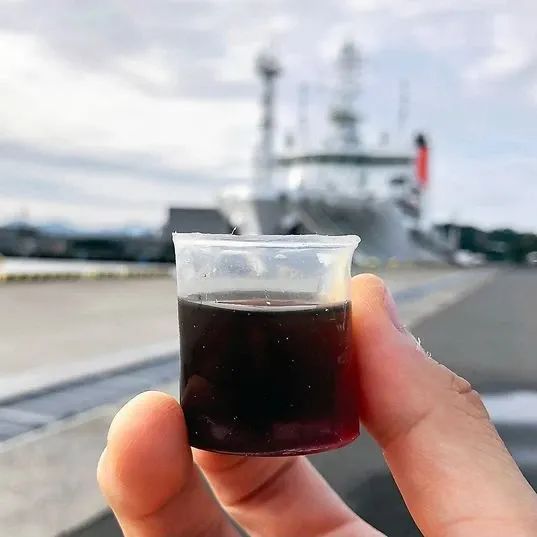 A cup made of newly developed paper material is very transparent, and even ships in the background can be seen through it
Original intention of research and development: Facing deep-sea plastic pollution directly
The deputy chief researcher of the Japan Institute for the Promotion of Marine Science and Technology and the leader of the research team, Noriyuki Iwabe, has high hopes for this study. He said, "I look forward to this material becoming a 'trump card' in the fight against marine pollution
This project began with Noriyuki Iwabe. He has been involved in research on cellulose (the main component of wood and paper) and joined the Japan Institute of Marine Science and Technology in 2017. With the institution's vast database of scientific submersible images, he witnessed firsthand the harsh reality of deep-sea water being heavily polluted by disposable plastics.
When he saw plastic bags and various pollutants scattered on the seabed at a depth of over 1000 meters, Jibu quickly came up with the idea of using a container made of a material that can be decomposed by microorganisms even in the ocean to replace plastic containers.
Technological breakthrough: from non transparency to 'ultra transparency'
For Shibata, paper seems to be one of the most promising materials. However, traditional paper has a clear weakness: due to its use of wood pulp, the gaps between the coarse fibers scatter light, resulting in the finished paper being opaque.
For the food industry, which highly values transparency, this issue is particularly prominent. It is generally believed that packaging that allows consumers to see the contents in advance can better stimulate their desire to purchase. According to reports, a French food manufacturer once launched juice drinks packaged in cardboard boxes, but later at least once resumed using plastic containers.
Although there is a material called glass paper, derived from cellulose like paper and known for its transparent appearance, current production methods can only produce glass paper with a thickness of 0.03 millimeters. For a long time, it has been widely believed in the industry that it is technically impossible to produce glass paper between 0.3mm and 0.7mm (sufficient for paper boxes and other commercial packaging).
Taking this into consideration, Noriyuki Iwabe came up with the method of using lithium bromide aqueous solution. At that time, one of his colleagues was studying this liquid, and the ability of this chemical substance to dissolve silk and cellulose began to attract people's attention. Jibu came up with a plan: to dissolve and solidify cellulose by adjusting the temperature of lithium bromide aqueous solution, so that the thickness and shape of the paper can be freely adjusted.
In the second year, 2018, he began developing prototypes. The Jijiang department solidified, cleaned, and dried cellulose, ultimately successfully producing a highly transparent and moderately thick paper. According to reports, during this process, fibers are finely decomposed into molecules, forming a dense structure without pores, allowing light to penetrate without scattering.
Another unique feature of this research project is that the team fully utilized the facilities and expertise of the Japan Marine Research and Development Corporation (JAMSTEC) to verify whether this material can truly decompose in the deep sea.
With the help of the manned research submersible "Deep Sea 6500" and other equipment, researchers placed cups containing this new material on the seabed. These locations include a 757 meter deep area in the Sanzaki region along the Sagami Bay coast in Kanagawa Prefecture, as well as a 5552 meter deep sea area near Nantori Island in the easternmost Pacific Ocean in Japan.
The six-month filming results showed that these containers gradually decomposed. One cup placed in the Sanzaki area completely disappeared within four months.
Commercialization Challenges and Future Prospects
Despite high hopes for the commercial application of this specialty paper in the future, the high cost remains a major obstacle. This paper material is difficult to quickly achieve the same level of economy as cheap plastics produced on a large scale using oil, as currently this unique material can only be manufactured in specialized laboratories.
Faced with this challenge, Isobe and his colleagues are actively seeking interest from large manufacturers in their research. Scientists plan to propose a cheaper production technology, similar to the manufacturing of paper boxes and other common cardboard. They also plan to design a dedicated production line to control energy consumption.
I imagine a society where everything we need for our daily lives comes entirely from substances produced by living organisms. At the same time, everyday items should be carefully reused