


Green packaging transformation underway: new choices for global brands such as Pepsi, Mondelez, and L'Oreal
Recently, PepsiCo announced adjustments to its sustainable packaging goals, including canceling the goal of achieving 20% beverage consumption by 2030, adopting reusable containers, and lowering the reduction ratio of raw and recycled plastic use.
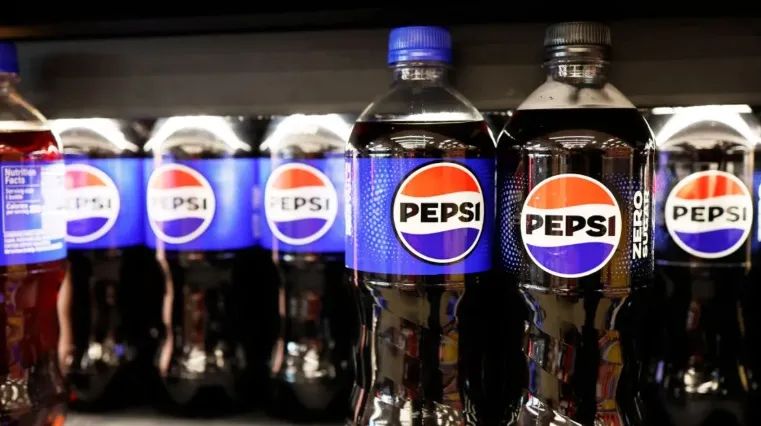 △Image source: PackagingDive
Although this transformation has attracted widespread attention, it is not an isolated example: multinational giants such as L'Oreal and Mondelez International have also exposed the practical challenges of green transformation when disclosing their packaging progress.
According to L'Oreal's 2024 annual report, its sustainable compliance rate for plastic packaging (recyclable, reusable, or compostable) is only 49%, which is still a significant gap from the target of 100% by 2025. In addition, Mondelez International has also faced technological bottlenecks in its hard plastic reduction targets recently.
This series of signals indicates that although companies are actively investing in environmental commitments, the path of green packaging is not smooth. Yashi Rubber Network has sorted out the latest trends of three companies, dismantled the transformation obstacles behind them, and explored the direction of future breakthroughs.
The transformation and adjustment of the three major brands
PepsiCo: Strategic Dynamic Adjustment to Address Challenges
PepsiCo has comprehensively adjusted its sustainable packaging goals under the "PepsiCo Holding Plan" strategy based on the challenges of "external reality". Although there have been changes in the setting and tracking of some goals, positive results have been achieved in the journey of sustainable development.
This adjustment mainly involves sustainable packaging goals:
Cancel the expansion target of "achieving 20% beverage sales through reusable packaging by 2030" and adjust it to continuously track the progress of reusable packaging within the overall target framework of "reusable, recyclable, or compostable packaging";
The original goal of "reducing the use of non renewable primary plastics by 20% by 2030" has been cancelled and replaced with an annual reduction plan of "continuously reducing the use of primary plastics by 2% annually in key markets by 2030", with a focus on major plastic packaging categories;
Adjust the original goal of achieving 100% recyclable, compostable, biodegradable or reusable packaging by 2025 to achieve 97% reusable, recyclable or compostable packaging by 2030;
Adjust the original goal of "plastic packaging containing 50% recycled content by 2030" to reach 40% or more by 2035;
Reduce commitments to biobased and renewable materials, and instead support new material technology partners.
From the perspective of results, PepsiCo's sustainability report released in 2024 shows that its Scope 1 and Scope 2 emissions have decreased by 13% year-on-year, the total absolute greenhouse gas emissions of Scope 1, 2, and 3 have decreased by 5% year-on-year, and the use of primary plastics from non renewable resources has decreased by 4% year-on-year.
L'Oreal: Although environmental progress is slow, it continues to advance
As early as 2020, L'Oreal launched the "For the Future" project, promising to achieve 100% recyclable, reusable, or compostable plastic packaging by 2025. By 2024, this goal has only been achieved by 49%; We plan to fully adopt recycled/biobased plastics by 2030 (with a mid-term target of 50% by 2025), and currently 37% of plastic packaging comes from recycled/biobased materials.
According to the company's recently released 2024 annual report, L'Oreal consumed a total of 306000 tons of packaging materials during the reporting period, of which 26% were recycled materials (approximately 78000 tons). Taking L'Oreal Elvive Care Series in Paris as an example, this eco-friendly packaging achieves a weight reduction of 20%, provides supplementary packaging, and is made of 100% PCR plastic.
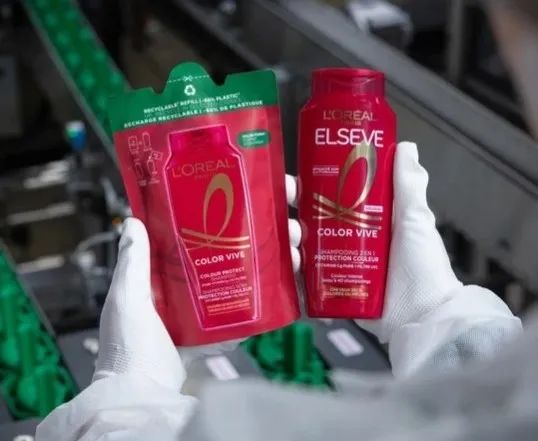
△The Paris L'Oreal Elvive skincare series adopts multiple environmentally friendly packaging measures. (Image source: L'Oreal official website)
Mondelez International: Impressive Performance in the Chinese Market
Mondelez International regards sustainable development of product packaging as one of the highest priority issues, and has been continuously working in areas such as supply chain, climate action, and packaging circular economy for many years.
At the global level, Mondelez International has incorporated nearly 91% of cocoa raw material procurement into the "Life of Cocoa" sustainable development project, promoting supply chain transformation and restoring agricultural ecosystems; Compared to the benchmark year of 2018, end-to-end greenhouse gas emissions have decreased by approximately 12%; About 96% of product packaging is designed to be recyclable; Over 84% of revenue comes from independent small packaging or products with clear weight guidelines.
△ Image source: Mondel ē z International.
In the Chinese market, Mondelez International is taking action in multiple fields around the full chain emission reduction:
In terms of production and energy, the output in 2024 will increase by 29% compared to 2018, but the carbon dioxide equivalent emissions will decrease by 48.8%. The Beijing factory will achieve 100% green electricity production by early 2025, setting a benchmark for energy transformation in the region.
In the logistics process, from direct emission control to indirect emission control, through route optimization and vehicle replacement, 14% of fuel vehicles will complete the electrification transformation by the end of 2024.
In terms of packaging and nutrition, 98% of products are designed to be recyclable, which is higher than the global average;
With the help of the "Yizi Nutrition Classroom" to popularize health knowledge, nearly 100% of revenue generating products use small packaging or weight guidance to help promote healthy consumption.
Three major systemic barriers to green packaging
The Ellen MacArthur Foundation is a non-profit organization dedicated to promoting a circular economy, founded in 2010. In its "New Plastic Economy Global Commitment" initiative, PepsiCo, L'Oreal, and Mondelez International are all core partners.
According to the latest research by the organization, the current plastic circular economy transformation faces three major structural obstacles:
Soft packaging is difficult to recycle
Due to the multi-layered composite structure design of flexible packaging (such as aluminum-plastic composite materials for food packaging bags), physical sorting is difficult, and the back-end low value material recycling system lacks economic driving force. The end chemical recycling technology (such as pyrolysis and hydrogenation) has not been widely applied, forming a vicious cycle of "design non recyclable - insufficient collection power - high processing cost".
The entire process of "front-end design+back-end collection+end application" for flexible packaging is the core bottleneck that makes it difficult to achieve the goal of actual scale recycling (IPAS).
Reusable and difficult to promote
Although 64% of the committed parties have carried out pilot programs for reuse (such as beverage bottle deposit system, makeup product replenishment), this model faces a dual dilemma:
One is the economic value ceiling - the operating cost of the deposit system accounts for 15% -20%, and the user repurchase rate is only 32%;
The second is the lack of standards - there is a lack of industry unified definitions for reuse frequency, cleaning standards, etc., resulting in incomparable data.
As of 2023, the global proportion of reusable packaging is only 1.3%, even lower than in 2019.
Infrastructure gap
IPAS (actual scale recycling system) has very high requirements for sorting, transportation and processing infrastructure, but in regions such as Southeast Asia and Africa, the mixing rate exceeds 70%, and the sorting cost of recycled plastics is 40% higher than that of developed countries.
The Ellen MacArthur Foundation specifically pointed out that the construction of the IPAS system is particularly urgent in developing countries, requiring collaborative investment across government, enterprise, and community value chains. However, the current infrastructure investment of signatories in these regions accounts for only 12% of the global total.
From individual combat to ecological collaboration: exploring breakthrough paths
The Ellen MacArthur Foundation points out that despite facing multiple challenges, 70% of global commitments have achieved Reusable, Recyclable, or Compostable (RRC) packaging, but progress among companies is uneven: the proportion of top companies "designed to be recyclable" has reached 89%, while the proportion of tail companies with native plastics has increased by 8%.
To break the current deadlock, a coordinated effort from the system is needed:
Technological breakthrough: In response to the challenges of flexible packaging recycling, the industry needs to accelerate the industrial application of bio based materials, AI intelligent sorting, and chemical recycling technologies, especially by increasing research and development investment in industrial chain links such as "collection, sorting, and recycling" and "single system preparation", and opening up the technological loop from design to recycling.
Supply chain collaboration: Leading enterprises can draw on the cooperation model of mobilizing over 1000 organizations through the "Global Commitment to the New Plastic Economy", empower small and medium-sized suppliers to upgrade through green financial tools (such as sustainable development linked loans) and digital platforms, and promote the coordinated progress of the entire chain towards the goal of "100% reusable, recyclable or compostable".
Policy guidance: Referring to the EU's Extended Producer Responsibility (EPR) mechanism, combined with the framework of China's "Plastic Pollution Control Cooperation Network Project", explore institutional designs such as the "Packaging Circular Tax Gap", provide policy incentives for high recycling packaging, and strengthen rigid constraints on the elimination of plastics such as EPS and PVC.
Consumer activation: Leveraging the high attention of Generation Z to "zero native plastic" products, interactive designs such as "empty bottle recycling points redemption" are used to transform the environmental protection intentions of young people into consumer behavior, bridging the transition gap between the high-end market and the mass market.
The adjustment of green packaging goals from PepsiCo, L'Oreal to Mondelez is not only a response to practical challenges, but also reflects the difficulty of "individual combat" in supporting system transformation. Only by establishing a multi-dimensional ecosystem that links policies, technology, supply chains, and consumers can the sustainable path of plastic packaging truly be achieved.