


Fully merged into Heidelberg! Cutting giant Polar announces exit, Hofheim factory sold separately
In 2026, as the global printing and packaging industry accelerates its structural transformation, the reshuffling of resources and brand takeovers among traditional equipment giants is moving toward conclusion at a very precise and tidy pace. In early July, German printing machinery giant Heidelberg officially announced that it had completed the integration of Manroland Sheetfed Printing Group's full lifecycle business, along with its global sales and service companies. The plan to merge Manroland Sheetfed Printing Group into the Heidelberg Group is thus moving forward on schedule.
Immediately following this landmark deal, Heidelberg signed an agreement to fully acquire Bobst equipment and systems. This means that in the future, the production and R&D of Bobst cutting systems, as well as its wholly-owned Shanghai subsidiary, will be fully integrated into Heidelberg's organizational structure and production network. Behind this cross-boundary asset consolidation, Heidelberg is completely shedding its pure equipment manufacturing label and fully stepping into a new long-term path as an ecosystem-level system integrator.
Global Delivery of a German Giant: Manroland's Entry and Full Acquisition of the Bobst Group
In this business restructuring that has caught the global printing and packaging industry's attention, every move Heidelberg made has shown strong strategic consistency. Last year, Heidelberg took the first step by acquiring the intellectual property and brand rights of the Bobst Group, securing key assets like core patents, components, and inventory equipment, and in doing so, gained exclusive global sales and marketing rights for Bobst's post-press products. The full acquisition agreement signed this time integrates Bobst's R&D and manufacturing fully into Heidelberg's production matrix.
Heidelberg CEO Jürgen Otto clearly pointed out that by deeply integrating the operations of the Manroland Sheetfed Printing Group with Bobst's business, Heidelberg is further expanding its industrial value chain, providing global customers with more stable and long-term system-level solutions during periods of significant market change.
According to the agreement reached between the two sides, although specific transaction details are not disclosed, the handover roadmap of the industry chain is very clear. Bobst Group has been owned by SOL Capital Management since February 2023, when the funding helped it get out of bankruptcy protection caused by supply chain delays.
Previously, Germany's PCT Maschinenbau produced Bobst equipment on behalf of Heidelberg, but this company entered bankruptcy proceedings this April. Its production facility in Hofheim has been sold separately, so Bobst's business could not remain there long-term.
Heidelberg stated that after the new agreement, Bobst's existing production site in Hofheim, Germany, with nearly 250 employees, will cease long-term operations after a phased transition, and its capacity will be integrated step by step into Heidelberg's global production network.
At the same time, the Moer brand digital near-line cutting series, which was originally sold through independent distributor networks, will be fully taken over by Heidelberg's large distribution network after the transaction is completed. Heidelberg is using this move to directly launch its long-term offensive in high-growth packaging and labeling markets in Asia, South America, and the Middle East.
From Loading to Die-cutting: Bobst Automation's Post-Press Coordination and Full Workflow Integration
For printing and packaging plant owners struggling on the shop floor to find ways to cut costs and improve efficiency, the biggest immediate value of this full acquisition lies in completely eliminating the invisible technical silos between pre-press, printing, and post-press equipment.
As a traditional veteran with an excellent reputation in post-press cutting, Bobst's core competitiveness now extends far beyond single cutting tools and encompasses an entire set of networked, highly efficient production environments. In modern packaging and labeling workshops, Bobst systems can seamlessly automate the full process from loading, shaking, cutting, die-cutting, unloading, to bundling.
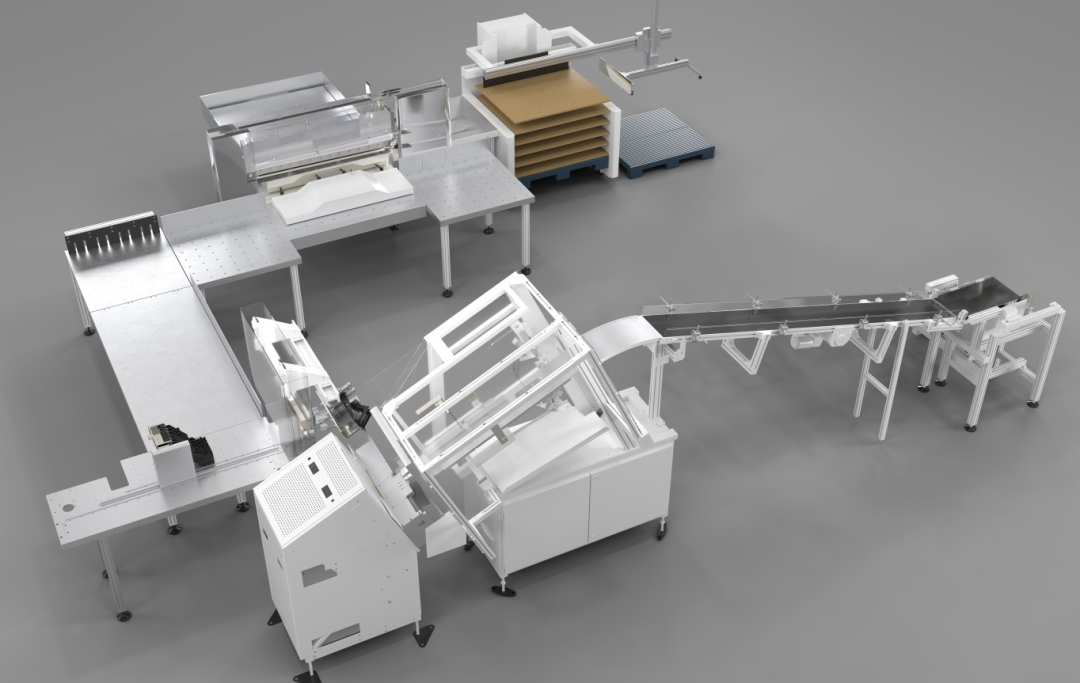
A prime example of hardcore technology is its LabelSystem DC-12 Rapid developed specifically for the labeling industry. This is an automated system designed for unmanned production that combines die-cutting and labeling. By fully taking control of this type of high-precision hardware, Heidelberg can speed up the development of more futuristic workflow integration solutions. With the addition of Polar, Heidelberg can deliver a complete solution to the market that manages everything from front-end plate making, mid-stage printing, to high-precision finishing seamlessly, greatly enhancing the usability of clients' factories while ensuring consistent product quality and the continuity of technological innovation.
Rooted in Shanghai Qingpu for over twenty years: product matrix of the wholly-owned Chinese subsidiary and localized operations
What domestic packaging and printing companies should pay close attention to is that the Polar Group has deep industrial roots in the Chinese market. Polar Printing Equipment (Shanghai) Co., Ltd. (PPM), located in Shanghai's Qingpu Industrial Park, is a wholly-owned subsidiary established by the Polar Group in 2005. With collaboration between the Frankfurt and Shanghai bases, Polar previously maintained a team of around 500 people worldwide.
As a crucial post-press manufacturing hub for the Chinese market, the Shanghai PPM facility has a highly competitive product line, covering high-speed cutting machines of various sizes from 560 to 1370, with touchscreen control and automatic programming to generate cutting programs. Additionally, the facility produces three-knife booklet cutting machines, as well as complete sets of high-standard auxiliary equipment including paper feeders, stackers, automatic turners, and paper stack lifters.
Heidelberg officially emphasized in a statement that customers are always at the center of all strategic initiatives, and all familiar sales, service, and after-sales processes will remain unchanged after the deal is completed. The smooth transition of the wholly-owned Shanghai subsidiary not only ensures high reliability in spare parts supply and after-sales maintenance for many domestic packaging and printing factories but also means that, under Heidelberg's positioning as a system integrator, it will be able to more precisely tailor cost-effective flexible post-press manufacturing ecosystems to the localized needs of China and the Asia-Pacific market, continuing to play a hardcore role in protecting profit margins in the future shelf competition.