


From Bonus to Must-Have: The C9 Evaluation System Continues to Help the Publishing and Printing Industry Upgrade
Recently, a leading publishing group launched the bidding process for printing suppliers for the 2026–2028 annual year, and the C9 printing and packaging quality control and evaluation system qualification was officially listed as one of the six essential qualifications for bidding units. The C9 system, previously used to add points in bidding and serve as a reference for high-quality qualifications, has now been officially upgraded to the basic threshold for leading publishing and printing suppliers to qualify. From a "bonus item" to a "mandatory option," the C9 system is undergoing a role shift from "being seen" to "being needed."
Currently, the number of C9 qualified printing enterprises nationwide has exceeded 400. Behind this adjustment lies a comprehensive improvement in publishing standards' for stable printing quality and standardized production, reflecting the domestic printing industry's transition from scale-driven to quality-driven.
Adapting to the trend:
Quality standardization has become a new consensus in industry cooperation
For a long time, the C9 system, with its scientific, quantitative, and implementable full-process quality control standards, has been included in many publishing institutions' bidding and evaluation criteria, becoming an important reference for differentiated competition among high-quality printing enterprises. This time, leading publishing groups have made C9 a mandatory entry requirement, not to raise industry thresholds, but to make reasonable optimizations that align with the current state of the industry.
With the steady increase in the number of C9-qualified enterprises and the continued popularization of industry standardization capabilities, the market now has a foundation to select high-quality capacity using unified standards. For publishing institutions, publications carry the core value of cultural communication and knowledge transfer. Color accuracy, batch stability, and production standardization directly determine the final quality and brand reputation of the publication.
Moving away from the previous quality control model that relied mainly on manual experience and subjective judgment, and relying on the C9 standardized evaluation system to select suppliers, it can effectively unify printing production standards, stabilize product quality, and reduce communication costs for quality control-this is the core intention behind leading publishing companies in leading industry quality upgrades.
To Printing Enterprises:
Improving quality and building a foundation, standardization is the inevitable path for long-term development
This adjustment of bidding rules sends a clear industry signal to all printing companies: the extensive production and low-price competition model can no longer meet mainstream market demands. Standardization, normalization, and quality have become the basic thresholds for enterprises to establish themselves in the industry and secure high-quality resources.
In the past, many companies relied on capacity and price to compete in the market, investing insufficiently in color management and building full-process quality control systems. Production quality depended on operator experience, and issues such as batch color differences and unstable quality frequently occurred. During the rapid development phase of the industry, such issues can be tolerated, but under the requirements for high-quality development, stable quality and compliance have become the core criteria for market partner selection.
For printing companies, the C9 qualification is not just a certificate, but a systematic review and improvement of their production processes, equipment configuration, quality control systems, and personnel capabilities. Building a standardized color management system not only meets the entry requirements of mainstream publishing bidding but also fundamentally reduces quality defects, lowers rework costs, and enhances customer trust, helping enterprises embark on a healthy development path of high quality and affordable prices.
However, meeting the standards for a single unit does not guarantee reliable batch delivery. During peak order periods, multiple machines are often operating simultaneously. If only one device meets C9 standards, the rest will have varying quality and delivery consistency will still be hard to guarantee. We encourage certified companies to use the C9 standard as a benchmark, gradually expanding from single equipment to multi-machine, full-machine standardization, ensuring that every batch of products delivered to the publisher, regardless of which machine comes from, maintains consistently high standards.
The practice of over 400 C9-qualified enterprises shows that standardization is not an industry burden but a solid foundation for enterprises to consolidate core competitiveness and deeply cultivate the high-end publishing market.
Long-lasting protection:
Selecting capacity based on scientific standards to jointly build a healthy industry ecosystem
High-quality publications rely on high-quality printing, and high quality comes from the continuous implementation of standards in daily production. Going forward, C9 will focus on the actual implementation of the standard system by enterprises, conducting quarterly dynamic evaluations to supervise some enterprises that meet standards only for project bidding at the last minute, preventing a "disconnect" between qualifications and actual production capacity, and promoting the true integration of C9 standards into daily management throughout the entire production process, internalizing them as norms for enterprise production behavior.
Meanwhile, C9 will strictly implement a qualification exit mechanism. For enterprises that fail to implement properly or fail quarterly stability evaluations, qualifications will be canceled according to regulations, ensuring that C9 qualifications "come in and out, with survival of the fittest," and maintain the credibility of qualifications. This is not only a safeguard of the market value of qualified enterprises but also a solemn fulfillment of responsibility toward printing end demanders-behind every C9 qualification lies a stable quality that stands the test of time.
While enforcing strict supervision, C9 will also actively guide more enterprises to refer to the C9 standard and promote benchmarking and compliance construction of all printing production lines, helping enterprises turn standardization into a daily capability and ensuring that each production line can stably produce high-quality publications that meet standard requirements. As more and more companies' production lines operate stably under unified standards, the supply base for high-quality printing capacity will become more solid, and publishers' choices will become more confident and reliable.
Staying true to the original intention:
Strictly uphold the credibility of evaluations and empower the industry with fairness to improve quality in both directions
As the R&D and operation unit of the C9 system, the China Academy of Printing Science and Technology has always adhered to the principles of science, rigor, objectivity, and fairness, deeply cultivating the fields of printing color standardization and quality evaluation.
Faced with the trust of publishing institutions in the C9 system, we hold them in awe and place greater emphasis on them. After C9 changed from a "bonus item" to a "mandatory option," the evaluation results directly affect whether a company can enter the publisher's supply system-companies lacking sufficient skill but wanting to take the payment inevitably harbor illusions and try to take shortcuts in the evaluation stage. For this reason, the Academy recently held a special meeting on evaluation discipline, putting discipline and rules first: during peak evaluation periods, on-site evaluations are conducted under a two-person collaborative system, with "one person reviewing + one person supervising," mutually checking and leaving traces throughout the process, and eliminating improper interference from the institutional level. We require that the more business volume surges, the more rigorous, standardized, and scientific evaluations must become, with standards neither reduced nor simplified, ensuring every evaluation can withstand the scrutiny of enterprises and industries.
Certification is not the end, and fairness is not limited to the evaluation stage. We deeply understand that publishing institutions trust not just a certificate, but the sustained and stable quality capabilities behind it. Only by ensuring every qualification matches its reputation and reality can fair evaluation truly have complete meaning. This is the continuation of the original mission of the Chinese Indian Academy of Sciences and the best response to the trust placed in publishers.

C9 Task Force Anti-Corruption Special Deployment Meeting
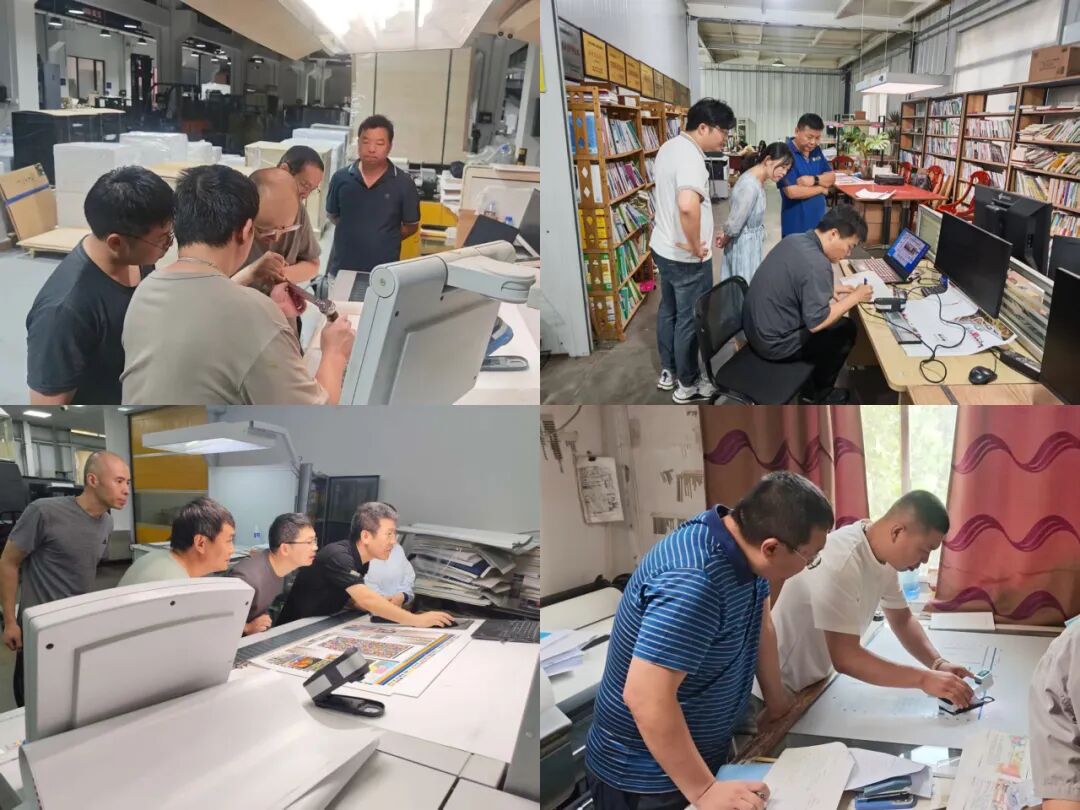 C9 Evaluation On-Site
In the future, the China-India Academy of Sciences will continue to iteratively optimize the C9 evaluation system based on the actual production needs of the publishing and printing industry: on one hand, helping printing companies complete standardized transformation, strengthen quality control capabilities, and enhance market competitiveness; on the other hand, providing major publishing institutions with objective and reliable quality control references to ensure product quality.
From tender bonus points to entry thresholds, the upgrade of the C9 system is an inevitable choice for the printing industry to move towards high-quality development. We look forward to printing companies steadily advancing standardization, refining their production strength, and major publishing institutions using scientific standards to select high-quality capacity, coordinating supply and demand, empowering each other, and jointly promoting our publishing and printing industry toward a new stage of higher-quality, standardized development. The C9 evaluation system will also continue to iterate and improve, serving as a reliable companion consistently present and performing steadily throughout the industry's quality upgrade process.