


Cut costs by 50% and boost efficiency by 25%! A breakdown of Yatush's practical experience in digital transformation
The global printing industry is becoming increasingly competitive, and the demand for customized products is growing more prominent. Orders tend to be small, delivery is fast-paced, and cross-regional and cross-department collaboration happens frequently, which makes business operations increasingly uncertain. Traditional printing companies, which rely on experience-based management, are gradually showing problems like slow reactions and difficulty identifying risks in advance. In this context, figuring out how to use data and process design for proactive prediction and decision-making has become a key issue for printing companies looking to transform and upgrade. Heshan Yatushi Printing Co., Ltd. (hereafter Yatushi) is using smart digital governance as a starting point to create a management model that links manufacturing and sales, providing a practical example that the industry can learn from.
Factory Next Lays the Foundation, Reshaping Digital-Intelligent Governance Logic
Facing the complex and ever-changing international situation and the new demands for high-quality development in manufacturing, Yatushi deeply understands that digital-intelligent transformation is not just partial automation, but a systematic reconstruction covering concepts, processes, organization, and technology. In 2018, Yatushi launched the overall digital-intelligent transformation plan for Factory Next (Dream Factory), focusing on the overall design of processes and data, reshaping the digital-intelligent governance model from the ground up, and building a next-generation smart printing factory for the future.
The project revolves around the ERP 2.0 system, fully integrating key links such as work order processing, production execution, and logistics delivery. By digitizing processes and structuring data, it builds a unified and reliable operational data foundation, laying a solid groundwork for the deployment of smart equipment and upgraded management decision-making.
Since 2005, Yatushi has embarked on the path of digital-intelligent exploration. Starting with lean automation, it introduced RFID sensing technology to build smart warehouses and established an innovation R&D center to strengthen its technical foundation. The ERP 2.0 system officially went live in 2021, gradually connecting the data chain. From 2022 onwards, Yatushi formed a special team to accelerate intelligent transformation, focusing on six core areas: smart logistics, smart production, smart campuses, smart offices, central control centers, and information security. By deeply applying IoT, big data analytics, AI, and other technologies, it gradually achieves comprehensive intelligence and efficiency upgrades across all business areas, driving digital-intelligent governance to new depths.
Under this setup, Yatus relies on its self-built platform and has independently developed over 400 mini-programs covering various scenarios like information updates, workflow approvals, daily management, and cross-department collaboration, with an average daily usage of over 45,000 times. These apps turn tasks that once depended on manual communication and gut feeling into standardized processes with clear steps and traceable responsibilities, gradually shifting the organization from being 'person-driven' to 'system-driven,' allowing management to keep real-time tabs on operations.
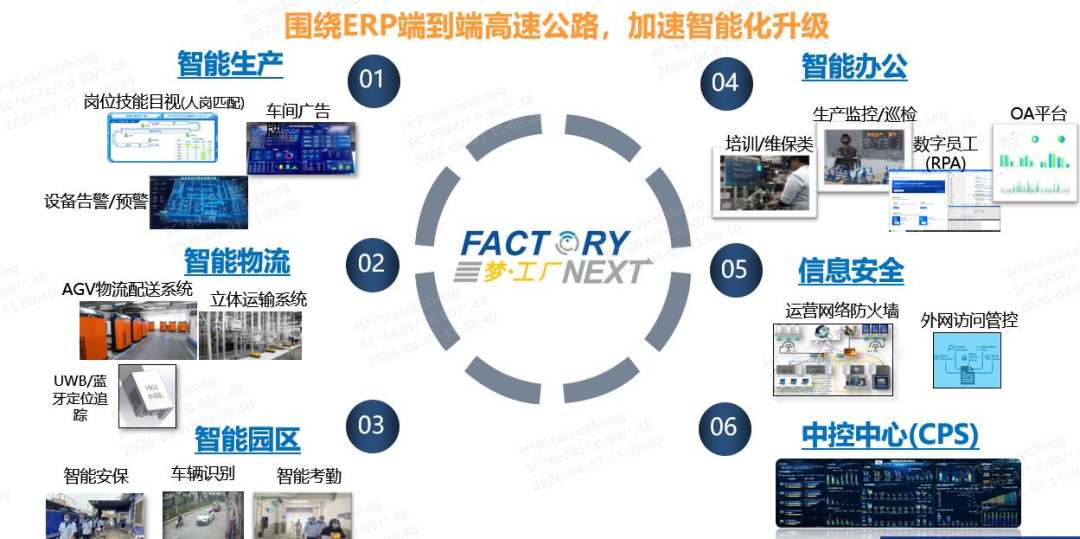 Yatus Dream Factory Planning Map
From Manufacturing to Marketing, Achieving Full-Chain Digital Intelligence
Yatus uses end-to-end digital intelligence to connect the entire production and sales chain, integrating discrete steps into a collaborative and efficient operation system that fully adapts to market demands.
On the manufacturing side, Yatus focuses on the concepts of "continuous production" and "real-time circulation," actively promoting the intelligent implementation of production sites. By introducing new printing equipment, AGV automated logistics systems, and self-developed 3D transport systems, the efficient transfer of semi-finished products across workshops is achieved, significantly reducing intermediate waiting and storage time. Semi-finished product inventory and related costs drop by about 50%, and the production pace better matches actual order demand. At the same time, industrial robots and collaborative robots participate in tasks like machine feeding, cooperative processing, and material handling, reducing on-site labor intensity while improving efficiency and quality consistency. All equipment is integrated into the overall data system, making the entire production process visible and controllable, creating conditions for subsequent data applications.
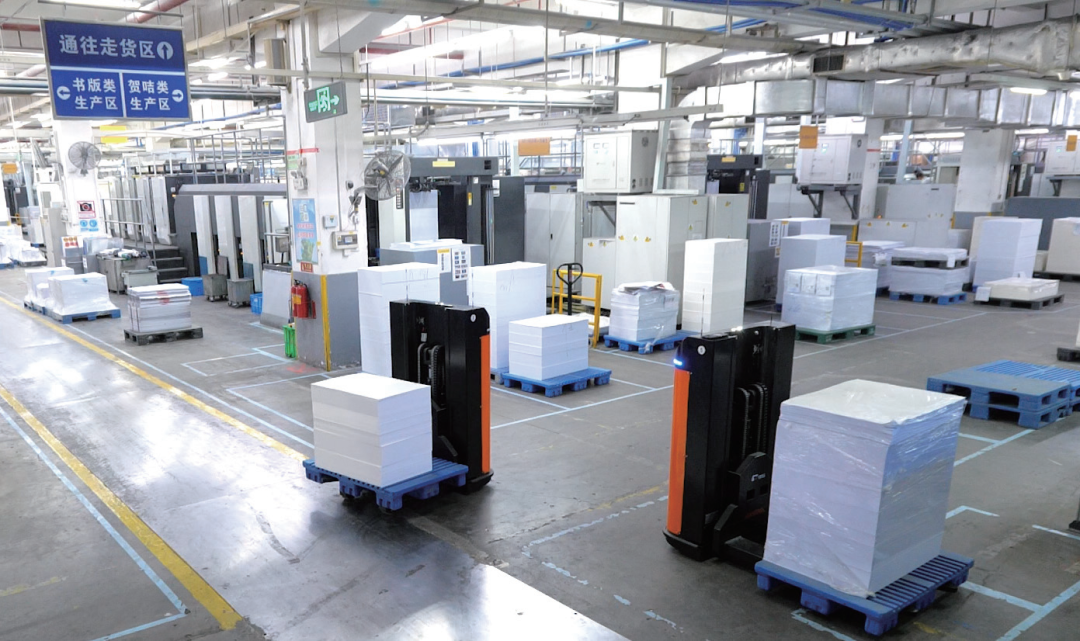 Yatushi Smart Factory Workshop
Intelligent logistics is a key innovation for Yatushi to streamline production flow and eliminate bottlenecks, with two main solutions showing remarkable results. First is the four-way automated storage system. Leveraging multi-level racks and automated shuttles, it fully automates the storage, sorting, and delivery of semi-finished products. This system is also deeply integrated with the MES and scheduling systems, achieving efficient coordination between logistics and production.
Second is the industry-first "Aerial Logistics Method." By using the workshop's overhead space, a suspended transport network covering all processes-folding, book stacking, line assembly, casing, and packaging-was built, allowing semi-finished products to flow continuously while suspended. Once fully implemented, it boosts production efficiency by over 25%, reduces semi-finished product footprint by 630 square meters, cuts logistics costs by 25%, and tackles traditional production issues like board flips, batch mixing, and material damage, enabling continuous flow manufacturing.
On the sales side, Yatushi also applies intelligent management logic. Using a self-developed CRM system with AI, it centrally manages potential client resources and prospective projects, controlling the entire follow-up process through standardized system workflows, reducing dependence on individual sales experience. The system automatically collects information from emails, meetings, client websites, etc., parses it with AI, and inputs it into a unified sales lead pool. It then links client backgrounds and past cooperation data, smartly assigns leads based on client location and business type, helping sales staff follow up efficiently.
During quoting and negotiations, Yatushi uses standardized control tools, "Blue Sheet" and "Green Sheet," to regulate sales strategy creation and client interactions. This gradually turns salespersons' personal experience into content that can be discussed, reviewed, and optimized. AI technology provides real-time strategy suggestions and risk alerts, helping the sales team avoid risks and make rational decisions. Management can monitor key project progress in real time, anticipate potential issues, and implement proactive controls.
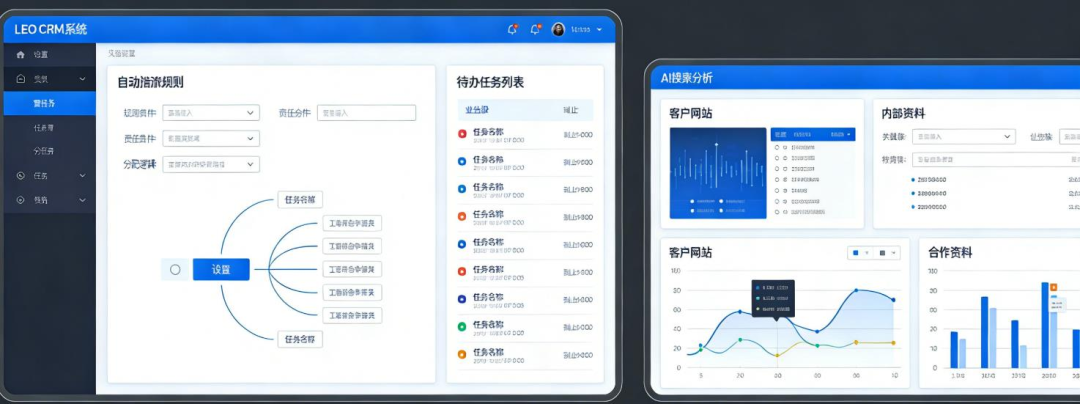 Yatushi Intelligent Sales Management System
Digital Twins Empower Decision-Making, Smart Data Drives Overall Management
As sales and manufacturing achieve full-chain digital intelligence, Yatushi has further built a digital twin visual management platform. By combining predictive analysis with basic data, the platform enables real-time monitoring of equipment operations and production progress, allowing early detection and handling of anomalies.
The group's central control center gathers comprehensive operational data across factories and departments, providing an overall monitoring and analytical perspective. By breaking down data barriers across production, logistics, quality, energy, and supply chain, it enables the enterprise to manage operations with 'one-click control,' strongly supporting data-driven operations and scientific decision-making.
On this basis, Yatushi has also constructed a digital twin visual management platform, serving as a key hub for enterprise smart governance. The platform is built around the ERP 2.0 system, integrating MES systems and on-site equipment data collection. It consolidates dispersed information from equipment and systems into operational digital twin scenarios that can be observed and analyzed in real time, supporting production management with process visibility and immediate control.
Currently, the platform's main modules include: an equipment networking and data collection module for real-time tracking of equipment start/stop status, output, cycle times, and anomalies; a production execution and process monitoring module (MES) for instantly linking work orders, production progress, and equipment status; an anomaly management and downtime analysis module for classifying and analyzing unplanned downtime; and a data analysis and visualization module that intuitively displays equipment efficiency, operation structure, and anomaly distribution through charts.