


11 national standards including the "Guidelines for Plastic Recycling Design" have been released, and a plastic recycling standard system has been established
On September 5th, at the 8th China International Plastic Recycling Exhibition held at the Ningbo International Convention and Exhibition Center in Zhejiang, China, the National Plastic Standardization Technical Committee, China Synthetic Resin Association and other units jointly promoted the official release of 11 national standards, including the "Guidelines for Plastic Recyclable Design", and announced full implementation from February 1st, 2026.
This measure marks the initial establishment of China's plastic recycling standard system, providing key support for the high-quality and standardized development of the entire industry.
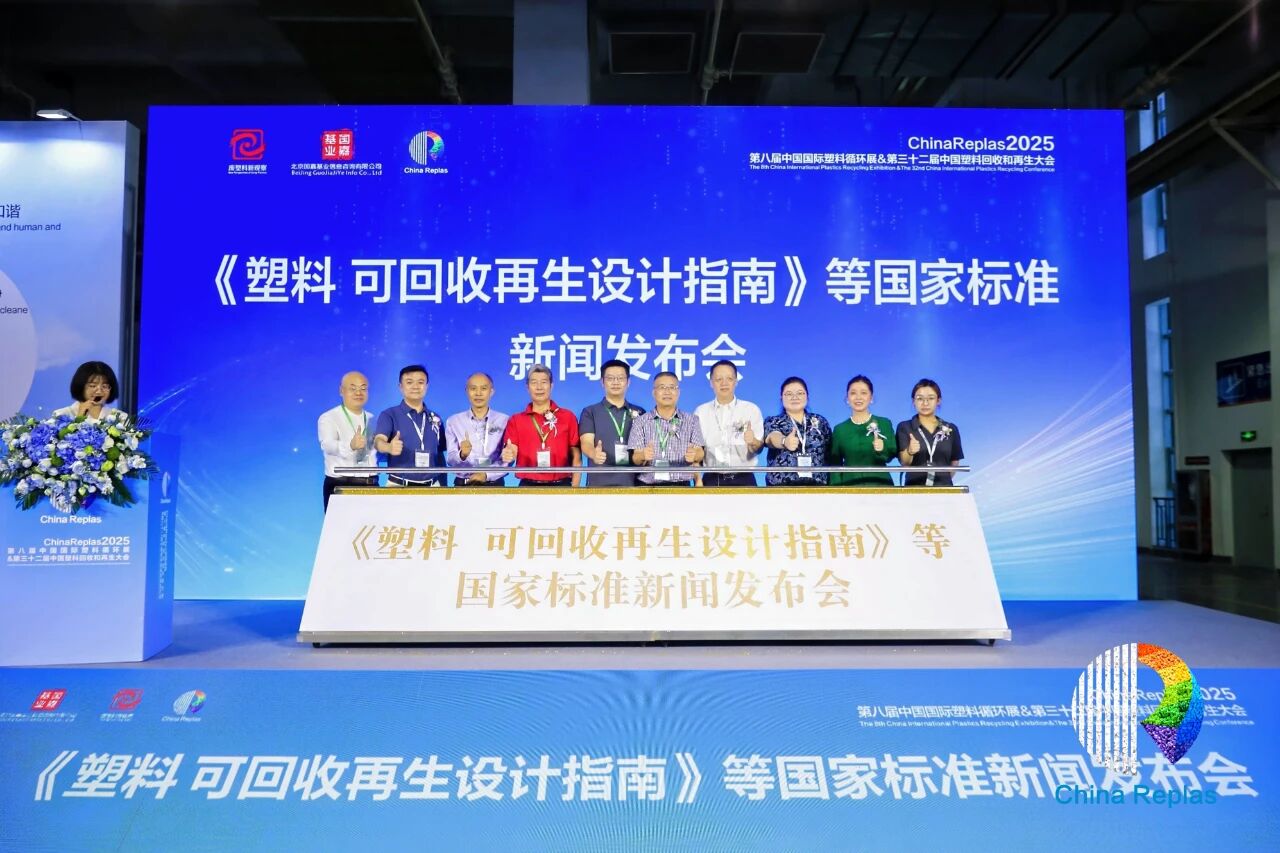
Among the 11 national standards released this time, the "Guidelines for Plastic Recyclable Design" serves as the core standard, starting from the source of product design, systematically stipulating the technical requirements for plastic products in material selection, structural design, labeling and other aspects, aiming to comprehensively improve the recyclability and recycling rate of plastic products, and promote the realization of a green closed loop in the entire industry chain.
It is reported that the "Guidelines for Plastic Recycling Design" provide authoritative design basis and testing standards for end enterprises that extensively use plastic packaging in food and beverage, daily chemical and other industries. Among them, the standard focuses on addressing a major core challenge in the recycling process of PET bottles in various terminal fields - label and adhesive residue.
In the "Guidelines for Plastic Recyclable Design Part 1: Polyethylene terephthalate (PET) Materials", the design principles for packaging components such as labels, inks, adhesives, etc. are clearly standardized, and classification recommendations are proposed based on their compatibility with the PET recycling system. At the same time, the standard proposed for the first time the "elution float sink test method", which established a clear experimental process and judgment criteria for washable adhesive labels.