


How to deal with unstable label printing processes when regulations drive ink formula iterations?
As environmental regulations continue to tighten, the components of printing inks are facing increasingly strict restrictions. While meeting compliance requirements, adjustments to ink formulations also change the rheological properties of the ink, bringing new challenges to label printing. Issues that were previously relatively controllable, such as label foaming, ink splashing, and blade skipping, are now occurring more frequently. It's crucial to reassess and find corresponding solutions for these problems.
Root Cause: Regulation-driven changes in ink formulations disrupt the original process balance
According to the EU REACH regulations and its amendments, many components in printing inks are now restricted or banned, forcing ink manufacturers to adjust their formulations. Some components in the original formulas that had defoaming functions have been removed and are no longer allowed, which directly results in the ink becoming more prone to foaming.
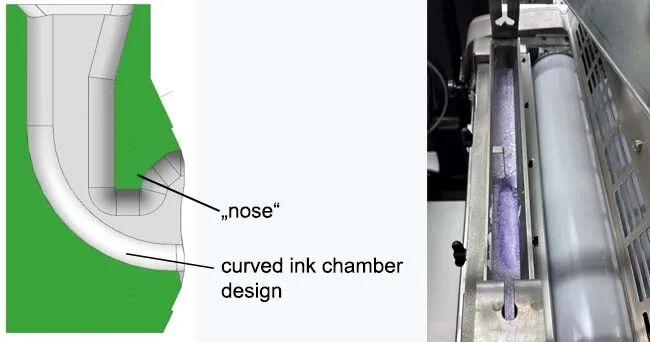
Arc-shaped Ink Chamber Structure Design
At first glance, this issue seems like just a raw material problem, but it quickly turns into a systemic challenge. The reason is that the rheological properties of the new ink formula change during printing, while the printing equipment was originally designed for the old ink conditions. When the ink's flow behavior changes, the existing equipment geometry doesn't match the new ink, triggering a series of process failures.
Ink Chamber Geometry: Structural Factors Affecting Ink Foaming
One of the core components of flexo printing is the chambered doctor blade with an ink chamber, which transfers ink evenly to the anilox roller. But this is precisely where an unexpected weak point appears. Traditional round ink chambers, influenced by their geometry, can increase ink agitation. It's like a cup of water with a little soap-stir it and foam forms. The same thing happens inside the ink chamber.
When paired with new ink formulas prone to foaming, this effect is amplified. Air gets trapped in the ink and accumulates in the system, leading to uneven anilox roller wetting and ultimately causing uneven ink layers and missing spots, hurting print quality. The situation gets especially tricky during production stoppages. When the press stops, bubbles settle into the ink chamber, worsening the problem and creating a vicious cycle.
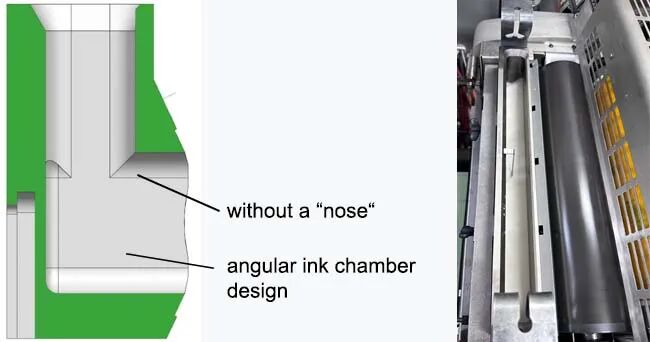
Geometric Design of Angular Ink Cavity Channels
The optimization plan is to use angular channels to improve the ink cavity structure. The angular design can reduce internal ink turbulence and minimize air flow, which helps to a certain extent in preventing ink from foaming. This structure works well with high-viscosity UV coatings, metallic inks, and similar types, providing more consistent ink layer output. After optimizing the ink cavity structure, printing speed-which was previously limited by process fluctuations-can be steadily increased, continuously boosting production line efficiency.
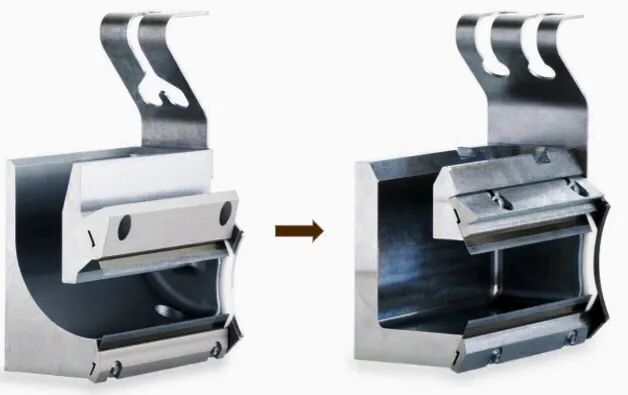
Comparison of Arc-Shaped Ink Chamber Structure Design (Left) and Angled Ink Chamber Flow Channel Geometry Design (Right)
It's worth noting that not all situations require changing the ink chamber structure. Only when issues like ink foaming, ink splattering, or doctor blade bouncing occur should the geometry of the ink chamber be evaluated for modification. Under normal ink operation, the traditional arc-shaped ink chamber can still run stably.
Doctor Blade Selection and Structural Design: An Easily Underestimated Factor in Process Stability
Besides the ink chamber, there's another component that's often underestimated but greatly affects process stability: the doctor blade. In actual production, many users choose cheap doctor blades for cost reasons, which directly puts the printing process at risk. Since doctor blades are wear parts, if the quality is poor, process issues like ink splattering and blade bouncing are almost unavoidable.
The material and geometry of the doctor blade determine process stability: high-quality alloy blades can create a 'lotus effect,' allowing excess ink to flow off smoothly; uncoated blades, on the other hand, can accumulate ink on the back side (open side). This accumulated ink eventually forms droplets that fall back onto the anilox roller and are then flung off at high speed - this is what causes ink splattering, creating visible defects on the print. Poor blade geometry or incorrect installation angles can further amplify the problem: the ink chamber cannot achieve reliable sealing, and ink accumulates chaotically.
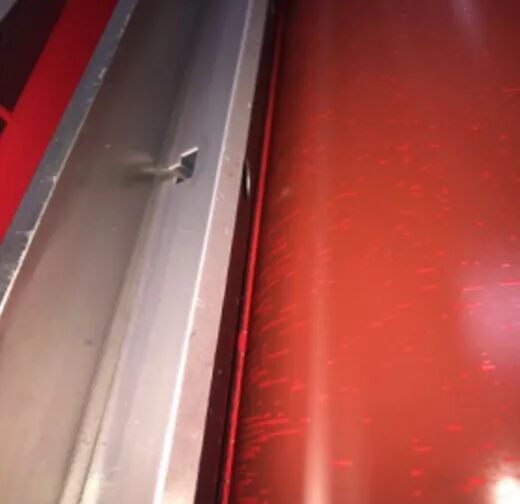
Special alloy scrapers can eliminate ink splashing.
The structure of the blade is equally important. Scrapers with a layered-edge structure can accurately control the ink flow while reducing stress on the edge. In addition, the material thickness and rigidity also affect how the scraper performs during printing. Micro-vibrations on the surface of the anilox roll can also cause ink splashing, and a scraper with higher rigidity helps minimize this effect.
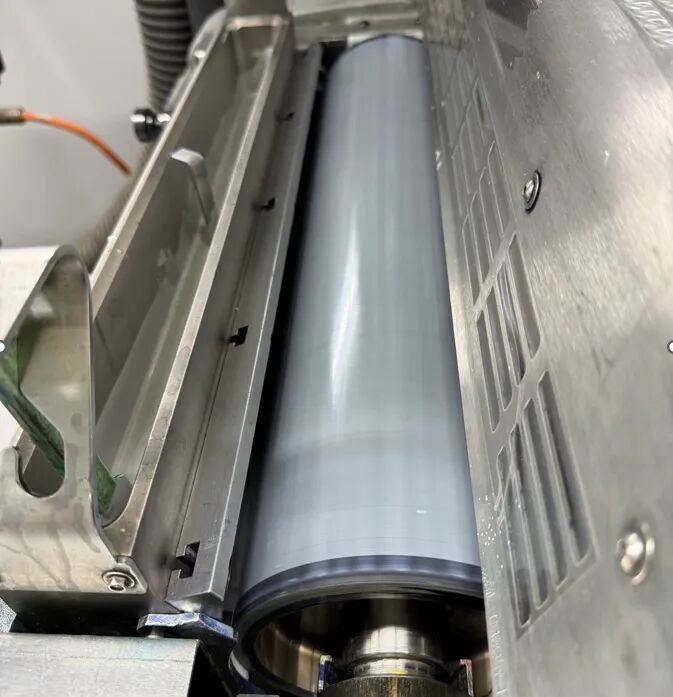
Scraper bounce can reduce the effectiveness of ink scraping, worsen ink splashing, and speed up wear on both the scraper and the anilox roll.
Anilox roll cleaning: the basic guarantee for stable ink transfer
Another key factor for process stability is whether the anilox roll is clean. Even tiny amounts of residual ink in the cells can weaken the anilox roll's ink transfer capability; once contamination builds up to a certain level, it can also trigger ink splashing. In other words, the anilox roll's function is to carry and release ink. If this process can't happen cleanly and smoothly, problems are bound to follow. Besides basic manual cleaning, specialized cleaning units and modern laser cleaning systems can efficiently remove stubborn contaminants and clean deep inside the cells.
In short, issues like ink foaming, splashing, and scraper bounce are system problems caused by multiple factors. Simply replacing a single part won't achieve long-term stability. Printing process stability depends on the overall match and coordination between the ink, ink chamber, scraper, anilox roll, and scraper pressure. When dealing with ink formula updates due to regulations, it's important to establish a full evaluation approach for the entire ink transfer chain, adjusting multiple aspects like fluid structure, scraper selection, and roll maintenance at the same time, instead of just making isolated fixes.