


Improper handling of manual labeling causing frequent problems? Remember these eight points to easily resolve them!
Sticker labeling is generally done in various ways, including automatic labeling, semi-automatic labeling, and manual labeling. Among them, automatic and semi-automatic labeling are usually completed by machines, providing stable force and smooth labeling, which avoids the uncertainties caused by human operation. However, some products may still use manual labeling due to limitations like bottle shape. In actual production, improper manual labeling can lead to many labeling problems, causing considerable trouble for enterprises.
During the labeling process, the following points must be noted:
(1) Avoid touching the adhesive surface directly with your hands, as sweat and oils from your hands can transfer to the adhesive. When the adhesive surface is contaminated, the glue cannot fully adhere to the bottle, and the contaminated areas are at risk of lifting.
(2) Apply a certain amount of pressure to gradually smooth the label, removing air bubbles and avoiding residue.
(3) Pay special attention to smoothing the corners and edges of the label, as they are naturally uneven. Applying force to flatten them helps prevent the risk of edge lifting.
(4) The cleanliness of the bottle surface must be considered. If there are small molecular substances on the bottle surface, use a cloth soaked in 95% alcohol to clean it. After cleaning, let the bottle sit for about 10 minutes to allow all alcohol moisture to evaporate completely, preventing alcohol residue from compromising the adhesive's stickiness.
(5) The temperature and humidity of the labeling environment can also affect the final labeling result. Therefore, labels must be applied within the temperature range specified by the adhesive's technical parameters.
(6) After labeling, bottles should be placed in an environment with a normal temperature of 20°C to 25°C and relative humidity of 45% to 55%. Observe the labeling after 48 hours.
(7) Different label processing methods have varying risks of issues. For example, the thickness of the same adhesive label with a lamination process is greater than one with a varnish process. Different lamination materials, such as PP compared to PET, have lower rigidity; therefore, the higher the rigidity of the label, the greater the risk of edge lifting.
(8) Manual labeling must also consider whether to label before or after filling because the temperature of the liquid being filled will affect the final labeling result.
Finally, a demonstration for manual labeling:
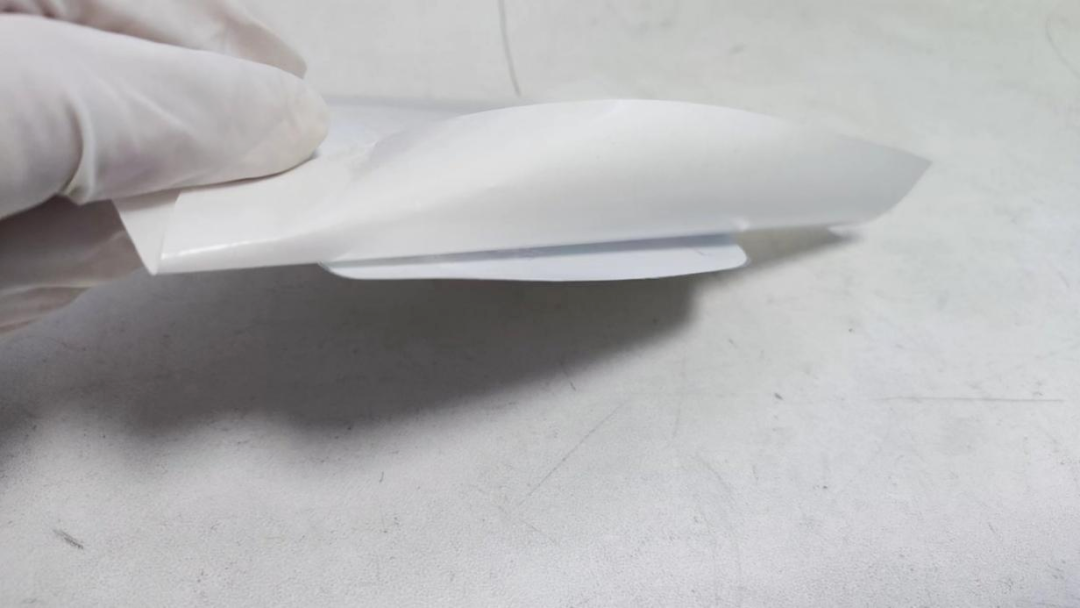
Push out the label
Pull the backing paper backward, pushing out the label.
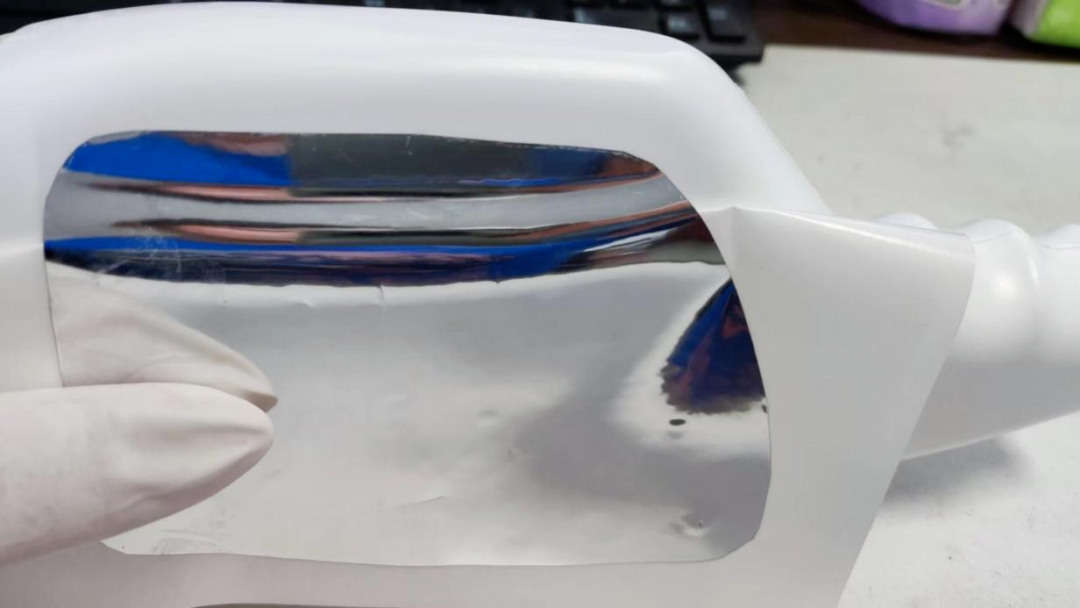
Applying the Label
Align one side of the peeled-back label with the bottle and press it on.
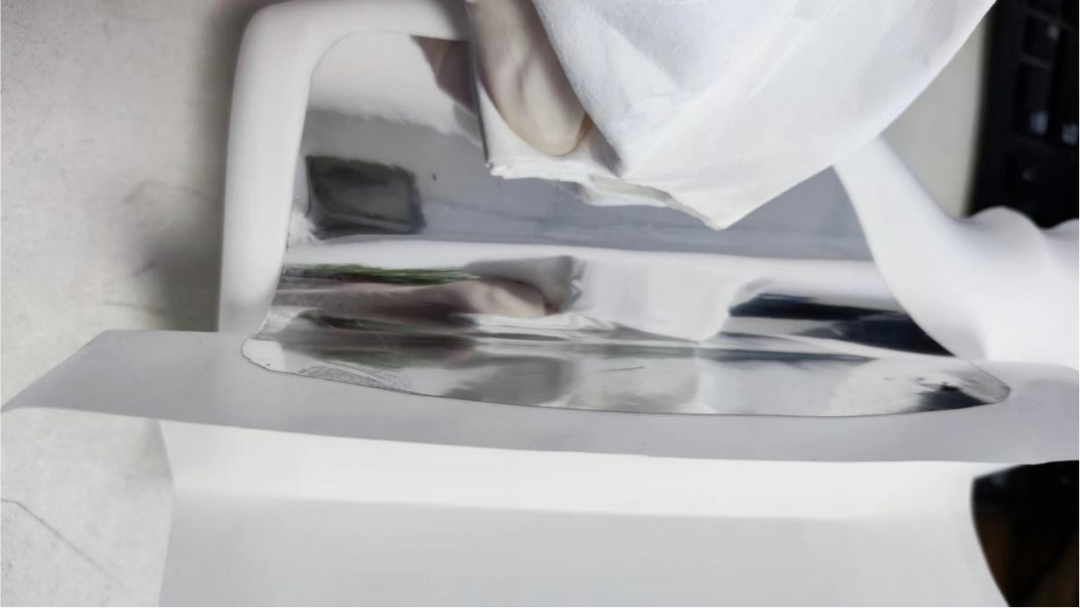
Smoothing the label
While applying the label, use cotton gloves or gauze to press and smooth the label firmly, making sure not to squeeze the bottle. The label should be
applied so that there is no flaring at the edges.
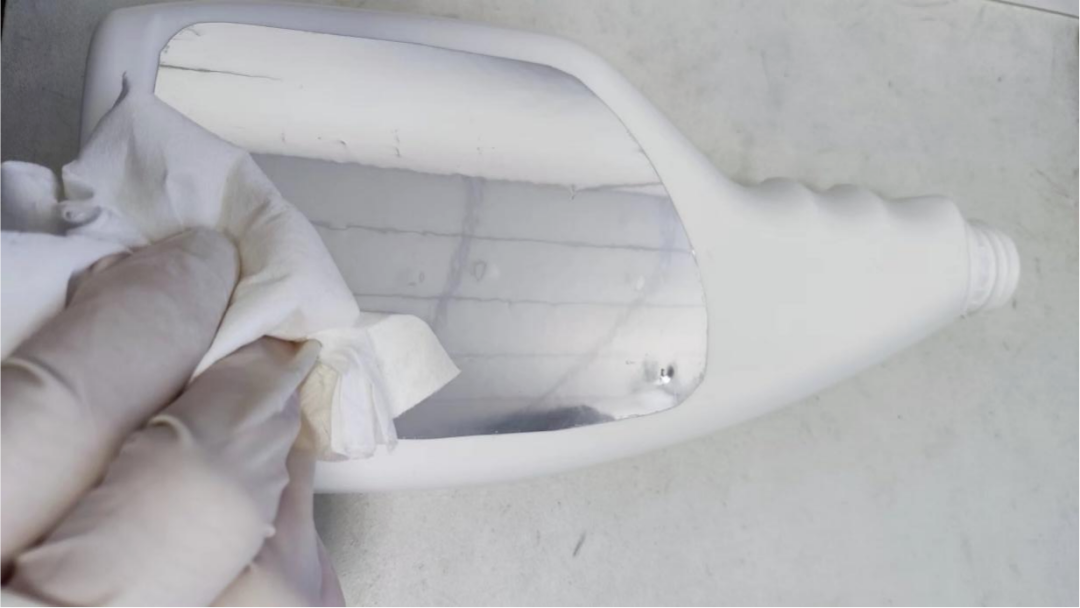
Peel off all the backing paper
Peel off the backing paper completely, then smooth the label as a whole again. Pay special attention to whether the label is smoothed at the edges and corners, and be sure to press it flat.
It can be seen that the correct material selection matching the appropriate processing technology, standardized labeling methods, and suitable temperature are all key factors in achieving good labeling results.