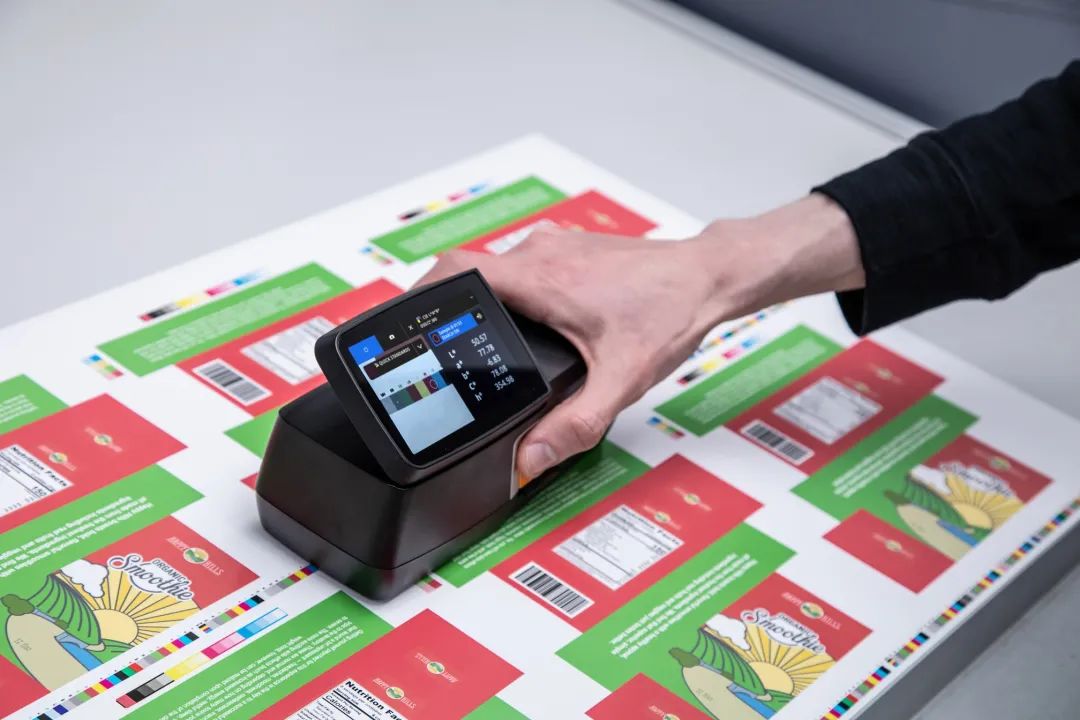
Color Technology Sharing - Why Visual Color Assessment Is Far from Enough?
Everyone says that color is very important, but do you know why it is so important?
In reality, color is a key element in the manufacturing process. Unfortunately, many manufacturers are gradually finding that ensuring color accuracy is much more difficult than in the past, and their upstream brand owners are demanding increasingly stringent color tolerances.
The reason is as follows:
With the continuous advancement of color technology, various metal packaging, pearlescent surface effects, custom fabrics, and bright new colors are emerging endlessly. While these attract customers' attention, they also make achieving color consistency more challenging.
Composite Flooring
Take composite flooring as an example. In the past, composite flooring only had two options: gray and brown. As long as the color of the entire floor was consistent, customers would be satisfied. Today, the options are much wider, such as dark wood grain patterns and exotic colors. Manufacturers need to manage dozens of colors, no longer just two or three.
Achieving color consistency has become significantly more difficult!
Packaging
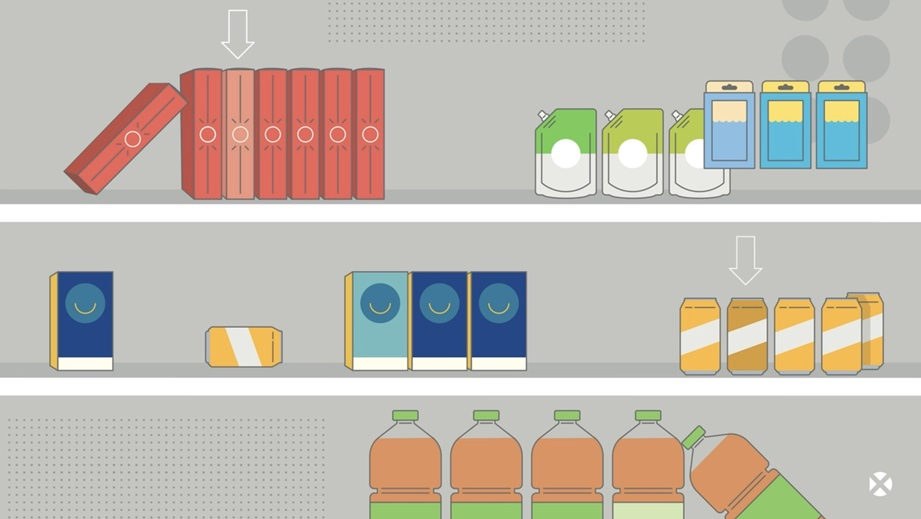
Take packaging as another example. In the past, store shelves neatly displayed printed boxes, but now they also include foil bags, blister packs, and multi-material displays. Colors on reflective and translucent surfaces are particularly difficult to control, and a method suitable for one material does not necessarily work for another.
Various packaging designs ultimately come together on the shelves. Here, you can see bags, labels, cartons, and corrugated sheets with inconsistent visual effects.
However, all these problems can actually be overcome!
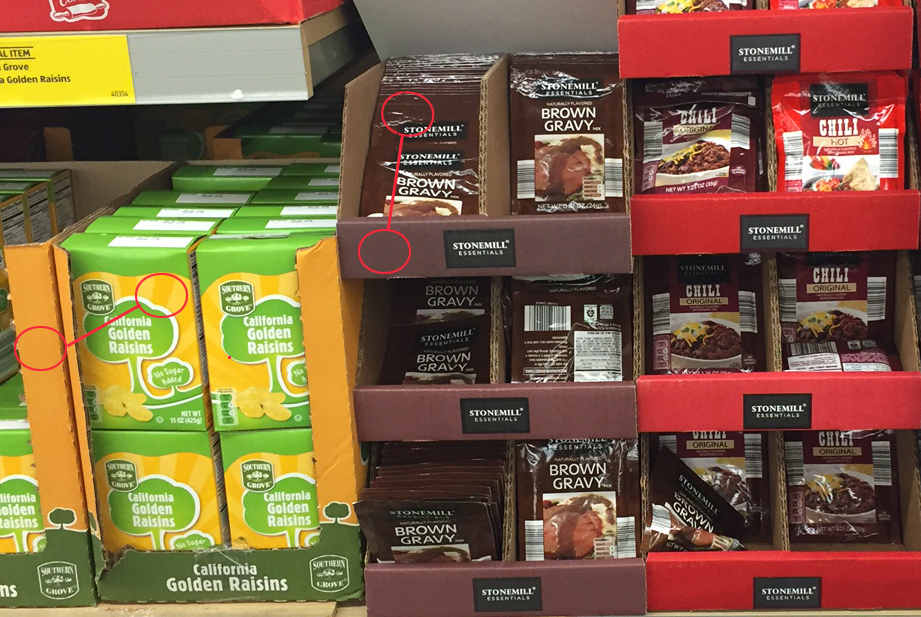
"Colors that used to pass are no longer good enough."
From textiles to plastics to paints and coatings, the same story plays out across every industry. Consumers and brand managers are becoming increasingly picky. Once the color appearance is off, consumers will skip over disliked packaging or products and turn to competitors, and rejected products often end up as waste inventory.
This creates enormous pressure for brand owners, printers, and manufacturers. Do you feel the same way?
Do you go outside to evaluate colors in natural daylight?
Do you mail photos to others for evaluation and approval?
Are you unsure about which exact color to produce?
Are colors that were "pretty good" in the past now being rejected?
If any of the above issues exist, it indicates that your visual evaluation program still has room for improvement. Fortunately, the first step toward color consistency does not require a significant investment of time, cost, or effort.
Let's look at common misconceptions in visual evaluation programs that lead to color errors.
1. Incorrect light source
The image below shows why it's important to evaluate colors under standard lighting conditions. Can you see how red changes depending on the type
of light?
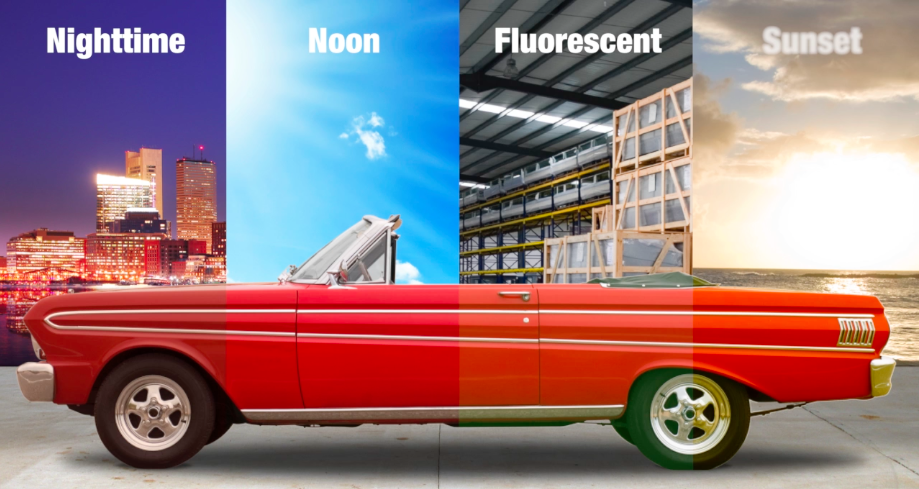
When the color temperature of a light source changes, our perception of color also changes.
But what should you do if you are unsure whether the laboratory or office lighting meets the standard? Do not take chances!
PANTONE® lighting guide dots are a good tool. Each guide dot has two color patches. When they match, it indicates that you are working under natural daylight conditions. Otherwise, the light source should be replaced before making color decisions.
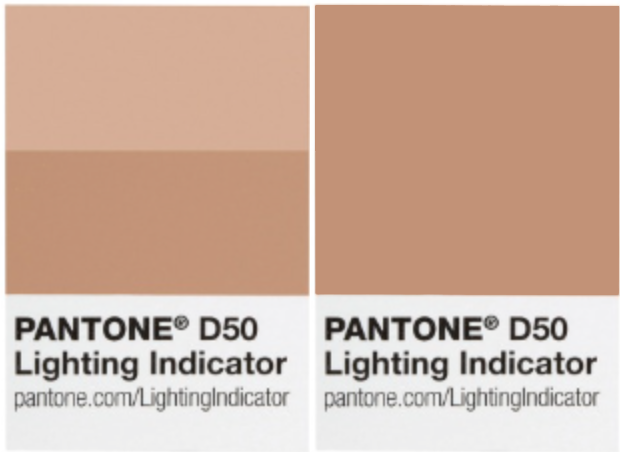
Of course, lighting index stickers will not show the appearance color under fluorescent lamps, incandescent lamps, or LED lights in stores, offices, and homes. The recommended way to understand the actual appearance color of the finished product in real life is to use a standard light source box.
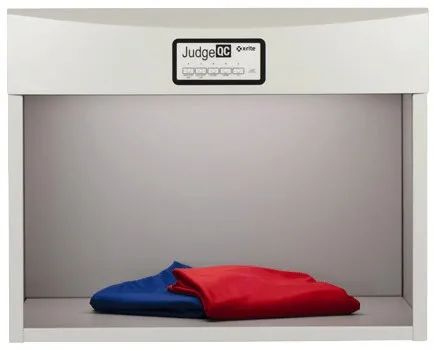
This is especially important when the parts you produce are going to be assembled into the final product, such as a phone case composed of a plastic back and rubber sides, or a car side mirror that must match the body during assembly. Matching them under daylight with a physical reference does not mean their appearance will be consistent in store lighting, showroom lighting, or home lighting.
2. Poor color vision
Most people do not know that they have some type of color vision deficiency, but it is actually very common. In fact, approximately 1 in every 13 men and 1 in every 300 women has some type of color vision deficiency.
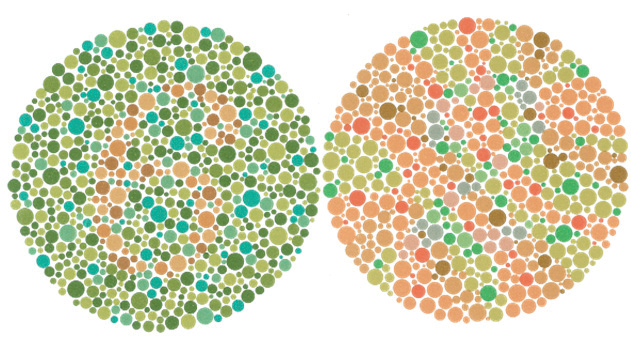
This is the Ishihara color blindness test. If you cannot see the "6" in the circle on the left and the "2" in the circle on the right, you are very likely to have some type of color vision deficiency.
If you are responsible for color decisions, you should take a physical test, which is also part of our "Fundamentals of Color and Appearance" workshop. If you are just curious, you can quickly and enjoyably check your color vision sensitivity through an online color challenge.
3. Incorrect Physical Standards
If you use physical standards, that's great! They are an accurate way to communicate and evaluate color, but the premise is to follow some basic guidelines.
They need to be made from the correct materials!
For example, if you are producing terry fabric for towels, using paper standards to evaluate the color of the fabric obviously will not provide accurate results. Because pigments, inks, or dyes behave differently on different materials, you need to use standards made from the same material to make reasonable color decisions.
Many manufacturers encounter setbacks at this point. However, physical standards can be affected by dirt, stains, and fading.
4. Device Color Inconsistency
If you have ever walked into an electronics showroom and seen a brand-new video wall displaying completely different colors, you will understand that device color inconsistency is a problem. But many people are not aware of this when making color decisions using handheld devices or computers. Did the camera capture the correct color? Did the person you sent the sample for approval see the correct color?
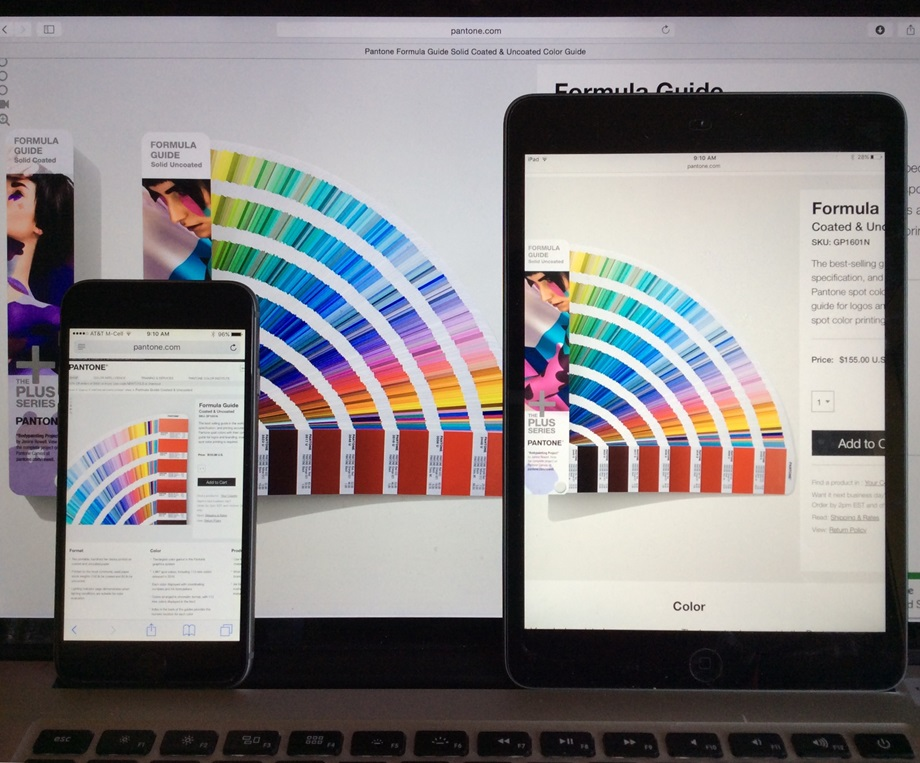
In situations where sharing physical samples is not possible, although sending photos electronically is not a good way to make color decisions, calibrating all the devices involved in terms of color will be very helpful.
Do you rely on visual assessment?
Achieving excellent color performance is a long-term process. Although new substrates and manufacturing processes nowadays may increase the difficulty of color control, the intelligence level of color tools is also continuously improving.
As long as you make good use of them, your colors can get back on track! If you are already using light boxes and color measurement tools, then your color journey is already a step ahead.
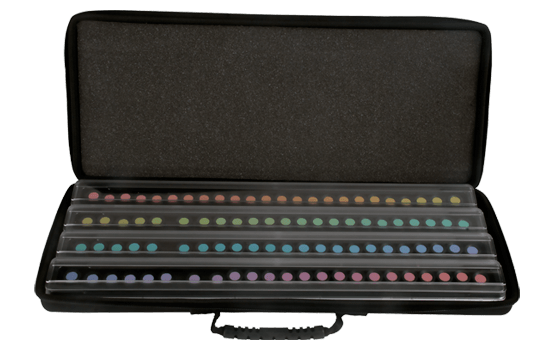
FM100 Hue Test
The FM100 Hue Test is an easy-to-manage and highly efficient testing tool that can be used to evaluate an individual's color discrimination ability.
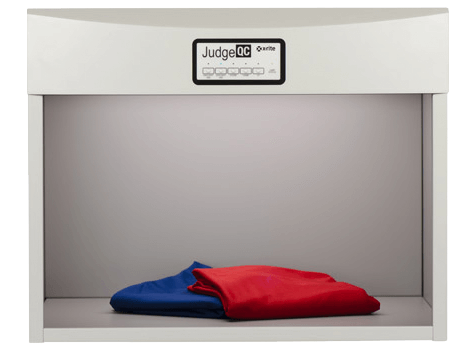
Judge QC
This compact entry-level light box features 5 light sources, including B-level daylight and an optional LED light source, making JudgeQC an economical solution for visually assessing the color of small samples under controlled lighting.
eXact 2 Product Series
eXact2 is the first on the market, featuring innovative characteristics such as the patented MantisTM video target positioning function and digital magnifier enlargement technology. It is the ideal choice for brand owners, printers, packaging service providers, and ink suppliers.