


How to solve the exhaust gas problem of gravure printing? Here comes the complete guide to governance from source and process to end-of-life management!
Gravure printing has mature processes, high production efficiency, rich and layered printed products, and excellent original reproduction performance, making it widely used in the flexible packaging industry. Our company owns seven advanced gravure printing production lines both domestically and internationally, with an annual output of about 26,000 tons of packaging film. In this paper, the author conducts an in-depth study of gravure printing exhaust gas (VOCs) reduction and energy-saving technologies, combining gravure printing exhaust gas generation, production process control, equipment improvement, exhaust gas (VOCs) treatment, and heat source utilization, achieving significant economic and social benefits.
Gravure printing exhaust sources
The solvent-based ink used in gravure printing contains ≤75% VOCs. To improve printing performance, various solvents (ethyl acetate, n-butanol, isopropanol, n-propyl acetate, etc.) must be added to the ink to mix and dilute it. VOCs are evaporated and released during ink preparation and drying.
To reduce VOC emissions, in recent years, the printing industry has adopted water-based inks (absorbent substrates≤15% for exhaust source control; Non-absorbent substrates ≤30%) technology has also developed rapidly, but since water-based inks have not fully overcome technical challenges in adhesion, water resistance, and gloss, their current application still faces limitations. This paper explores research on VOCs emission reduction and energy-saving technologies, based on solvent-based inks widely used in gravure printing.
Gravure ink process control
01/ Storage
VOCs such as ink and solvents should be stored in sealed containers, which should be covered and sealed, kept sealed, and stored in dedicated hazardous chemicals warehouses. The temperature in hazardous chemicals warehouses should preferably be controlled between 0°C~28°C. Water storage roofs or cooling water pipes can be installed on the warehouse roof. When outdoor temperatures are 30°C or above, spray water to cool the temperature, keeping the internal temperature below 28°C. Hazardous chemical warehouses with suitable conditions should be equipped with explosion-proof air conditioning or explosion-proof supply air supply equipment, controlling the temperature of the warehouse in summer to below 28°C and above 0°C in winter.
02/ Blending
The ink and solvent mixing process should use automatic ink mixing equipment and operate in a sealed space to reduce evaporation caused by exposure. If conditions are not met, local gas collection measures should be taken in the isolation room, and exhaust gas should be fed into the VOCs exhaust gas treatment system via explosion-proof fans and sealed pipelines.
03/ Ink supply
After mixing, ink should be centrally conveyed to the printing machine unit using sealed pipelines (ideally using a self-flowing system). The demand unit should use centralized viscosity control based on usage, and a pneumatic valve should automatically add ink to the ink tray.
For non-pipeline transfer of ink and solvents, sealed containers should be used. When adding ink or solvent to the ink tank, a unit-type ink viscosity controller should be used to keep the solvent sealed inside the unit. After ink is added, the ink bucket should be closed promptly to reduce VOC emissions during the ink supply process.
04/ Printing
To reduce on-site exhaust emissions, ink trays, ink drums, and solvent drums should be covered with cover plates. Gravure squeeges should preferably use closed squeeges, or measures such as using ink tank covers or changing the shape of the groove openings can reduce the open area of the ink supply system. The printing process should use automatic control of ink viscosity, enabling online monitoring of ink viscosity and automatic solvent dosing to reduce the frequency of manual opening of ink caps and minimize VOC emissions.
The printing unit should adopt local gas collection measures, with air intake located at the lower part and on the drive side. After collecting exhaust gas, it is discharged through sealed pipelines to the VOCs exhaust gas treatment system.
05/ Oven heating
Oven heating for gravure printing accounts for about 70% of the machine's ignition cost and is a key focus for energy saving and emission reduction. New high-efficiency gas suspension or semi-suspension ovens offer excellent drying and energy-saving effects; If conditions permit, air heat pumps or water-electricity (steam) mixing are preferred. The intake and return air ducts should use internal circulation or LEL automatic control. The oven should be well sealed to reduce exhaust gas and heat loss caused by air leakage. During operation, air volume should be adjusted to maintain a slight negative pressure inside the oven.
06/ Clean with a different plate
Gravure printing requires plate cleaning when an order is completed or products are replaced. During cleaning, try to use a small amount of solvent for rapid cleaning during plate roller operation. For further cleaning, it is best to use an ultrasonic cleaner for automatic cleaning in a sealed space. The exhaust gas produced is collected locally and discharged through sealed pipelines to the VOCs exhaust gas treatment system.
Printing ink plates, ink buckets, cover plates, etc. can greatly reduce VOC emissions caused by solvents used during cleaning by spraying Teflon. Through scientific production order scheduling, products of the same specifications and varieties are produced in a centralized manner, reducing the frequency of plate roll replacement and minimizing VOCs emissions.
07/ Production environment
Gravure printing production environment should be controlled between 18~28°C and humidity at 45%~65%, with indoor and outdoor environments maintained under slight negative pressure (indoor negative pressure) to reduce VOC leakage.
Improved exhaust system for printing machines
The drying device consists of an oven, fan, air valve, air duct, air nozzle, and other components. Hot air is blown directly onto the substrate through the nozzle, and the solvent film on the substrate surface is damaged by the hot air jet. The solvent in the ink then seeps through the hollow dielectric pores and evaporates to the outer side of the ink layer. Part of the heat is transferred as latent heat, while another part is transferred inside the substrate body via conduction, and the remaining heat is eventually carried out of the oven by air.
The hot air drying process of gravure printing equipment is a complex process of mass and heat transfer. The quality of printing depends not only on hot air speed, hot air temperature, ink thickness, exhaust system, and environmental temperature and humidity, but also greatly affects the characteristics of the substrate, ink composition and characteristics, and the structure of the drying oven.
To improve the overall utilization of heat in the oven, we implemented the following improvements:
(1) Use an insulated oven, with ceramic fiber felt insulation layers on the walls of the enclosure, providing insulation that reflects heat and reduces heat loss in the drying system.
(2) The oven nozzle corresponds to the alloy guide roller of the printing press. Through the metal guide roller, it absorbs and transfers heat secondly, increasing the contact area with the registration material and improving energy utilization.
(3) Install a return air heat exchanger to exchange heat between the external exhaust air and the heating oven inlet, recovering the discharged hot air. This reduces the solvent content in the inlet air while also achieving secondary hot air reuse. This method can recover about 65% of hot air and reduce waste air emissions by approximately 30%.
(4) Taking advantage of the low bottom exhaust concentration and high upper exhaust concentration, the bottom exhaust duct is introduced into the upper exhaust mode, reducing the upper exhaust air from indoors. Tests show that each printing machine reduces exhaust emissions by about 12,000 cubic meters per hour.
(5) Using unit or local LEL technology, the upper exhaust system automatically adjusts circulating air volume based on concentration, reducing waste air emissions. Under stable operation, this solution reduces exhaust emissions by 40%.
Design of exhaust gas (VOCs) treatment facilities
Gravure printing VOCs exhaust gas is characterized by low concentration and large air volume. After comparing various solutions, we chose a two-stage zeolite rotary concentration + three-tank RTO (regenerative oxidation furnace) exhaust gas treatment system. Using a two-stage runner to concentrate and increase VOC concentration in process gases enables RTO self-sustaining operation and reduces natural gas consumption.
The zeolite rotary concentration and removal efficiency is 90%~95%. When the VOCs concentration in the exhaust exceeds 500mg/m³, the single-stage runner concentration adsorption can no longer guarantee the requirement of 40mg/m³ for chimney exhaust VOC≤s. A two-stage runner is designed to perform secondary adsorption of the gas adsorbed by the first-stage runner, increasing the wheel's adsorption efficiency to 98.5% and significantly reducing VOC emissions. Using a three-tank RTO (Regenerative Oxidation Furnace) design, VOC removal efficiency can exceed 99%, greatly improving the environment.
Energy saving of exhaust gas (VOCs) treatment systems
Through operational management, equipment improvement, and energy recycling of exhaust gas (VOCs) treatment systems, VOCs reduction and energy savings are achieved.
01/ Two-stage zeolite rotary concentrate
The two-stage zeolite rotary concentration device is designed with two first-stage runners (A1 & B1) and two second-stage runners (A2 & B2). The desorption air from the first-stage runner enters the RTO system directly, while the adsorption air from the first-stage runner re-enters the second-stage runner for secondary adsorption (A1 adsorption air enters A2, B1 adsorption air enters B2). The adsorption air from the second-stage runner is discharged directly into the exhaust stack, and the desorption air from the second-stage runner is introduced into the first-stage runner inlet to mix with the original process waste gas. (Figure 1 Dual-stage zeolite rotary concentration schematic), the key points for energy-saving operations are as follows:
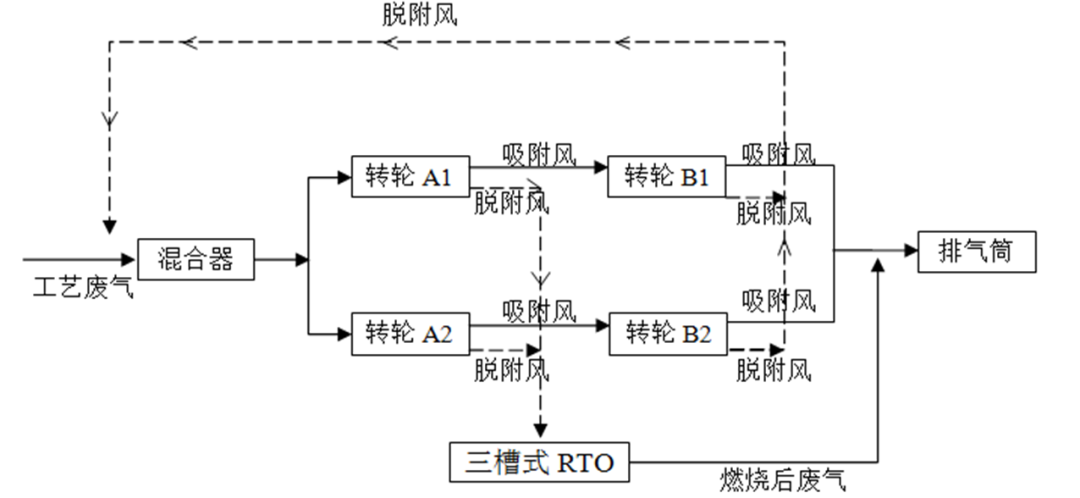 Figure 1 Schematic Diagram of Two-Stage Zeolite Wheel Concentrator Principle
(1) Wheel Speed Adjustment: At startup, it is generally set around 30Hz. During operation, it can be adjusted based on airflow. For example, when the airflow is low and the concentration is low, adjust the rotation motor frequency of the wheel to reduce the rotation speed, increase the concentration, achieve self-balancing of RTO combustion, and save natural gas; conversely, increase the rotation speed to enhance the adsorption effect of the wheel and ensure that the exhaust gas emission meets the standard.
(2) Regular Replacement of Wheel Inlet Filter (Filter Bag): The pressure difference at the wheel inlet should not exceed 75 mmAQ. Through regular cleaning or replacement, the pressure difference should be controlled at 25 mmAQ or below as much as possible, which can save the power load of the system fan.
(3) Wheel Temperature Adjustment: The desorption inlet temperature of the wheel is set at 180°C. This temperature is controlled by the top of the RTO combustion chamber, using a proportional valve and mixing box to stabilize the desorption inlet temperature of the wheel. If the desorption inlet temperature is below 115°C, it will result in low desorption efficiency; if it exceeds 225°C, it will pose a safety hazard. In this case, the equipment must be forcibly stopped, and the high-pressure CO2 system is automatically triggered to cool the wheel to ensure safety.
02/ Three-Chamber RTO (Regenerative Thermal Oxidizer)
RTO (Regenerative Thermal Oxidizer) includes three major functions: heat storage, thermal oxidation, and combustion. The "heat storage" comes from the regenerative media in the RTO. In domestic ceramic regenerative systems, the heat utilization efficiency is already above 97%. The working principle is to heat the organic exhaust to above 790°C, causing the volatile organic compounds (VOCs) in the exhaust gas to oxidize and decompose into carbon dioxide and water. The heat generated during oxidation is stored in the ceramic regenerative media, causing the media to heat up and store heat. The heat stored in the ceramic regenerative media is used to preheat the subsequently incoming organic exhaust, which is the "heat release" process of the ceramic regenerative media, saving fuel consumption in the exhaust heating process.
The three-chamber RTO uses valve switching and operates cyclically in three stages. In stage one, the exhaust gas is preheated through regenerative chamber 1 and then enters the combustion chamber for combustion. The exhaust in the combustion chamber (generally maintained at 800-850°C) undergoes oxidation and decomposition, and any remaining untreated gas in regenerative chamber 2 is back-blown after purification into the combustion chamber for incineration (purging function). The decomposed exhaust is discharged through regenerative chamber 3, while regenerative chamber 3 is heated (as shown in Figure 2, Three-Chamber RTO Schematic Diagram).
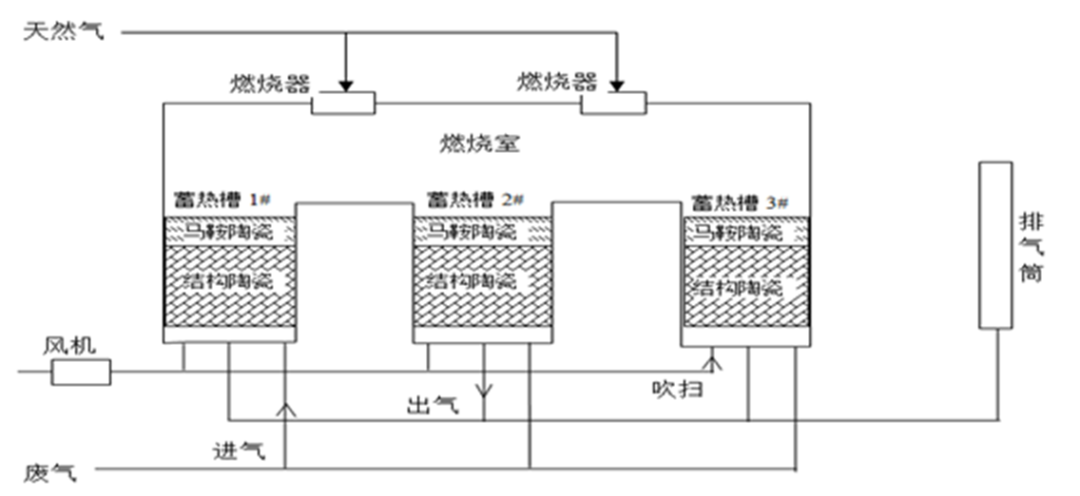 Figure 2: Schematic diagram of the three-tank RTO (Regenerative Oxidation Furnace).
The main operating energy consumption of RTO (Regenerative Regenerative Oxidation Furnace) is electricity and natural gas. Under the same operating conditions, scientific operational management and improvements can achieve energy saving and emission reduction:
(1) RTO switching valve time adjustment: When there is a large temperature difference or excessively high temperature (e.g., exceeding 1000°C) between the RTO regenerative layer and the cooling zone, adjust and shorten the RTO switching valve cycle (generally set between 1.5 and 2 minutes) to ensure even heat distribution throughout the combustion chamber, achieve RTO furnace temperature control, and save electricity costs.
(2) Adjust the intake air pressure: When the temperature difference between the middle and upper layers of the RTO is small or the middle layer temperature is relatively high (750°C), the pressure value at the system air inlet can be increased to increase the fan frequency, increase the temperature difference, reduce the temperature in the middle layer, and improve VOCs treatment efficiency; When there is a large temperature difference between the lower and middle layers of the RTO, the pressure at the air inlet can be adjusted to lower the system fan frequency and save electricity.
(3) Fresh air vent modification: RTO safety design. When the RTO combustion chamber temperature rises above the set value, the fresh air damper automatically opens, lowering the combustion chamber temperature by introducing low-temperature outdoor air while increasing the air volume for exhaust gas treatment. Through in-depth research, we adopted a modified fresh air vent duct design, using exhaust from the bottom of the printing machine unit (at room temperature). This way, while meeting the cooling target, we did not increase exhaust gas treatment and reduced electricity consumption.
(4) Shutdown operation: When the exhaust gas treatment system is shut down and shut down, the RTO temperature remains at 400°C. Thanks to the insulation effect of the internal heat storage layer, natural gas consumption is reduced when the unit is restarted.
03/ Thermal Circulation
During the operation of the VOCs exhaust gas treatment system, the chimney exhaust gas temperature is around 200°C. To maximize energy utilization, heat exchange is installed on pipes entering the chimney to recover exhaust heat.
When designing heat exchangers, dry burning and low-temperature protection measures must be considered. For example, the flue gas outlet temperature of the finned tube heat exchanger is continuously monitored by a thermal resistor. If the temperature is below the set temperature, the heat exchanger is bypassed. The outlet temperature of circulating water is continuously monitored and controlled by the resistor; if the temperature exceeds the set temperature, the heat exchanger is bypassed. Figure 3 shows the VOCs heat recovery schematic.
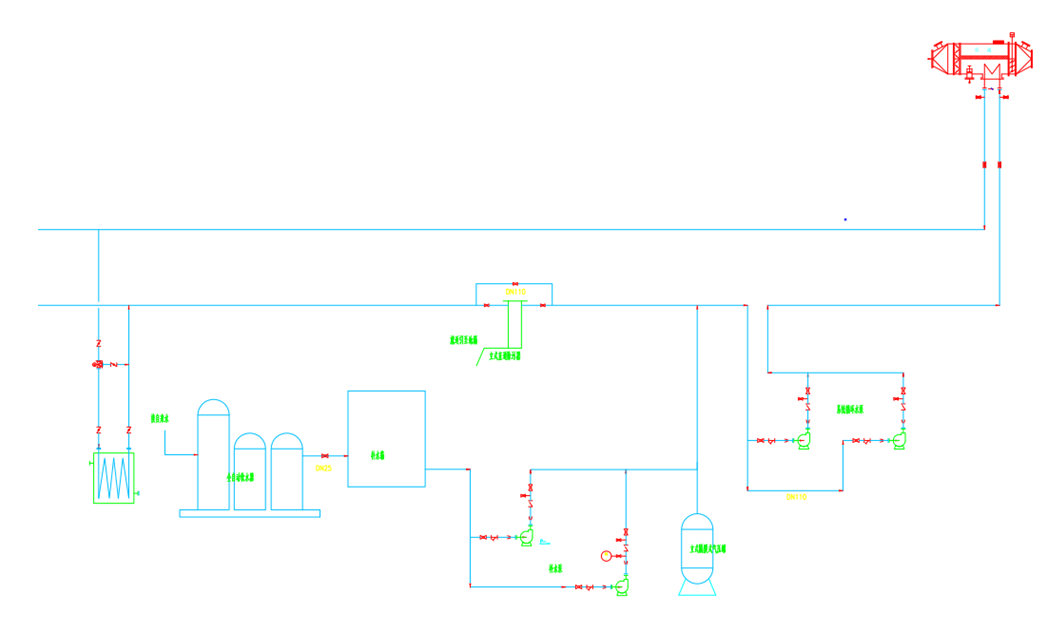 Figure 3 VOCs heat recovery schematic
By controlling the pump and storage tank with circulating water, the recovered hot water is then reused in the printing press and added to the oven, reducing printing energy consumption. In winter, hot water is also used for heating production and office areas, enabling energy recycling.
Maintenance and servicing
VOCs exhaust gas treatment systems feature complex structures, high levels of automation, and multiple safety interlocks. During operation, a comprehensive inspection should be conducted every two hours, with thorough inspection records. Any abnormal noise, temperature rise, or emission rate should be promptly addressed. In addition to operational patrols, specialized inspection equipment such as infrared thermal imagers, vibration testers, ammeters, etc., should be used for professional inspections to detect abnormal signs early and facilitate timely and effective measures, ensuring the continuous and stable operation of the VCOs exhaust gas treatment system. The key points for daily maintenance are as follows:
(1) Fans and transmission motors: important equipment can use online temperature measurement, while others can measure temperature weekly; Lubricating oil should be refilled every three months; Bearings are replaced every 5 years.
(2) Automatic (pneumatic) valves: filters and drain valves are installed in the compressed air pipeline; The air circuit uses dedicated compressed air lubricating oil; Instrument pressure regulator valves and filters are inspected weekly for sewage discharge.
(3) Fan: The fan impeller is affected by adhesion caused by dust particles and other factors, so on-site inspection and cleaning are conducted every six months.
(4) ROT furnace body: The RTO outer wall is inspected and reapplied annually with heat-resistant coating; The interior is opened every two years to inspect the condition of the regenerative bricks, and repairs or replacements are made as needed.
(5) Sealing: Inspect zeolite rotary wheel sealing rings, zeolite rotary motor drive chains, and automatic control valve seals every six months.
(6) High-temperature components: After about 2 years of operation, the internal high-temperature probe of the RTO should be replaced; Perform sealing and zero-position calibration of high-temperature proportional valves, and perform maintenance or replacement of the weather hot ignition switch system.
(7) LEL Calibration: VOCs exhaust air inlet LEL is calibrated quarterly to avoid deviations that could affect system control accuracy.
(8) Circulating water: Heat recovery circulating water should be softened or purified, fully drained and replaced during annual shutdown.
(9) Natural gas pressure gauges, safety valves, combustible gas alarms, compressed air pressure gauges, etc., must be calibrated and labeled strictly according to laws and regulations.