


How laser holographic labels can 'make a comeback' through craftsmanship!
Due to the characteristics of its production process, laser holographic labels inherently have a high level of anti-counterfeiting. In the printing and packaging field, the author's company has attempted to combine these labels with screen printing on cardboard boxes and implement digital linkage and other functions, in order to enhance the anti-counterfeiting level, meet customers' personalized needs, and improve the packaging grade.
This article shares a case of anti-counterfeiting upgrading after a label is formed. Starting from the case, it introduces the main process combinations and precautions during production.
Overview of the Process
1. Main materials and equipment
(1) Holographic hot-stamping labels: with QR codes and digital information, which are mutually linked.
(2) Other materials: screen printing UV varnish, screen printing ink, film plates, screen printing plates, etc.
(3) Main production equipment: screen printing machines, etc.
2. Main implemented processes
(1) Hot-stamping process
Generally, after the preceding processes such as offset printing are completed, the label is attached to the customer's specified position on the cardboard box through hot stamping.
(2) Screen printing process
The upgrade of anti-counterfeiting is mainly achieved through the screen printing process, by superimposing three treatment layers on the digital information: a UV varnish layer, a scratch-off ink layer, and a UV black text layer (as shown in Figure 1). The size and position are determined according to the label and digital information. The main functions of the three treatment layers are as follows:
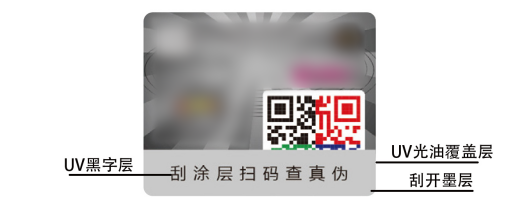
Figure 1: Process Display of Digital Information on Laser Holographic Labels
① UV Varnish Coating Layer: A layer of varnish is added to the designated surface of the label, which facilitates the adhesion between the scratch-off ink layer and the label, and also improves the scratch-off effect of the ink layer.
② Scratch-Off Ink Layer: The main step in anti-counterfeiting upgrade; this layer covers the digital information and part of the QR code on the label. Consumers can scratch off the layer to view the covered digital information, enabling anti-counterfeiting verification and other operations.
③ UV Black Text Layer: Black text such as "Scratch off to scan code and verify authenticity" is added on the scratch-off ink layer to prompt consumers that they can scratch off the ink layer for anti-counterfeiting verification.
3. Function Realization
The combination of the label and screen printing process on the paperboard box allows consumers to follow the prompts to scratch off the ink layer and use handheld devices to scan the QR code. By reading the information and comparing it with the covered digital content, anti-counterfeiting verification can be carried out. This effectively protects the product's digital information and provides a higher level of anti-counterfeiting verification than simple QR code reading. (As shown in Figure 2)
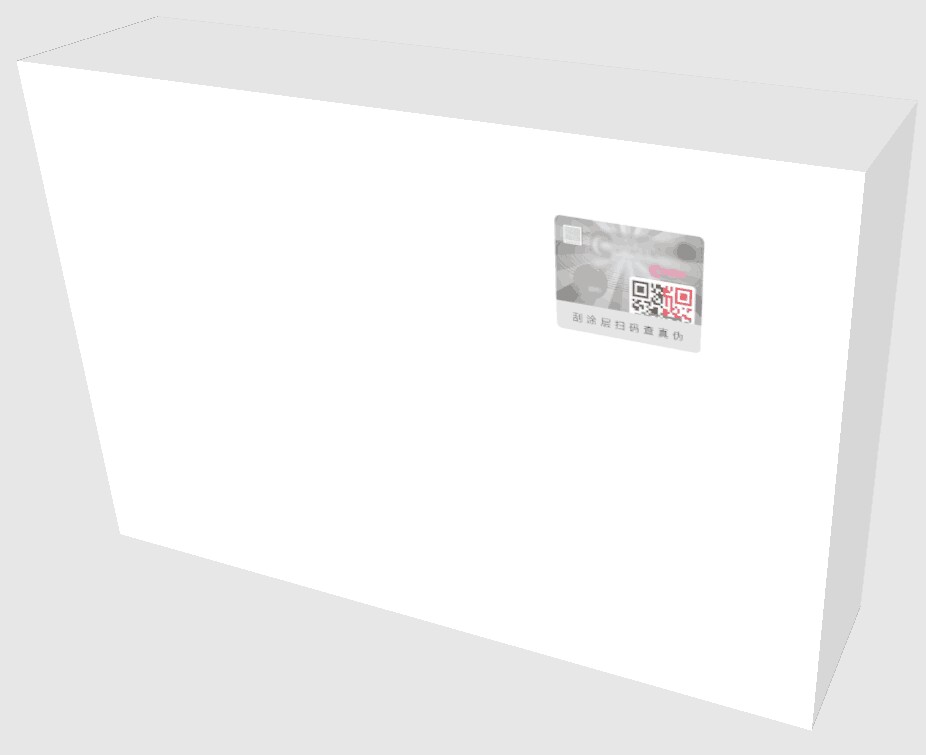
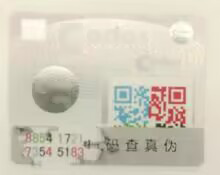
Figure 2 Detailed Display of Laser Holographic Label Anti-Counterfeiting
Production Process Precautions
The main focus and difficulty in achieving labels with screen printing technology lies in the firmness of the scratch-off ink layer and the ease with which it can be scratched. Numerous factors affect its formation, such as equipment production parameters, material compatibility, and several other factors. In actual production, for new products, we need to conduct reasonable preliminary testing, select the correct production parameters, and focus on key points during the process to ensure product quality.
1. Main Equipment Production Parameters
The main equipment production parameters include: drying temperature, plate mesh count, and conveyor speed.
(1) Drying temperature: Directly affects the drying degree of the UV varnish and scratch-off ink. Too high or too low temperature will affect the scratch-off effect of the ink.
(2) Plate mesh count: Affects the thickness of the ink layer. A lower mesh count results in a thicker ink layer, impacting the scratch-off effect; a higher mesh count results in a thinner ink layer, affecting the scratch-off ink's coverage and firmness.
(3) Conveyor speed: Has significant relevance to both production quality and efficiency.
2. Material Type Matching
Material type matching mainly refers to the compatibility of the UV varnish used for the coating layer, the scratch-off ink, and the black ink used for text. The degree of compatibility among these three directly affects the firmness and the ease of scratching off the ink layer. In our company's actual production of such items, different combinations of varnish and inks are used depending on the type of label and cardboard box to ensure the scratch-off quality of the product.
3. Production Quality Requirements
(1) The UV coating layer and scratch-off ink must be densely printed, with neat edges, accurate dimensions, and no exposed ink in other areas.
(2) The first sheet of printed scratch-off ink must be tested for firmness and ease of scratching. The scratch-off effect should be good, and the information code should remain complete and clearly variable after scratching.
(3) After printing the UV black text, it should be visually clear, with no missing strokes, broken characters, or smudging. The font and size should meet requirements, and no exposed ink should appear in other areas.
(4) Pay special attention to printing registration deviations, which should meet the required standards. It is recommended to add die-cut reference lines on the soft film before plate making and to strictly align with these lines during screen printing.
4. Other Precautions
(1) Deformation rate of semi-finished products
In our company's actual production process, screen film is not prepared in advance. Attention must be given to the deformation rate of semi-finished products, as this can affect registration deviation. Before starting production, accurately measure the deformation rate of the semi-finished product and make the screen film accordingly. This will help effectively control the quality of the finished product.
(2) Packaging of finished products
After the screen printing process, necessary protective measures should be taken for finished products to prevent quality effects from being affected by environmental changes or prolonged storage.
(3) Follow up with the customer usage situation when necessary.