


How is the color reproduction capability of Landa devices?
Landa digital printing equipment uses nano ink technology, which has the advantage of ultra-small pigment particle size, only tens of nanometers, compared to the particle size of traditional inks of about 500nm. These nanoscale pigment particles can better penetrate and adhere to the surface of different substrates, forming an image thickness of only 500nm. This thickness is less than half that of traditional offset ink images. At this time, the ink only adheres to the surface of the substrate and does not penetrate inside, and the color saturation and clarity of the printed picture are excellent. Landa digital printing equipment can achieve 4~8 color printing by inkjet printing at 600dpi or 1200dpi resolution, of which the sheetfed equipment supports up to 7 colors (CMYK+OGB) and the rotary equipment supports up to 8 colors (CMYK+OGB+white). According to official data, the 4-color CMYK configuration can cover 84% of the Pantone color gamut, while the 7-color CMYK+OGB configuration can cover up to 96% of the Pantone color gamut.
This paper relies on the Landa sheetfed digital printing equipment of Shenzhen Jiuxing Printing and Packaging Group Co., Ltd. to test and analyze its color reproduction ability on white cardboard with a quantitative capacity of 300g/m2. Firstly, the equipment is linearized to measure the saturation and gradation uniformity of its monochrome, and then the ICC file of the equipment is analyzed to evaluate its color gamut performance and spot color coverage performance.
Investigation of core algorithm of color reproduction of 7-color digital printing system
01
Types and principles of linearization algorithms
Linearization of digital printing equipment is a key technology to ensure a linear relationship between device input and output signals. The 7-color channel linearization has significant technical complexity compared with the traditional CMYK 4-color. The first is the increase in the number of channels, from 4 to 7 means that the size of the lookup table increases exponentially. Common linearization algorithms include the following 4 types:
(1) Polynomial fitting algorithm is the most basic linearization method, which realizes linearization by fitting polynomial curves of input and output data. The advantages of this algorithm are simple calculations and fewer parameters, but the disadvantage is that it has limited modeling ability for complex nonlinear relationships.
(2) The lookup table (LUT) algorithm is the most commonly used linearization method in digital printing. 1D LUTs are the simplest form that only processes a single channel of the image, defining an output value for each input value (0 to 100). The essence of 1D LUT is a lookup table in one-dimensional space, and each input value is "repositioned" by the LUT to obtain a new output value, presenting a one-to-one corresponding relationship. A typical ICC printer profile configures a 1D lookup table (1D LUT) based on the number of color channels on the device, and then uses a 3D lookup table (3D LUT) to complete color gamut mapping and color conversion.
(3) The local linear regression algorithm performs well in color management, especially in the small and medium-sized sample scenarios estimated by digital printing lookup tables, and its performance is better than neural networks, polynomial regression and spline functions. The core idea of the algorithm is to use the local linear regression set of neighborhood points for each grid point to fit the linear hyperplane by the weighted least squares criterion, and estimate each output color component separately.
(4) Deep learning algorithms represent the latest development direction of linearization technology. Modern technology has been able to realize the linearization model of printed color channels based on deep learning networks, and with the online feedforward multi-dimensional nonlinear color density compensation method, it can achieve wide color gamut, high linearity, and continuous and stable digital printing output.
02
Multi-channel color management algorithms
Multi-channel color management for 7-color devices requires special algorithm support. In the traditional 4-color CMYK system, color management mainly focuses on the balance of four colors: blue, magenta, yellow, and black, while the 7-color system needs to consider the interaction of 7 colors at the same time. In a 7-color system, each color may interact with the other 6 colors, and this multi-dimensional color relationship requires more complex mathematical models to describe. In the traditional CMYK system, black is mainly used for grayscale balance and ink saving, while in the 7-color system, the addition of orange, green, and blue makes color mixing more complex. Commonly used color separation algorithms include the following two types:
(1) Composite Neugebauer models are important tools for processing multi-color printing. This model is a generalized version of the Neugebauer model that subdivides the entire XYZ color space into several volume partitions, predicts the color component weights within a given partition, and serves as a function to determine the XYZ values of the three basic colors for that partition. This method can effectively handle complex color relationships in a 7-color system.
(2) The multi-channel color space conversion algorithm needs to consider the mapping relationship between different color spaces. When converting from a device color space (CMYKOBG) to a standard color space (such as CIE Lab), you need to establish precise conversion functions. Studies have shown that it is an effective technical scheme to establish the relationship between device space and CIE XYZ space through three-dimensional relationship, and to achieve color separation by using three-linear interpolation between the values of the lookup table and table columns.
Experimental preparation and testing
01
Testing equipment and equipment
(1) Test equipment: Landa digital printing equipment, 7-color nano ink (CMYK+OGB);
(2) Test paper: 300g/m2 Asia Pacific Symbo Yinbo white cardboard;
(3) Measuring instrument: X-rite i1io spectrophotometer;
(4) Test software: EFI Fiery Color Profiler Suite (CPS);
(5) Environmental conditions: temperature 25±2°C, humidity 55%±5%.
02Testing Process and Steps
(1) Step 1: Print the linearization chart. Preheat the Landa digital printing equipment for over 30 minutes, and use EFI Fiery Color Profiler Suite (CPS) to output the linearization chart. The Landa digital printing system is configured with linearization color tables ranging from 4 colors to 7 colors. This article takes the 7-color example. The 7-color table has 54 colors per channel, totaling 378 color patches, with dot area coverage ranging from 0 to 100%.
(2) Step 2: Measure the linearization chart. Wait for the linearization chart to dry, and use CPS i1iO to complete data measurement for the 7 color channels.
(3) Step 3: Draw the tone curve. Correspond the measured data with the theoretical data to draw the tone curves for the 7 channels. Analyze the difference between the measured data and the target data, select an appropriate linearization algorithm, and calculate the linearization curve.
(4) Step 4: Print charts for ICC file creation. Use the linearization curve from Step 3 to print charts for ICC file creation, such as iT8.
(5) Step 5: Calculate and generate the ICC file. After the iT8 chart dries, measure it with CPS i1iO, save the data, and choose an appropriate color separation algorithm to generate the ICC file. This ICC file represents the maximum color gamut for the current device and paper combination.
Data Collection and Analysis
01
Device Linearization Analysis
The measured values of the linearization data chart are shown in Figures 1 and 2. Figure 1 shows the relationship between the dot area of each of the 7 color channels and the corresponding CIE Lab lightness value L*. The points in the figure are sampling points for each channel, and the curve is the fitting of a quadratic spline. The quadratic spline fitting cannot express the mapping relationship between dot area coverage and lightness; a more complex mapping function is required to describe the correspondence between equally spaced dot areas and visual lightness levels.
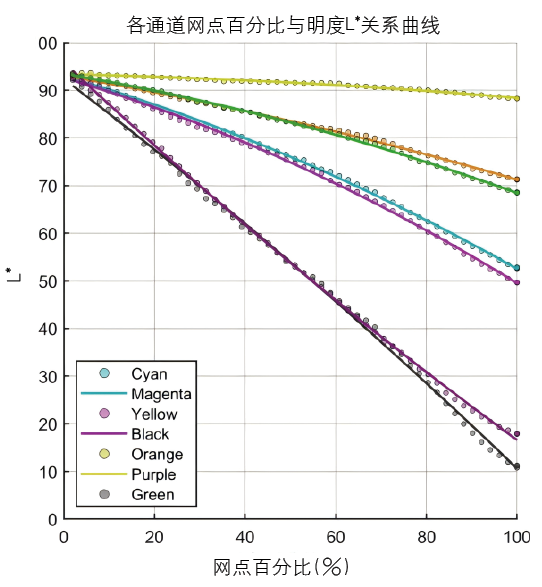
Figure 1 Relationship between dot area and brightness value
Figure 2 shows the hue variation and maximum saturation of colors in six color channels. In the figure, the purple and magenta channels show significant bending with increasing saturation, indicating that the hue uniformity of these two color groups is not good. Of course, hue uniformity is also related to the uniformity of the CIE Lab color space. For the yellow and orange channels, chroma non-uniformity is also quite apparent. For example, in the yellow channel, the spacing between points is uniform below a b* value of 50, but above 50 the spacing increases; the orange channel behaves similarly to the yellow channel, and around 40, point overlap also occurs, resulting in outliers. Therefore, phenomena such as hue bending and chroma non-uniformity will increase the complexity of linearization and color separation algorithm development.
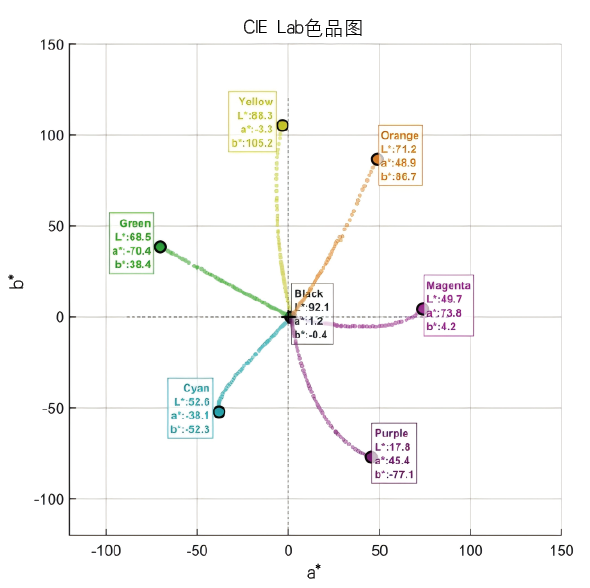
Figure 2 Color Saturation and Hue Performance of Each Channel
By combining Figure 1 and Figure 2, the optimal saturated color of the device can be determined. Table 1 shows the match between the maximum chroma of the 300g/m2 white cardboard used in this study and the chroma of Type 8 paper according to ISO 12647-2.
Table 1 Comparison of Chromaticity and Chroma Between Landa Digital Printing System and ISO 12647-2 Type 8 Paper
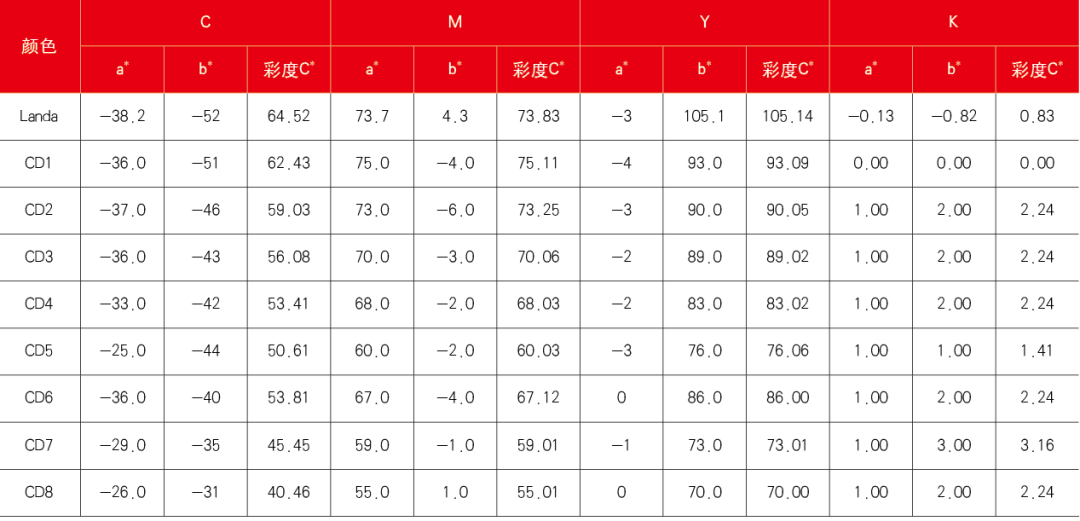
Table 1 data indicate that, except for magenta, whose chroma is lower than that of ISO 12647-2 CD1 paper, the chroma of the primary colors of the Landa digital printing system can fully cover the chroma of the 8 types of papers defined by ISO. It can therefore be inferred that the Landa digital printing system can perfectly match the offset printing standards of ISO 12647-2 through further linear adjustments, and of course, it can also meet the requirements for certifications such as G7 and C9.
02
Device Gamut Analysis
After linearization, the produced ICC profile expresses the current color characteristics of the digital printing system. As shown in Figure 3, it is a comparison between the gamut of the Landa digital printing system and the Adobe RGB (1998) gamut. The gamut of the Landa digital printing system and that of Adobe RGB (1998) do not have a simple containment relationship. In the medium brightness range from blue to green, and in the low brightness range from red to blue, the Landa digital printing system gamut contains the Adobe RGB (1998) gamut; whereas in the high brightness range from green to yellow, and from red to yellow, it is contained by the Adobe RGB (1998) gamut.
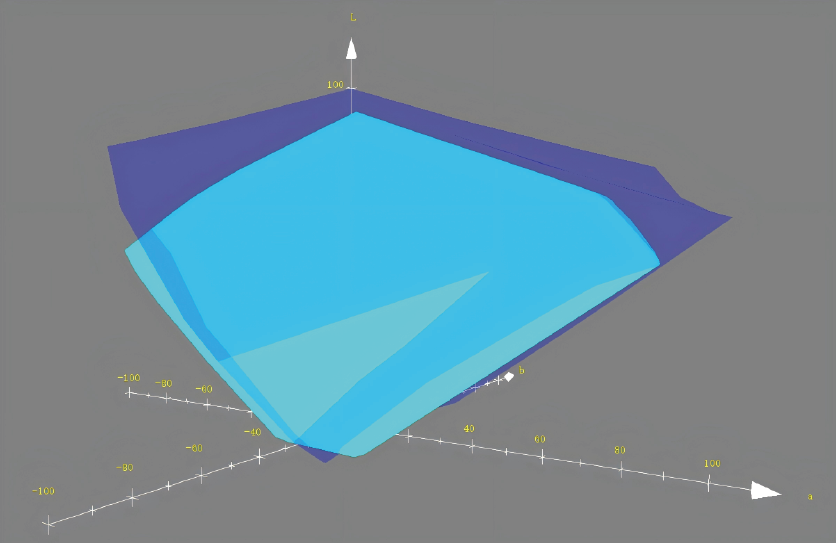
Figure 3 Comparison of Landa Digital Printing System with Adobe RGB (1998) Color Gamut
This situation indicates that when using the experimental white cardstock combined with the Landa digital printing system for high-fidelity printing processes, the reproduction capability for saturated yellow, orange, and green tones is slightly weaker. If paper with higher whiteness is used, it may be improved.
Figure 4 shows the comparison of the color gamut of the experimental Landa digital printing system with the GRACoL2006_Coated gamut. The comparison chart shows that the Landa digital printing system's color gamut basically encompasses the GRACoL2006_Coated gamut. In particular, the medium-brightness blue-to-green and red-to-blue areas completely cover the GRACoL2006_Coated gamut; however, in the very high-brightness green-to-yellow area, the GRACoL2006_Coated gamut is slightly larger. This situation indicates that the combination of the experimental white cardstock and the Landa digital printing system is capable of reproducing the colors of ISO 12647-2 offset printing. If paper with slightly higher whiteness is used, the color reproduction in high-brightness areas will be better.
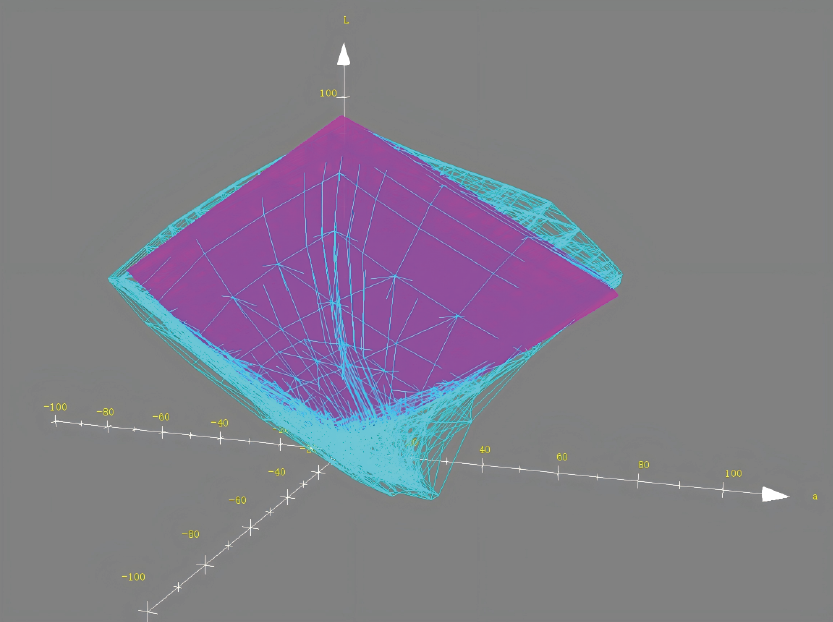
Figure 4 Comparison of Landa Digital Printing System with GRACoL2006_Coated Color Gamut
Figures 5 and 6, using the spot color simulation function of ORIS X Gamut,统计了在色差公差≤3和≤5两种情况下Landa数字印刷系统可还原的Pantone专色色域的比例. Figure 5 shows that when the tolerance is ≤3, 94.9% of the 2390 Pantone color patches can be matched; Figure 6 shows that when the tolerance is ≤5, 98.6% of the 2390 Pantone color patches can be matched. The results of this experiment confirm the accuracy of Landa's official claim that the 7-color CMYK OGB configuration can cover up to 96% of the Pantone color gamut.
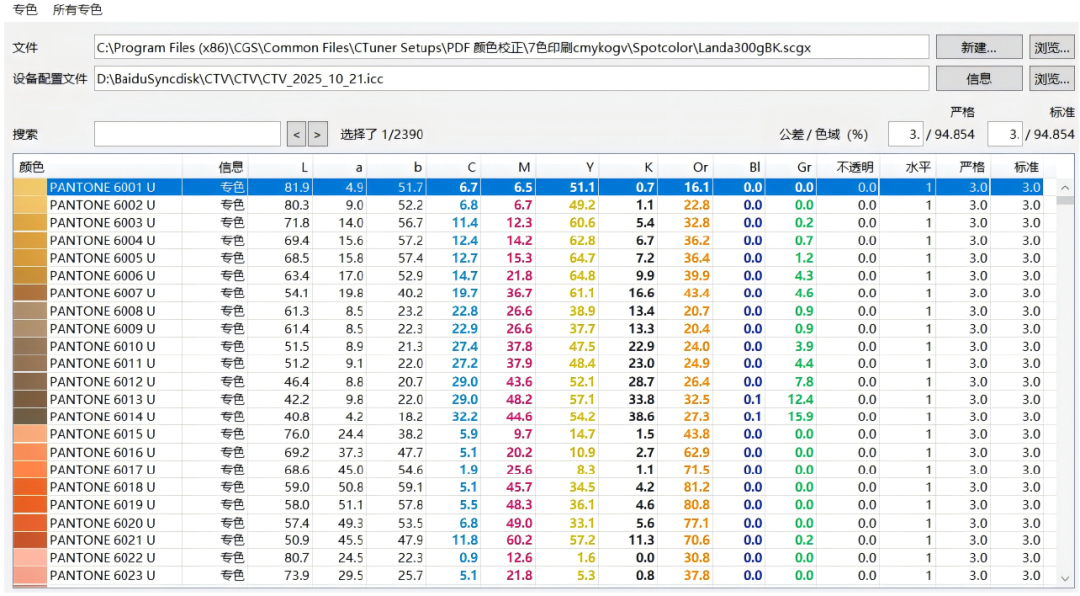
Figure 5 Landa digital printing system coverage of Pantone color gamut (color difference tolerance ≤3)
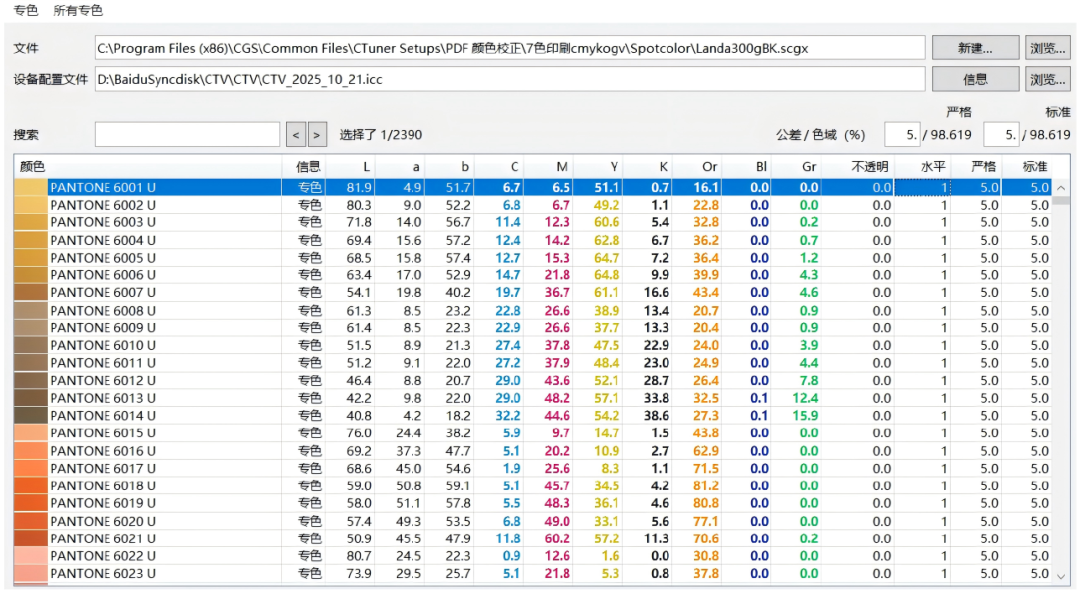 Figure 6 Landa digital printing system coverage of the Pantone color gamut (color difference tolerance ≤5)
In summary, this experiment tested the color reproduction capability of the Landa digital printing system using the company's commonly used 300g/m² white cardboard. Key data analysis during the capture process revealed that: the Landa digital printing system's CMYK primary color capability can match ISO 12647-2 CD1 paper and can fully cover the other seven types of paper; compared with the Adobe RGB color gamut, the Landa digital printing system's 7-color gamut is relatively smaller in high brightness areas and slightly larger in medium brightness areas. If high-fidelity printing is performed using Adobe RGB primaries, it is recommended to use paper with higher whiteness; the Landa digital printing system's 7-color gamut basically includes the GRACoL2006_Coated color gamut, can fully match the ISO 12647-2 color standard, and when the color difference ≤3, it can match more than 94% of the Pantone color gamut.