


Troubleshooting a Misaligned and Stuck Sheet Problem on an Offset Printing Press
In the production process, a stable paper feed is closely related to the stability of production quality. If the paper does not feed smoothly, it can obviously cause many problems, such as being unable to increase machine speed, not guaranteeing production capacity, and being unable to maintain ink and water balance, ultimately leading to the inability to ensure the quality of printed products.
Some time ago, the CD102-5 L five-color Heidelberg sheet-fed printing press used by our company experienced the following malfunction: when the machine speed exceeded 7,000 sheets per hour, the paper output began to skew, which in turn continuously caused misfeeds, machine stalls, and other faults, preventing the production from proceeding smoothly.
To address the above fault, we first checked the paper delivery timing. By pressing the paper feed button, we slowly advanced to 40.3°, then inserted a test pin into the feeder wall. We found that the test pin could smoothly pass through the two cam holes and insert into the feeder wall hole (Figure 1), indicating that the paper delivery timing was correct. Next, we checked the single-side adjustment device for paper feed speed and found no issues. We then checked whether the delivery pressure rollers were consistent, and there was no problem. After turning on the blower, we observed that the paper suction nozzles were also working synchronously. Continuing to check, we let the equipment continuously feed paper in slow-run mode, and no problems were observed.
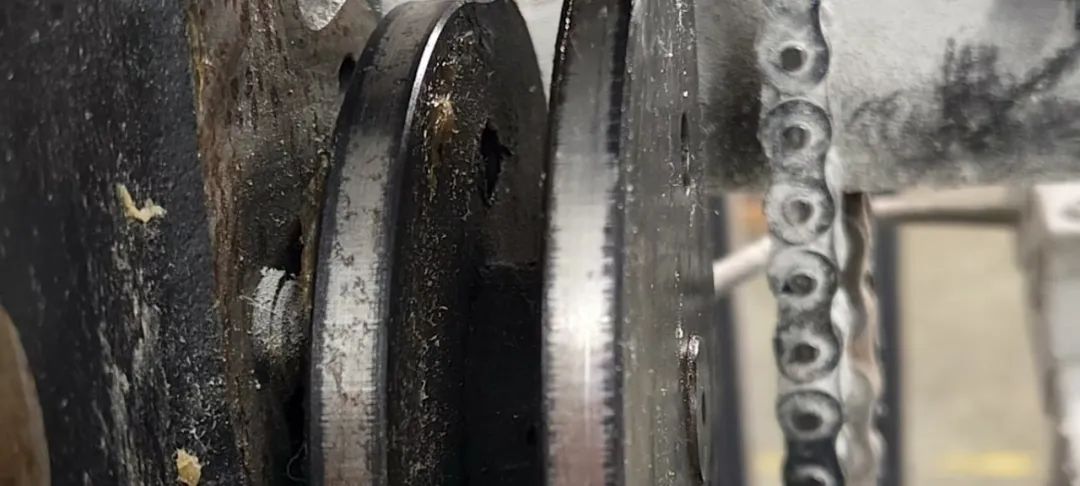 Figure 1 Detection pin passing through the position
We ran the machine idle again and pressed the paper feed key to accelerate to 11,000 sheets/hour. Occasionally, we felt slight vibrations. After decelerating and stopping, we checked the feeder again and finally found the problem. When holding the two paper feed suction nozzles by hand, we found a slight forward and backward wobble. Further inspection revealed that the problem was with the connecting component that links the paper feed nozzle rod to the drive rod. This component showed wear (Figure 2), which created a gap between the drive rod and the paper feed nozzle rod, causing the wobble. At low speed, the wobble amplitude is small and does not affect normal paper feeding, but as the speed increases, the wobble amplitude grows, eventually affecting normal paper feeding. The problem location is shown in Figure 3.
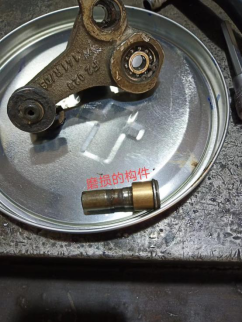
Figure 2 Worn Component
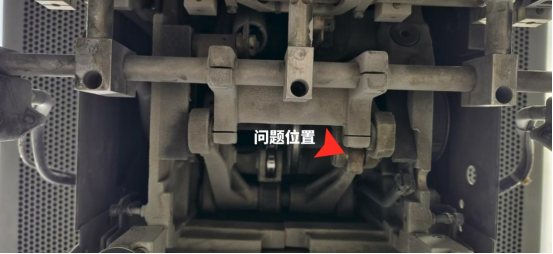
Figure 3 Problem Location
To verify our judgment, we used a rubber band to pull one side of the paper feeding suction nozzle, using the elasticity of the rubber band to offset the effects of the suction nozzle's uneven speed caused by shaking. At the same time, we increased the machine speed to 11,000 sheets per hour, and the equipment was able to feed paper smoothly.
Having identified the problem, we immediately resolved it by replacing the parts and performing a thorough dust removal and maintenance on all components inside the feeder head. When test-running the paper feeding, the machine speed could even be adjusted to 13,000 sheets per hour without any issue (Figure 4). With that, the problem was successfully resolved.
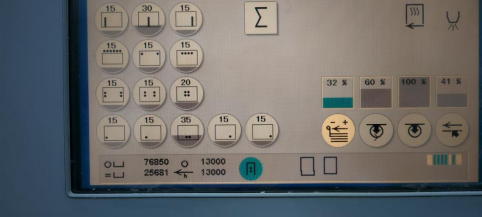
Figure 4 Adjusting the recovery machine speed