


How digital printing can break through process bottlenecks
Nowadays, with the growing demand for personalized customization and short-run printing, digital printing is developing rapidly, with technology constantly improving. High speed, high efficiency, and high flexibility are gradually becoming the 'golden brands' of digital printing, driving label printing companies to embrace digital transformation and smart upgrades.
In this wave of change sparked by digital printing, more and more label printing companies are actively responding to market shifts, adjusting their strategies, and investing more in digital printing equipment and technology. They are optimizing production processes and improving service quality, aiming to gain a foothold in a highly competitive market. The goal is to transition from traditional printing to digital and smart printing, better meeting customers' diverse and personalized label printing needs.
However, new fields inevitably come with new challenges. Label printing companies also face many challenges in developing digital printing. The first and foremost is the cost issue. Whether it's the cost of equipment, ink, print heads, or application software, these expenses are like a mountain standing in the way of a company's digital printing development, making it daunting to move forward.
Secondly, on the core technology level, whether the results of digital printing can mimic or reach the standard quality of traditional printing also makes many label printing companies hesitant when choosing digital printing equipment. Traditional printing has gone through long-term development and technological accumulation, forming a very mature process system with high standards in color reproduction, detail performance, and overall effect. In comparison, digital printing, though fast, flexible, and personalized, still has a certain gap in matching or reaching the standards of traditional printing. From this, it's clear that the demand for seamless integration between digital and traditional printing has become an urgent market need for the label printing industry.
In fact, digital printing can achieve high-quality printing that matches traditional printing with some adjustments. For example, in the image below, the left shows a PS plate print dot, and the right shows an electronic ink dot, and the print results are already very close.

Offset printing dot
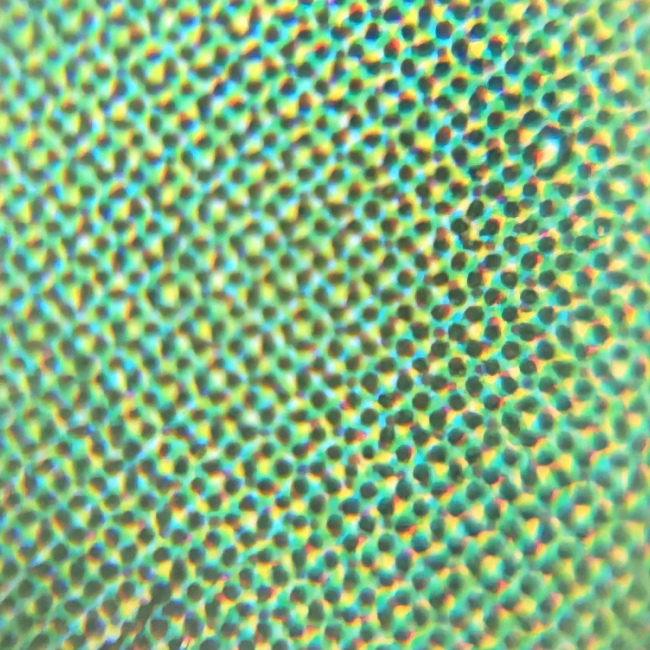
Electronic Ink Halftones
This is because offset printing works on the principle of water-ink balance, resulting in halftones with lower color saturation, emulsification around and on the surface of the dots, and low density. In contrast, electronic ink relies on electrostatic principles, giving halftones with higher color saturation, more regular and less deformed dots, and higher density. If both use a 150 lpi screen frequency, the overall ink volume (color density) of electronic ink prints is significantly higher than that of PS plate offset prints. Therefore, increasing the screen frequency in electronic ink printing can reduce the ink volume, lower the color density, and achieve color matching with PS plate offset printing.
So, what other methods can make digital printing reach the quality of traditional printing? How can label printing companies use digital printing to achieve the most efficient production? What steps are needed to convert traditional printing to digital printing?