


Books and periodicals offset printing fold pages prone to creasing
Compared with lithography printing, book offset printing rotary printing has a simple, fast and efficient process, and is gradually accepted by the printing market, especially suitable for the inner text printing of large-scale products. The principle of offset printing is the same as that of lithographic printing, but the text is mostly web instead of single sheet, and there is an additional folding process after printing is completed. The principle of rotary folding is the same as that of folding machines, both of which are physically folded to turn them into sequentially connected pages. The rotary machine folds quickly, but the folded book clip is prone to figure-eight wrinkles, which affects the quality and beauty of the product. The traditional solution is to install a flower knife at the back of the bookcase, and the folding knife can be used in each folded back position of the glue-bound books, and the folding flower knife cannot be used at the back of the last fold of the book.
Domestic book offset printing rotary printing machines generally come with three folding knives, the first folding cutter is at the top of the triangular plate of the folding machine, which is to divide the web paper in the middle. Taking the sixteen-open book clip of the whole roll paper as an example, folding it into half the width of the web page, that is, the size of four openings, generally a round gear flower knife; The second folding knife is in the folding roller of the folding machine, and its function is to separate the top and foot of different layouts, perpendicular to the first fold, and fold it into half the size of the needle edge and the cutting edge, that is, the size of eight openings, generally a strip serrated flower knife; The third folding knife is also in the folding roller of the folding machine, and its function is to separate the binding edge of different layouts from the cutting edge, perpendicular to the second fold, and fold it into a quarter of the width of the web page, that is, the size of sixteen sheets, generally a circular gear flower knife, but it cannot be used for horseback stapling periodicals.
Although the folding machine comes with a flower knife, it is easy to have a figure-eight wrinkle due to different substrates, different processes or different debugging methods, affecting the beauty and quality of the product.
Analysis of the causes of wrinkles in book and periodical offset printing wheel folds
01
Substrate factors
The most common printing papers include writing paper (including newsprint, dictionary paper, etc.), offset paper and light paper. In terms of paper weight, the larger the weight of the same type of paper, the easier it is to produce wrinkles. In terms of paper type, light paper is more likely to wrinkle than offset paper under the same gram weight, and offset paper is more likely to wrinkle than writing paper.
02
Process factors
Different folio designs have a great impact on the formation of folds, and generally speaking, the smaller the folio, the more likely it is to appear wrinkles. This is because the smaller the folio, the more folds the paper has. For example, the sixteen-folio book clip is more prone to wrinkles than the octa-folio book-holder, because the sixteen-folio is folded once more than the octa-folio.
03
Equipment factors
Rotary machines are equipped with a folding mechanism, and folds are generally generated when the folding machine is folded. Generally speaking, low-configuration equipment is more likely to produce wrinkles than high-configuration equipment, and domestic equipment is more likely to produce wrinkles than imported equipment, because high-configuration equipment or imported equipment is more scientific in the design of folding machines.
Domestic book and periodical offset printing rotary machines generally have a tri-fold function, which can fold a folio paper three times. The first fold is at the position of the triangular plate, and the top of the triangular plate has a circular serrated blade in the middle of the fixed shaft of the platen wheel, as shown in Figure 1, when the paper passes through the press wheel, the circular serrated blade divides the middle position of the paper into a dot line, and when the paper enters the bottom of the triangular plate, it is folded in half at the point line division position.
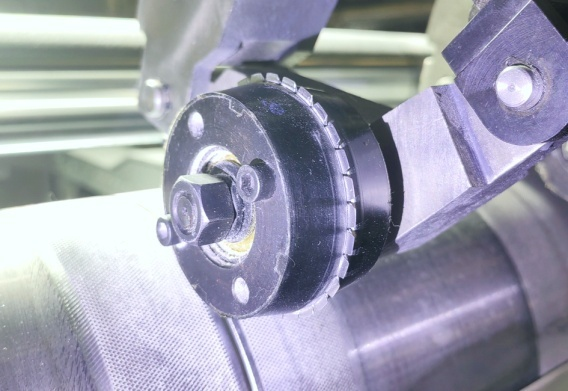
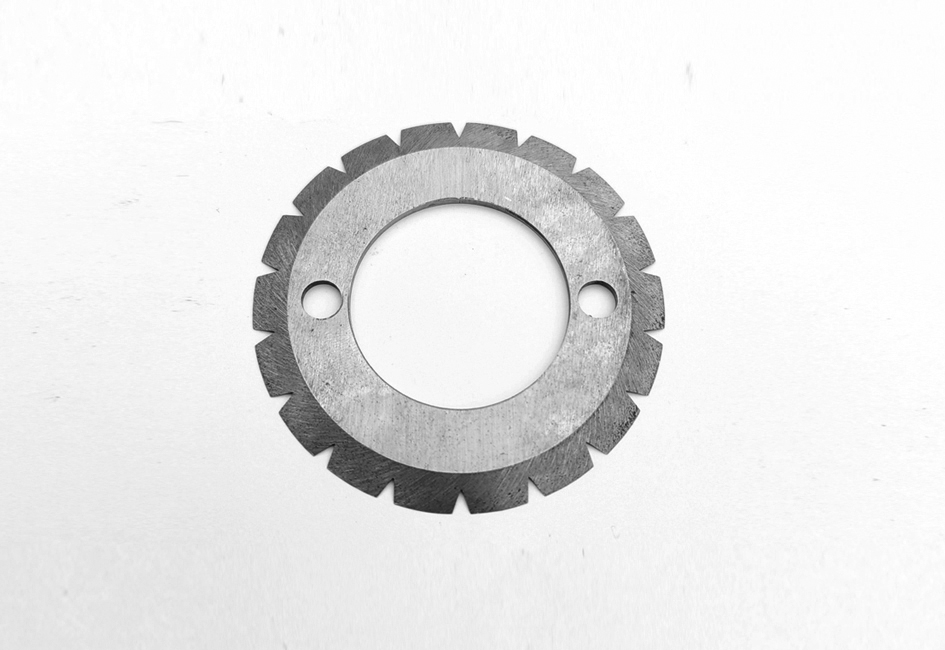
Figure 1 The first folding blade component (left) and the first folding blade (right)
The second fold is located below the first fold. It positions the paper for folding and performs single-sheet cutting through coordination and pressure between the rollers. Folding positioning refers to dividing the paper along a line of perforations at the folding position by pressing it with the rollers. The principle is that on two aligned rollers, saw-tooth blades and rubber strips are installed respectively, as shown in Figure 2. When the two rollers rotate, the saw-tooth blades press against the rubber strips, creating perforation lines on the passing paper. After the perforation, a cutting knife cuts the roll paper into single sheets, and the second folding mechanism folds the paper at the folded position.
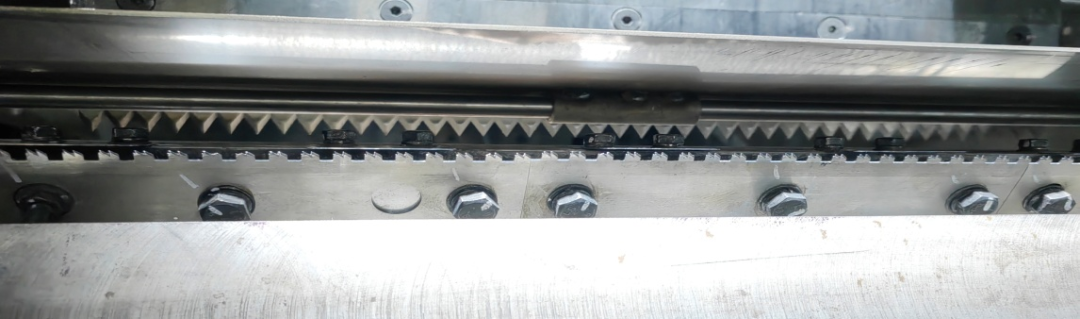
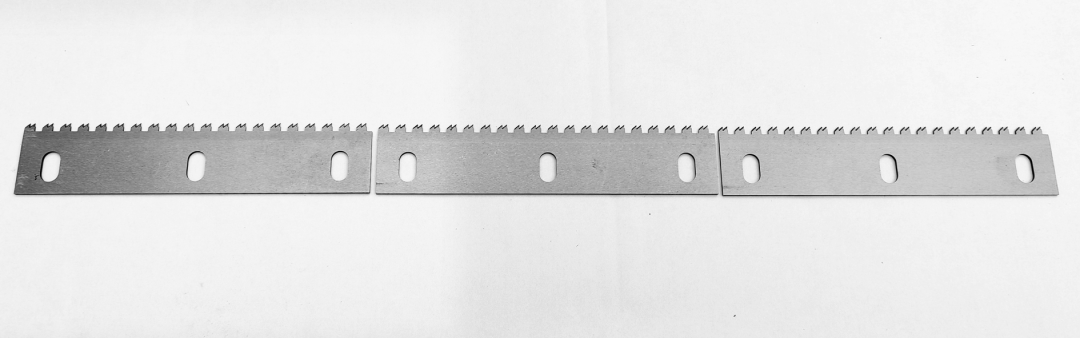
Figure 2: Second fold die-cutting knife holder component (left) and second fold die-cutting knife blade (right)
The third fold is generally achieved through a chopping mechanism. In actual production, whether a three-fold die-cutting knife is needed depends on the binding process, as shown in Figure 3. Saddle stitching cannot use a die-cutting knife, while perfect binding requires the use of a die-cutting knife. The die-cutting knife mechanism is installed on top of the second fold alignment fixing shaft. Its principle is similar to the second fold dashed line division. Circular serrated die-cutting knives and corresponding die-cutting positions are installed on two alignment rollers, and use is adjusted according to the process.
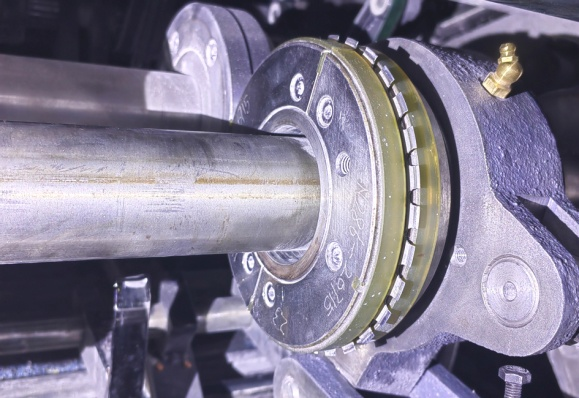
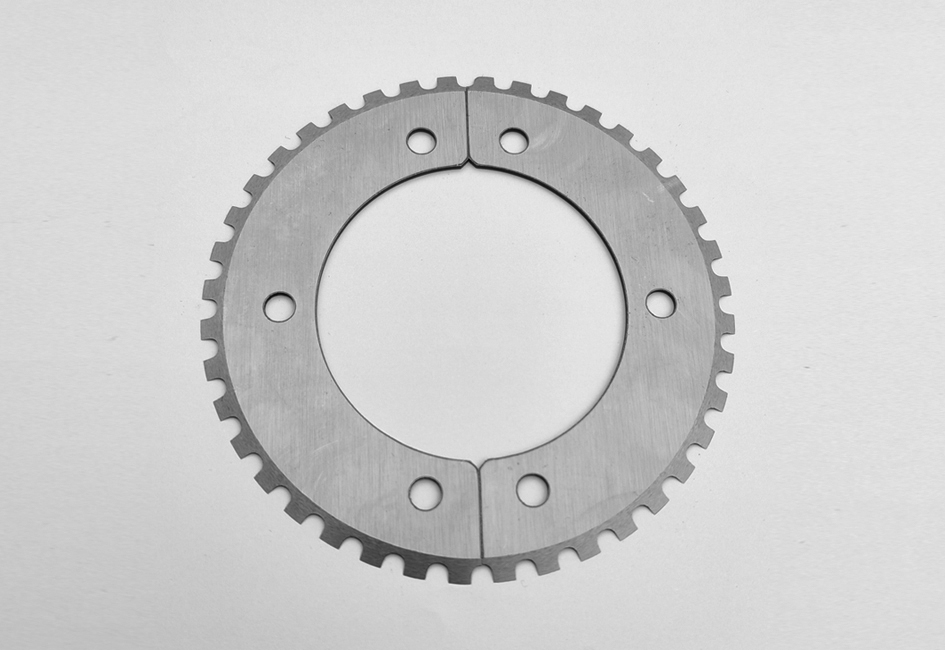
Figure 3 Third folding knife parts (left), third folding blade (right)
Improvement measures for book and periodical offset printing wheel folding pages
01
In terms of printed materials
In order to avoid wrinkles, when producing high-quality book products, the most suitable paper type and gram weight should be selected for printing according to the product type and characteristics. For general textbooks and teaching aids, offset paper and writing paper are mostly used, and offset paper and light paper are mostly used for books and social products on the shelf. The paper weight is determined by factors such as the color of the printed product, the grade of the product and the number of sheets.
02
In terms of craftsmanship
The book rotation page should not exceed three folds, generally two folds and below products will not appear in the case of machine debugging in place, three-fold products are prone to eight folds, so high-gram weight paper three-fold products and four-fold products should not be printed in book offset rotary printing, and lithography printing can be used to avoid wrinkles.
03
In terms of equipment
When selecting equipment, it is advisable to consider high configuration or imported equipment, and try to avoid the occurrence of figure-eight wrinkles from the hardware side. For low-end or domestic equipment, we can find ways to avoid the occurrence of figure-eight wrinkles in the technical transformation of the equipment, and now take the domestic book and periodical offset printing rotary machine as an example for analysis.
In the first folding position, the machine's own circular serrated blade can basically meet most of the product requirements, such as high weight paper products, you can choose a blade with less serrations and a long knife edge from the market; In case of loose clip printing, a blade with less serrations and a long blade edge or a blade with a whole circle of knife edges should be selected to facilitate post-press clipping. The tip position at the bottom of the triangular plate is adjusted according to the actual situation of the paper. The second fold line segmentation effect plays a crucial role in the production of wrinkles, and many products are caused by the second fold not using a flower knife or the flower knife is not adjusted well and the flower knife is not improved.
Whether it is a bi-fold product or a tri-fold product, it is recommended to use a bi-fold flower knife, because in addition to affecting the production of wrinkles, the bi-fold flower knife will also play a role in opening and exhausting, the book will be flattened and exhausted before cutting, if the bi-fold flower knife is not used, the air exhaust effect between the papers is not good, which will lead to the phenomenon of uneven cutting edges in the cut book incision.
For bi-fold products or low-gram paper products, you can directly use the three serrated blades that come with the machine, but when encountering tri-fold or high-gram paper products, in order to avoid wrinkles, we can improve the bi-fold blades, which are as follows: First, choose the right material to ensure applicability and durability; second, the three blades are designed as a single blade to facilitate installation and adjustment; The third is to improve the sawtooth, change the middle position of the whole blade to about 30mm, and the length of the cutting edge to both sides decreases in turn, as shown in Figure 4. This improvement is not only conducive to exhaust, but also plays a role in guaranteeing the generation of third fold fold folds.
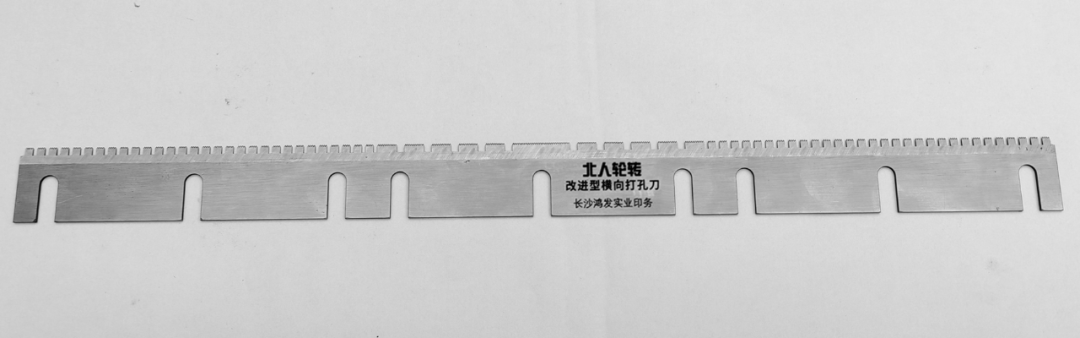
Figure 4 Second Fold Improved Die-Cut Blade
To achieve good dot and line separation effects, the choice of rubber strip is also very important. It is advisable to choose a rubber strip of medium hardness, and the position must be properly installed. The paper-cutting knife and the two-fold folding mechanism can be adjusted normally. The third fold saddle-stitching process cannot use die-cut blades; only the perfect binding process uses die-cut blades. This die-cut blade can also use a built-in die or an optional blade with a slightly longer edge according to the actual paper situation, but the blade edge cannot be too long, otherwise it will cause loose sheets, thus affecting the perfect binding process.
In summary, the wrinkling in book and periodical offset rotary folding is affected by multiple factors. In actual production, we need to conduct comprehensive analysis according to the position and degree of wrinkles, make good process planning, take preventive measures, and at the same time, carry forward the spirit of craftsmanship and innovation, adjust and improve machine components to prevent wrinkles, in order to meet the continuously improving product quality demands of the market and industry.