


North American paper industry giant continues to sell off its packaging business
Amid the wave of transformation and upgrading in the global packaging industry, a series of strategic adjustments by North American packaging giant Cascades has undoubtedly dropped a bombshell on the global paper products and packaging market. Recently, the Montreal-based publicly listed company has completed multiple high-profile asset disposals in succession, involving not only tens of millions of Canadian dollars in cash inflow but also reflecting the deep thinking of large multinational corporations on reducing costs and increasing efficiency, as well as optimizing capital allocation, through a 'subtractive' logic during economic cycles.
Placing Moves in British Columbia: The New Landscape After the Richmond Plant Changes Hands
Recently, Cascades officially announced that it has reached a milestone agreement with Crown Paper Group to sell its corrugated packaging plant in Richmond, British Columbia, Canada, for a total of C$65.5 million (approximately RMB 340 million).
This amount includes not only the business operations of the plant but also the highly valuable real estate assets. Although the final transaction amount still requires minor adjustments based on operating capital and certain liabilities, the deal has been finalized.
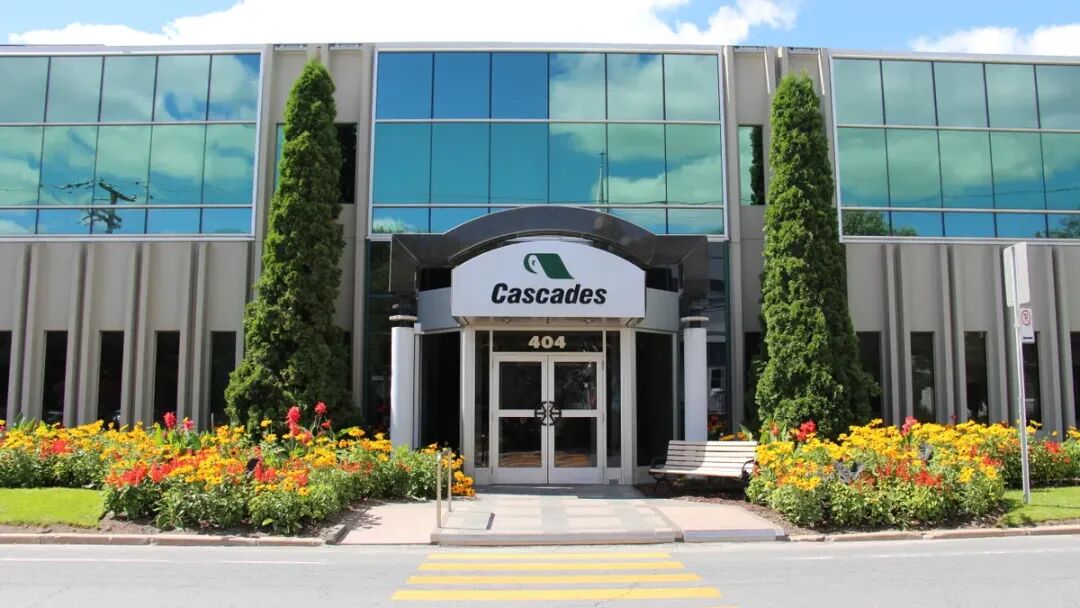
From the perspective of commercial layout, the sale of the Richmond plant is a typical efficient resource misallocation correction. Cascades management is acutely aware that due to its unique geographical location, it is difficult for the Richmond facility to create ideal integration synergies within the company's overall supply chain network. In layman's terms, it is like an "enclave" that was originally excellent but far from the main position, and could not form a synergy with the core area of Cascades in terms of logistics costs and production scheduling.
However, for Cascades, the "leftovers" are the "core puzzle" that Crown Paper is aiming to win. Crown Paper has been in British Columbia for many years and also has a century-span integrated containerboard mill in Port Townsend, Washington.
Through this acquisition, Crown Paper has successfully made up for the shortcomings of its business in the region, deeply integrating the paper mill and carton business, forming an integrated closed loop from base paper supply to finished product manufacturing. As Crown Paper CEO Rob Kretzenbeck said, this is not only an expansion, but also a qualitative upgrade of customer service capabilities.
Slimming and focusing, Cascades' "core market" defense
"Capital allocation must be tilted towards the core market," is the core logic that Cascades President and CEO Hughes Simon has repeatedly emphasized when talking about the deal. For a packaging leader with a broad footprint in North America, profitability has been prioritized before blind expansion.
By selling the Richmond plant, Cascades not only realized valuable land resources, returned considerable cash flow, but more importantly, successfully reduced the group's debt burden without affecting the overall cash flow of the packaging business. This approach of protecting the growth space of core businesses by "removing non-core assets" is particularly pragmatic and rational in the current global financial environment.
Simon said the deal is not only a financial success, but also a demonstration of responsibility to employees and customers. As an operator with deep roots in the region and a commitment to continued investment, Crown Paper is an ideal long-term partner for the Richmond plant. This "take what you need" transaction logic ensures the stability of the factory and its excellent team after the transition period, and achieves a win-win situation for all parties.
The liquidation in pain, the cruel truth behind the cessation of production of a century-old factory
If the sale of the Richmond plant was an "active adjustment", then the closure of the corrugated paper mill on Packard Road in Niagara Falls was a "passive clearance" due to historical problems and technical bottlenecks. At the end of last year, Cascades announced the permanent closure of the nearly 100-year-old factory, and 123 employees faced layoffs, which caused a huge shock in the industry.
Looking at the ledger of this old factory, we can clearly see the general dilemma faced by traditional industries. Although the theoretical annual production capacity of the plant is as high as 200,000 tons, the actual output has hovered around 150,000 tons for a long time. In 2023, its core equipment, the No. 2 paper machine, was forced to stop operation, not only because of the high maintenance costs caused by the aging of the equipment, but also because of the serious shortage of orders.
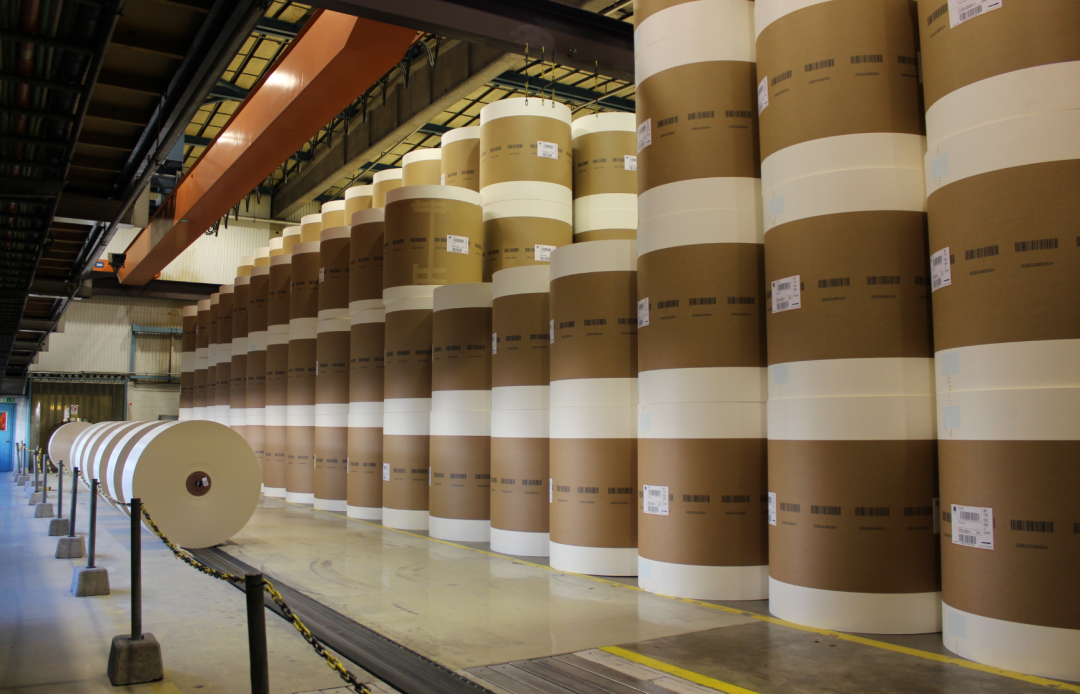
Cascades spokesman Hugo Damours admitted that the old factory was an asset acquired by the company from a discontinued company, and the inherent lack of hardware facilities made it powerless in the face of modern competitors. In today's increasingly demanding market requirements for packaging precision and environmental protection technology, old factories that cannot operate at full capacity have become a heavy financial burden.
It is reported that the closure will directly lead to an economic loss of $5 million. But Jean David Tardif, executive vice president of the packaging business, believes that this is a difficult but correct decision, and without removing the necrotic tissue, there will be no way to optimize the performance of the entire packaging department.
The end of diversification attempts and the return to the "subtraction" aesthetics of the main business
Cascades' divestiture list also includes its only asset in the flexible packaging sector. In October of the same year, the company sold its flexible packaging plant in Mississauga, Ontario to Texas-based Five Star Holdings for US$31 million (about 220 million yuan).
This factory was once a symbol of Cascades' attempt to diversify its operations, mainly responsible for the production of printed flexible plastic packaging and films. However, after the company's strategy shifted to "focus on profitability and core packaging", a single plastic packaging production line seemed a bit out of place.
By handing over this part of the assets to Five Star Holdings, which has more expertise and a wider asset network, Cascades has not only achieved a return on capital, but also secured the supply of films needed by its tissue and packaging divisions by signing long-term supply agreements.
This model of "asset sale + supply agreement" is worth learning from many Chinese companies facing transformation confusion. It not only shakes off the operational pressure of non-core business, but also retains the stability of the supply chain, ensuring a "non-perceptive transition" between employees, customers and suppliers in the process of ownership change.
The enlightenment of Chinese packaging companies - looking for certainty in change
Looking at Cascades' series of operations, it is not difficult to see that the North American giant is undergoing a profound self-revolution: first, decisively divesting inefficient and marginal assets. Whether it is the realization of the Richmond factory or the stop loss of the old Niagara factory, it reflects zero tolerance for "inefficient production capacity".
Second, maximize the utilization of asset value. While selling the business, make full use of the real estate premium to accumulate sufficient "bullets" for the company's transformation.
Finally, deepen the core competitiveness. Invest limited capital and energy in markets that can produce the greatest synergy, rather than unnecessary internal friction in the Red Sea.
For China's packaging industry, the current industry concentration is increasing, and the market dividend has shifted from scale growth to stock competition. The case of Cascades reminds us that big does not mean strong, and what truly determines the vitality of a company is the turnover rate of assets, the moat of core business, and the ability to adjust quickly in the face of adversity.
Today, as the global paper landscape continues to evolve, every move of Cascades is on the precise scale of "subtraction". This is not only a transaction about funds and plants, but also a profound practice on how to define the future and how to optimize the business model. In the future, we will see if Cascades can achieve stronger strategic growth through this series of slimming moves.