


Fenmei Packaging: Delisted from the Hong Kong Stock Exchange
On October 8, New Jufeng (301296.SZ) announced that its controlling subsidiary Fenmei Packaging (00468.HK) received a notice from the Hong Kong Stock Exchange, stating that the Listing Committee had decided to cancel its listing status. However, this decision is not final yet. Fenmei Packaging can apply for a review within seven business days from the date the decision was issued (October 2), meaning before October 13. If the company does not apply for a review, the last listing day will be October 16, 2026, and the listing status will be canceled from 9 a.m. on October 20. Previously, Fenmei Packaging announced that the company is reviewing this decision and discussing with professional advisors whether to apply for a review. New Jufeng said that Fenmei Packaging's daily operations are currently normal, and business coordination is not significantly affected.
New Jufeng spent about 3.355 billion yuan to buy this company, which is much larger than itself. Now, the company they bought may lose its listing that it's held on the Hong Kong Stock Exchange for nearly 16 years.
What worries the market more are the clients behind the two companies. New Jufeng's biggest customer is Yili, and Fenmei Packaging's old client is Mengniu. A company making milk cartons facing delisting brings the supply chain battle between China's two biggest dairy giants back into the spotlight.
A "tangled" acquisition
The trigger for Fenmei Packaging's delisting might actually be New Jufeng's acquisition itself.
The Hong Kong Stock Exchange requires that listed companies must have enough shares held by the public. According to the HKEX Listing Rules 8.08(1)(a), at least 25% of Fenmei Packaging's issued shares must be held by the public. After the 2025 tender offer is completed, New Jufeng, through its wholly-owned subsidiary Jingfeng Holdings, will hold 1.376 billion shares of Fenmei Packaging, accounting for 97.76% of the issued share capital. That leaves only about 2.24% for public shareholders, far below the 25% minimum requirement. As a result, Fenmei Packaging's stock was suspended from trading starting February 19, 2025.
According to HKEX Listing Rules 6.01A(1), if a company is suspended for 18 consecutive months, the exchange has the right to delist it. Fenmei Packaging has been suspended since February 19, 2025, so the 18-month period will expire on August 18, 2026.
It is worth noting that New Jufeng actually did not want Fenmei Packaging to be delisted. At the 2025 performance presentation, New Jufeng's management clearly stated that keeping the Hong Kong listing is beneficial for Fenmei Packaging's international image and can also retain a financing channel. On August 17, the day before the deadline, New Jufeng announced that Fenmei Packaging plans to issue new shares to independent third parties and company employees to restore the public shareholding ratio, and will apply to the exchange for an extension.
However, the Stock Exchange didn't give any more time. On October 2, Funmei Packaging received a letter from the exchange. The Listing Committee determined that the company hadn't completed all the requirements for resumption of trading by August 18. Three issues were pointed out: first, the public float hadn't been restored; second, an independent internal control review hadn't been completed; third, not all important information had been disclosed to the market.
Of these three, the first could still be resolved through a share increase, but the last two are the real problems. They point to the same issue: who exactly controls Funmei Packaging's overseas business.
Dairy Industry "Battle of the Giants"
Xinjufeng and Funmei Packaging are in the same industry, both producing aseptic cartons for UHT milk, and they're the two largest domestic aseptic packaging companies.
It's understood that Xinjufeng got its start with Yili; Yili is both its biggest customer and a shareholder. Xinjufeng's mid-2025 report shows Yili holding 17.136 million shares in the company. Funmei Packaging, on the other hand, has long supplied Mengniu, which is its most important domestic customer.
In January 2023, less than six months after going public, Xinjufeng made a move, spending HKD 999 million to acquire 28.22% of Funmei Packaging's shares, becoming the largest shareholder. The Funmei Packaging board immediately opposed this. The reason? Yili and Mengniu are competitors, and Yili's supplier had become its major shareholder, which could mean Mengniu's orders might not be secure.
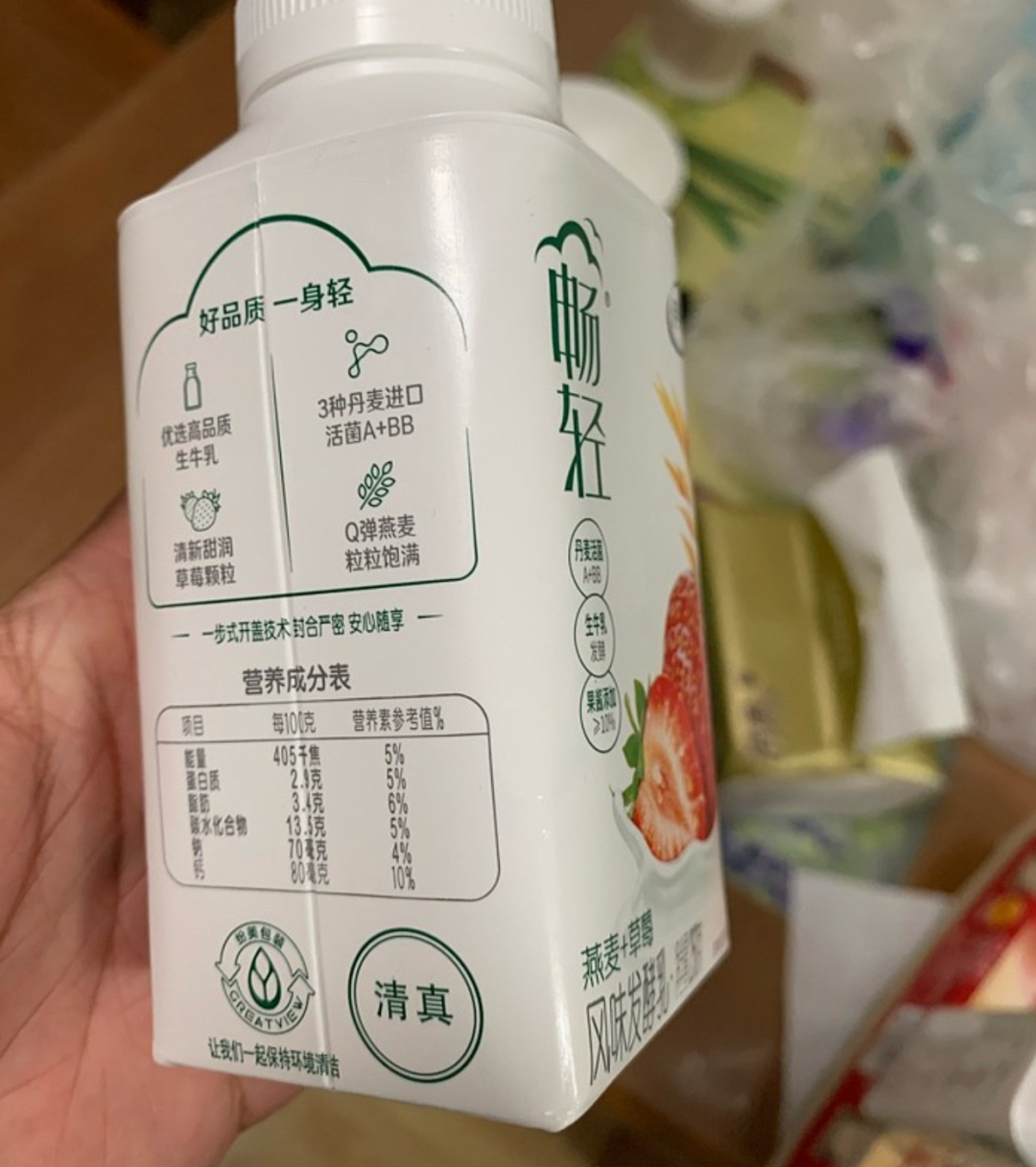
After that, the original management of Fenmei Packaging made two moves in a row. The first move was to bring in Mengniu as a shareholder. A company under Mengniu invested about HK$114 million to subscribe for 70.498 million shares of Fenmei Packaging, holding a 5.01% stake and getting a seat on the board. The second move was to restructure the overseas business in January 2024. After the restructuring, Fenmei Packaging's stake in its overseas companies dropped from 100% to 49%. The original management explained at the time that this was to guard against geopolitical risks and to ease the concerns of overseas clients.
However, this step completely angered New Jufeng. In May 2024, New Jufeng launched a full takeover bid, determined to gain control. By 2025, the offer was completed, and New Jufeng's stake rose to 97.76%, with the two rounds of acquisition costing about 3.355 billion yuan in total.
In fact, what New Jufeng acquired was an incomplete company. After taking over, Fenmei Packaging set up a special investigation committee and released two investigation reports in October 2025 and January 2026. The reports concluded that the 'customer concern' emails used to justify the restructuring were drafted by sales agents, not from actual clients; during the restructuring, 77 employees, intellectual property, production equipment, and the international sales team were transferred; and the former management also deleted a large number of emails. In October 2025, Fenmei Packaging filed a lawsuit in the Hong Kong High Court, seeking to annul the restructuring.
The lawsuit has yet to be resolved. In its 2026 half-year report, New Jufeng admitted that the company still hasn't obtained the financial information for Fenmei Packaging's international business. Without clear accounts, the internal control audit can't pass, and key information can't be fully disclosed.
The Dispute Behind the Paper Boxes
Why would a milk carton stir up two major dairy giants? The answer is that liquid milk remains the core business of both companies.
In 2025, Yili's liquid milk revenue was 70.422 billion yuan, accounting for about 60% of total revenue. Mengniu was even more dependent on liquid milk, with 64.939 billion yuan in 2025, making up 79.0% of total revenue. Room-temperature milk relies on aseptic packaging. Whether the paper carton supply is stable, whether prices are high, and whether new packaging leaks early-all of this directly affects the core business.
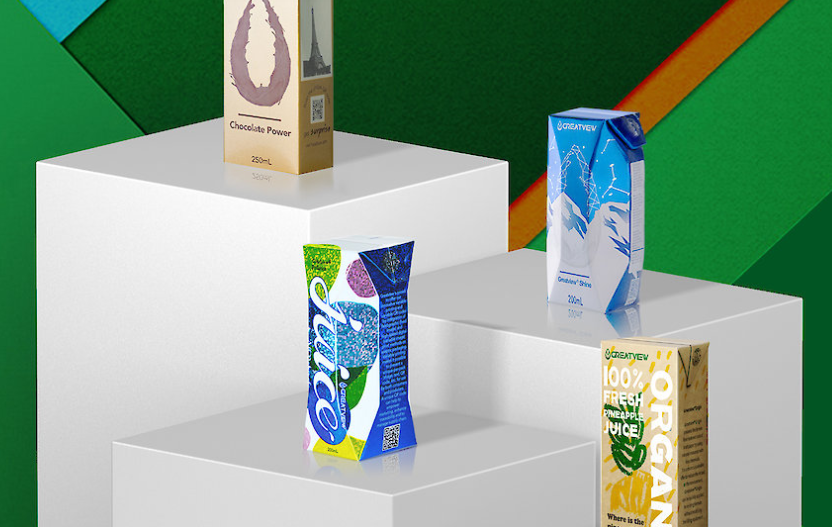
This is exactly what Mengniu is most worried about. In 2024, the board of Fenmei Packaging publicly relayed Mengniu's stance: Mengniu opposed its trade secrets being accessed by Xin Jufeng because Xin Jufeng's shareholders and biggest client are Yili.
Now, Mengniu's situation has changed. Mengniu originally held 5.01% of Fenmei Packaging's shares, but now all public shareholders combined hold only about 2.24%. Based on this proportion, Mengniu has basically exited the ranks of shareholders, shifting from 'shareholder and client' back to just being a client.
Xin Jufeng stated in its 2026 semi-annual report that after the acquisition, clients like Mengniu have been included in the group's client base. However, neither side has disclosed how many orders Mengniu is still giving to Fenmei Packaging. Notably, once Fenmei Packaging delists, it no longer needs to publish separate financial reports. Whether Mengniu's orders increase or decrease will be even harder for outsiders to see.
On the other hand, Yili can't really be called a winner either. Yili is only a minor shareholder and a big client of Xin Jufeng, and it doesn't control Xin Jufeng, nor is there public information showing Yili led this acquisition. In fact, Yili's core packaging supplier is paying the price for the deal.
In 2025, Xin Jufeng's revenue grew 71.61% to 2.928 billion yuan, but net profit dropped 76.23% to 43.6956 million yuan. In the first half of 2026, Xin Jufeng's revenue was 1.58 billion yuan, with net profit attributable to the parent company only 23.6054 million yuan, a year-on-year drop of 59.99%; Fenmei Packaging lost 347,200 yuan in the first half of the year. On August 31, Xin Jufeng's stock closed at 6.47 yuan, down from its issue price of 18.19 yuan that year.
The bigger picture is that it's a tough time for the dairy industry, and the gap between the two giants continues to widen. In 2025, Yili's total revenue was 115.931 billion yuan, Mengniu's was 82.24 billion yuan, a difference of about 33.7 billion yuan; Yili's liquid milk revenue fell 6.11% year-on-year, and Mengniu's annual revenue dropped 7.3%. The more the industry contracts, the more every bit of cost and every piece of information in the supply chain needs to be under one's own control.
Right now, Fenmei Packaging still has one last window: before October 13, the company can apply for a review with the Hong Kong Stock Exchange. But regardless of whether the license is retained, the real suspense isn't at the HKEX. Whether Mengniu keeps its orders or can recover overseas assets is the ultimate answer to this 3.3 billion yuan deal.