


Why are high-end printing companies doing preventive maintenance on anilox rollers? You'll understand after reading this.
In flexible printing, the anilox roller is the core component that determines ink transfer accuracy, color consistency, and print quality. The ink transfer performance of an anilox roller depends entirely on the ink-carrying and transfer ability of the cells on the roller surface. Only when the cell structure is intact and clean, without impurities, can the anilox roller deliver the standard amount of ink and ensure stable printing quality. Therefore, standardized anilox roller inspection and routine maintenance are essential steps in the flexographic production process.
1. Reasons for the decline in anilox roller performance
The standard ink transfer of an anilox roller relies on the roller surface's uniform and orderly micro-cell structure. In long-term production use, two main issues can directly cause roller performance degradation, leading to color inconsistencies, uneven ink layers, and other quality problems.
The first is structural wear. Continuous mechanical friction can cause wear and deformation on the cell walls and the overall structure, altering the effective ink-carrying volume of the cells, which directly disrupts the original ink transfer standards.
The second is cell contamination. Residual ink, varnish coatings, and various production impurities can continuously accumulate inside the cells, reducing their effective volume and obstructing normal ink transfer.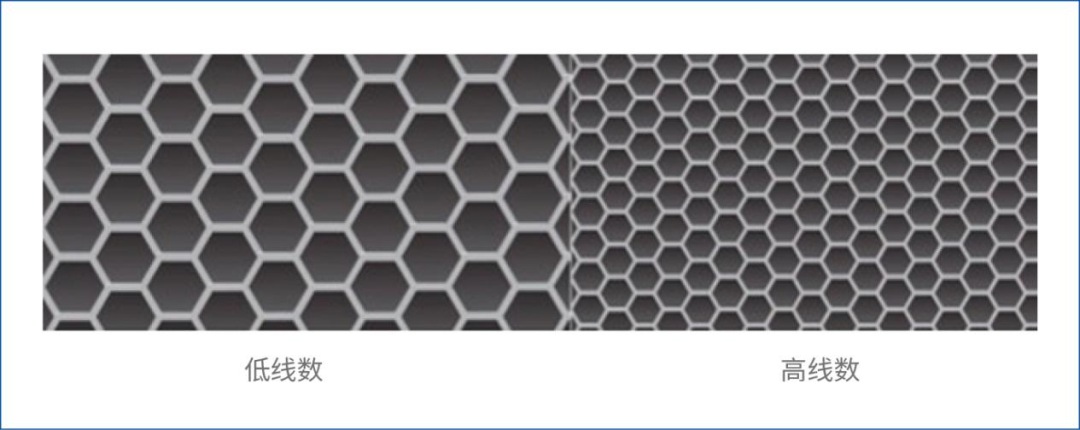
In actual production troubleshooting, if the finished product's color fails to meet standards or the color difference value (ΔE) exceeds limits, it is necessary to follow a standardized troubleshooting logic: first, confirm whether the anilox roll assembly specifications match the production requirements. If the specifications are correct, then focus on checking the cleanliness of the anilox roll and the integrity of the cells. This is the core idea for quickly locating color anomalies.
2. Standardized Preventive Maintenance System for Anilox Rolls
For flexographic printing companies, sporadic and reactive repairs can never reliably guarantee print quality. Establishing a systematic, data-driven preventive maintenance system is a way to maintain the long-term stable performance of anilox rolls. This system can be divided into three modules: daily maintenance, pre-production verification, and storage record archiving.
Daily maintenance requires thoroughly cleaning the anilox roll after each production batch to prevent long-term ink and debris buildup that could corrode and block the cells, thereby reducing performance loss from the source.
Pre-production verification is a key step before starting production. Before each order, the parameters of the anilox roll in use need to be checked to ensure they match the historical qualified production parameters for that order. Routine inspection methods include Kapachi test strip ink load checking, ink drawdown testing, high-power microscope observation, and precision detection with an interferometric camera. Multi-dimensional testing confirms whether the anilox roll's ink transfer performance meets the standard.
Storage record archiving achieves full lifecycle management of the rolls. Before storing an anilox roll after use, the roller surface must be fully inspected, and physical damage like dents and scratches should be accurately recorded, along with real-time cell volume data. Complete data records allow pre-press production to accurately assess the roll's condition, preventing unqualified anilox rolls from being mounted and ensuring the stability of each production batch.
Beyond these three modules, a regular performance benchmarking mechanism should be established. Set the actual ink density and line color effects of a brand-new anilox roll as the baseline standard, and during the roll's entire lifecycle, compare performance changes continuously using mass production order data. All inspection data should be archived uniformly, forming a traceable roll performance database.
3. Precision Testing Techniques for Anilox Rolls
Currently, the industry has developed various mature, standardized techniques for detecting anilox roll volume and condition, which can accurately suit different production testing scenarios. Mainstream testing techniques are divided into two types.
VoluCheck Volume Testing Method
This method is a practical, hands-on testing technique aligned with actual production conditions. During testing, a quantitative standard test ink is applied to the area of the anilox roll to be tested, simulating the doctor blade ink application process in production and obtaining an ink film imprint of the area. Using specialized analysis software and the calculation logic of 'ink amount ÷ coated area,' the actual effective ink storage volume of the cells is precisely measured, giving data that reflects the real production ink transfer effect.
Dotscope 3D Cell Analysis Method
This technique uses depth-of-field synthesis to measure cell geometry. The testing equipment is applied to the anilox roll surface, capturing multiple layer images of the fine cell structures (up to 150 layers), and algorithms reconstruct the 3D depth model of the cells. This accurately restores the geometric structure of the cells, allowing calculation of the standard geometric volume and precise identification of microscopic defects like cell wear or deformation.
Currently, anilox roll maintenance has shifted from traditional reactive repairs and experience-based judgments to a data-driven, standardized preventive maintenance model. On one hand, continuously upgraded testing equipment allows online, real-time inspection of printing machines without disassembly, greatly reducing production downtime losses. On the other hand, collaborations between printing companies and anilox roll technology service providers are becoming mainstream in the industry. Both parties unify testing standards, share performance data, and co-develop maintenance systems, breaking down data barriers and making the entire process of roll selection, maintenance, and replacement more standardized.