


Estée Lauder plans to raise 40 billion to acquire a perfume giant
On April 21, Estée Lauder launched financing of about 5 billion euros (approximately 40.3 billion yuan) for the acquisition of Puig. According to Bloomberg and Spain's Expansión, Estée Lauder has hired JPMorgan to lead this syndicated loan, planning to make a takeover offer for the Spanish beauty and fragrance group Puig using a combination of cash and stock.
If the deal goes through, the two beauty giants controlled by founding families will merge, and the market expects the new company's market value to exceed 50 billion euros (approximately 403 billion yuan).

There were signs of this negotiation early on. On March 23, both parties publicly confirmed that they were in talks over a potential merger. In early April, the Lauder family behind Estée Lauder and the Puig family met in New York to hold substantive discussions on key terms such as share exchange ratios and governance structure. According to Spain's El Confidencial, if the merger is completed, the Puig family is expected to hold 19% to 20% of the combined company's shares, becoming the largest single shareholder.
Jeffrey's analysts estimated that if Estée Lauder launched a full acquisition of Puig at a 30% premium, the total transaction could reach up to 13 billion euros (approximately 104.8 billion RMB). The merged new company is expected to have annual revenues exceeding 17 billion euros (approximately 137 billion RMB), with a market value between 27 billion and 34 billion euros (approximately 217.6 billion to 274 billion RMB). Market reactions are clearly divided: Puig's stock price rose more than 5% after the financing news was released, continuing the roughly 25% rise since the beginning of the year; meanwhile, Estée Lauder's stock price has declined by about 15% since the end of March, reflecting investors' concerns about Estée Lauder's financing ability and integration prospects.

Let's first look at the figures from the most recent financial reports of two companies.
According to Estée Lauder's Q2 fiscal 2026 report for the year ending December 31, 2025, the company's net sales fell by about 2% year-on-year to $4.01 billion (approximately 28.9 billion RMB). However, the perfume business grew against the trend by 9%, becoming the only segment among all business units to maintain positive growth and showing the most impressive growth rate.
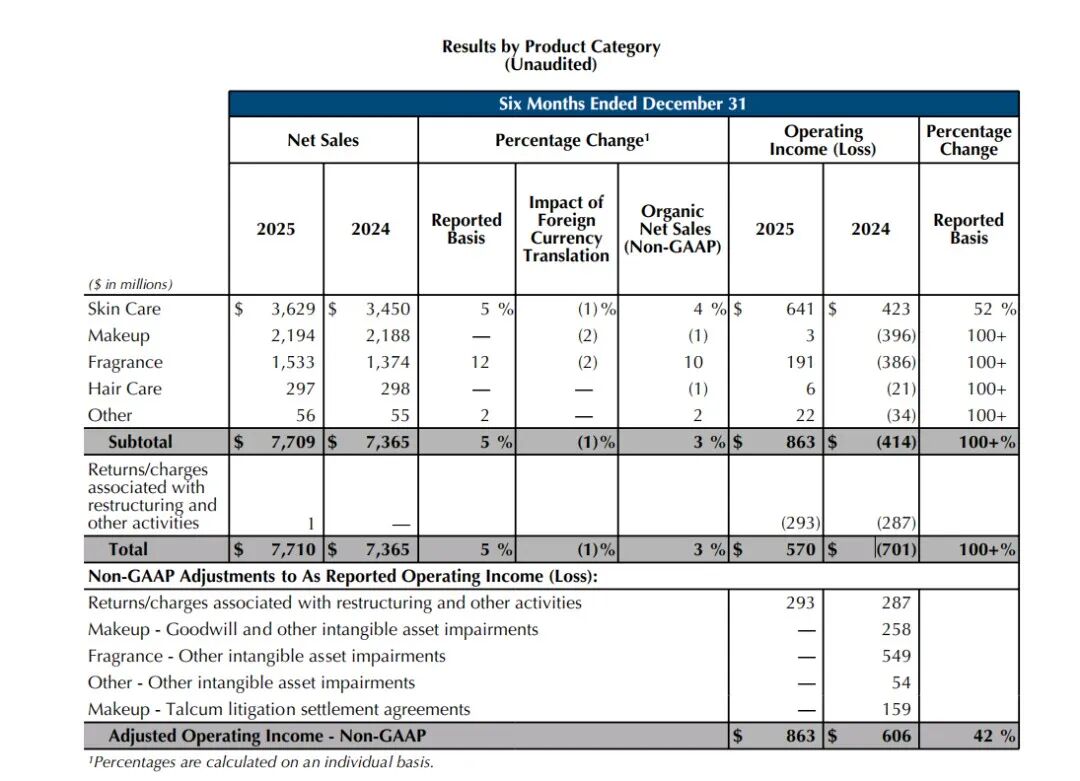
▍Excerpted from Estée Lauder's FY2026 Q2 financial report
Looking at Puig's fiscal year 2025 report, its total net sales reached 5.042 billion euros (approximately 40.6 billion RMB), a year-on-year increase of 5.3%. Net profit reached 617 million euros (approximately 4.97 billion RMB), up 13.7% year-on-year. Among these, the perfume and fashion business contributed about 72% of the revenue, maintaining a 3.8% sales growth.
The makeup business grew by 10.7%, and the skincare business grew by 7.3%. Puig's three perfume brands, including Rabanne and Carolina Herrera, ranked among the world's top ten perfume products, while Estée Lauder owns high-end perfume brands such as Jo Malone and Tom Ford Beauty. The two companies' businesses in the perfume sector overlap significantly.
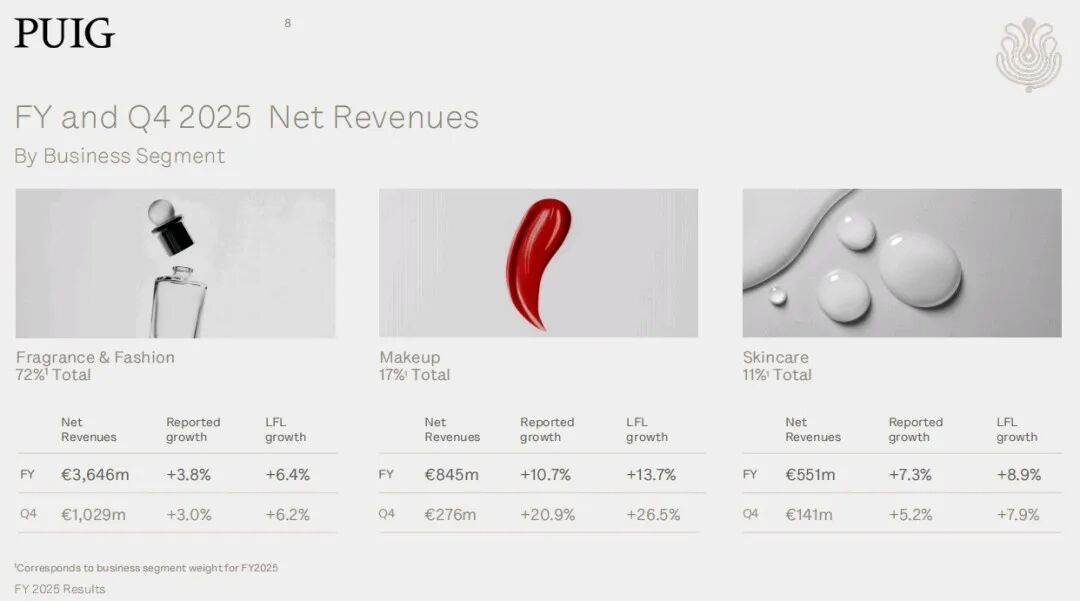
▍Excerpt from PUIG Group Financial Report
If merged, the total scale of the perfume business would exceed 5.6 billion euros (approximately 45.1 billion RMB), forming a lineup capable of challenging the perfume portfolio of L'Oréal's high-end cosmetics division.
However, Estée Lauder's motivation is not just to combine the two perfume divisions to boost sales. The deeper reason lies in the complementarity of regional structures.
PUIG's largest markets are Europe, the Middle East, and Africa, which contribute 55% of its sales. PUIG has strong retail channels and consumer recognition in markets such as France, Spain, and the UK. In recent years, Estée Lauder has heavily relied on China's travel retail channels. With declining duty-free sales in Hainan and increasing competition from domestic Chinese beauty brands, Estée Lauder's growth in the Asia-Pacific region has noticeably slowed. In fiscal year 2025, Estée Lauder's net sales were about 14.3 billion USD (approximately 103.1 billion RMB), marking a decline for the third consecutive year.
Acquiring PUIG is equivalent to gaining a solid European base in one move, which can reduce over-reliance on the Chinese market and optimize revenue structure. At the same time, PUIG's strong presence in the Latin American market is a region that Estée Lauder has long struggled to break through. The growth of cosmetics consumption in emerging markets such as Brazil and Mexico is far higher than that in mature markets in Europe and the US.
From the perspective of the Puig family, accepting this merger deal also has its business rationale.
Puig went public on the Madrid Stock Exchange in May 2024, with an issue price of €24.50. By the time the financing news was announced on April 21, 2026, its stock price had fallen back to around €18.64. Nearly two years after going public, Puig's stock liquidity has always been limited, and institutional investors have certain concerns about its family absolute control structure.
By merging with Estée Lauder and listing in two locations in the United States, the Puig family can convert its holdings into more liquid assets while continuing to retain actual control of the merged company through the super voting rights structure.
Under the current governance structure under negotiation, the Puig family will hold approximately 20% of the shares and retain 93% of the voting rights through its Class A super voting shares. The Lauder family will hold 82% of the voting rights through Class B super voting shares. This means that the two founding families will continue to control the merged company, while public investors can only hold economic interests and have no influence on major decisions.
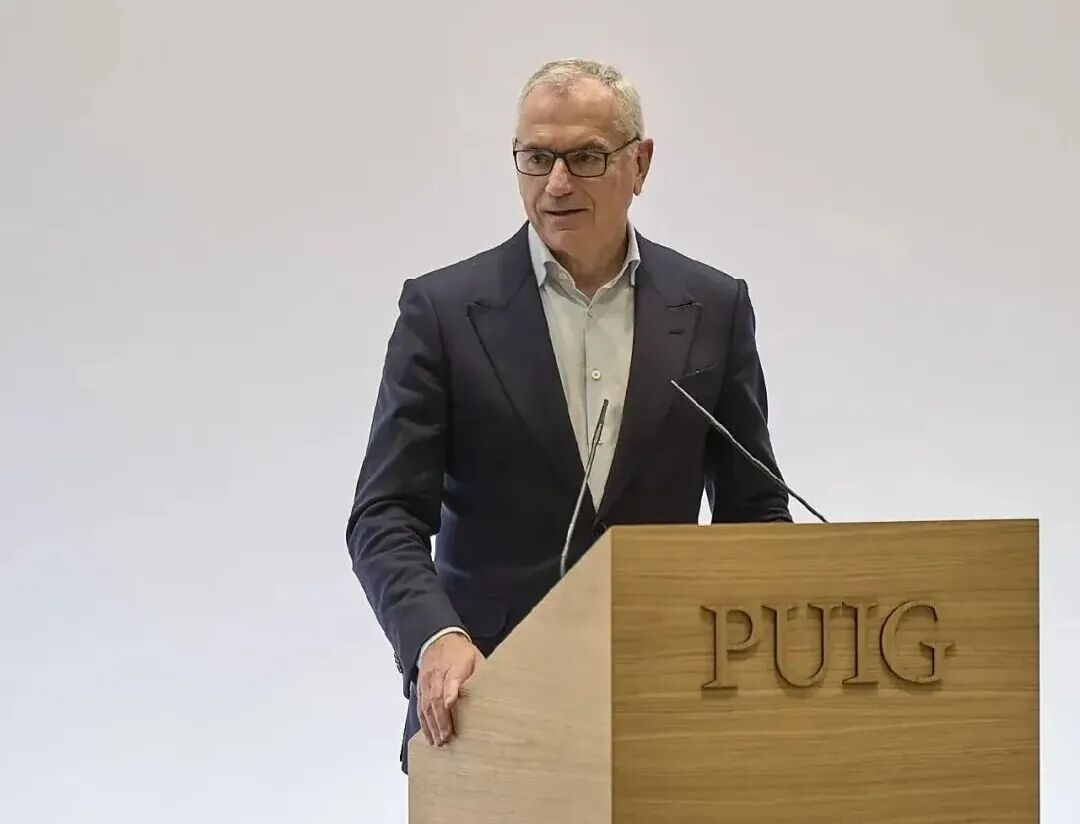
▍Chairman and CEO of Puig, Marc Puig

Market concerns about this transaction cannot be ignored either.
Integration risk is the first hurdle. Estée Lauder has completed multiple small-to-medium brand acquisitions over the past decade, such as acquiring the remaining stake in the Korean skincare brand Dr. Jart in 2019 and obtaining a controlling stake in Deciem, the parent company of The Ordinary, in 2021. However, the company has never managed a merger of equal scale with a giant.
The two companies together own more than 30 brands, and there is significant overlap within their brand portfolios. For example, in the high-end perfume segment, Puig owns Byredo, while Estée Lauder controls brands like Jo Malone and Le Labo, placing them in direct competition within this category. In the cosmetics sector, Puig-controlled Charlotte Tilbury also overlaps with Estée Lauder's MAC in business operations.
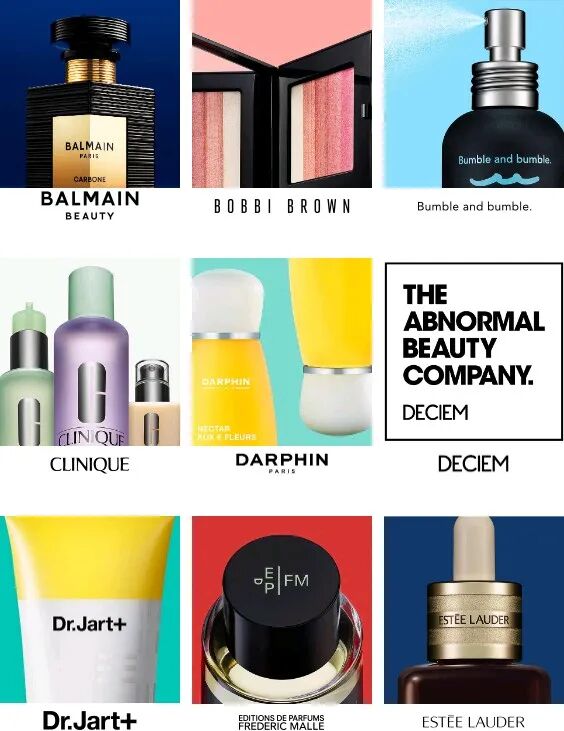
▍Certain Brands of Estée Lauder Group
How to handle brand overlap, how to integrate the dual-family supervoting structure, and how to pass antitrust reviews in Europe and the United States are all practical execution challenges.
Analysts at Deutsche Bank pointed out in a report that such a structurally complex deal brings new integration risks while Estée Lauder's own operations are still in a period of adjustment. Although Estée Lauder's gross margin improved in the second quarter of fiscal 2026, its operating margin remains below pre-pandemic levels. The company is undergoing a restructuring plan, including layoffs and the closure of inefficient stores. Launching a major external merger before internal changes are completed is a huge test of the management team's execution capabilities.
Another detail that requires attention is the antitrust review. After the merger of Estée Lauder and Puig, they will hold a considerable share of the global premium perfume market. Both the European Commission and the U.S. Federal Trade Commission may require the parties to divest some overlapping brands or make behavioral commitments in specific markets. Charlotte Tilbury, as a rapidly growing cosmetics brand, could be required to be sold if regulators consider it a source of competition concerns.
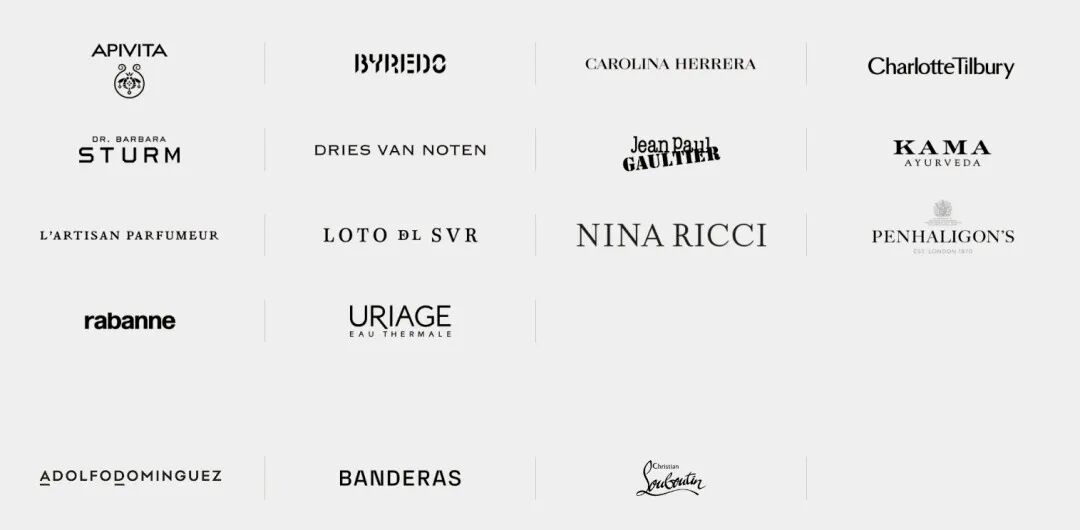
▍Puig Brand Matrix
This will directly affect the valuation and integration effectiveness of the transaction. In addition, the two companies' perfume businesses in the Chinese market also have significant overlap. It is currently uncertain whether the State Administration for Market Regulation of China will conduct an antitrust review of this transaction. Considering that China is the world's second-largest beauty market, any merger involving leading global beauty companies is unlikely to bypass Chinese regulatory scrutiny.
Finally, it comes back to the most fundamental question: Is this deal really worth it?
From a strategic logic perspective, Estée Lauder's choice is reasonable. Relying on internal efficiency improvements to gradually restore growth may take three to five years. Meanwhile, the competitive landscape of the beauty industry is rapidly changing, with L'Oréal continuing to expand its lead in 2025, and Sephora and Dior Perfumes under LVMH also competing for high-end market share. If Estée Lauder does not take action, it may fall further behind in the perfume segment, which has the most certain growth potential. Acquiring Puig effectively addresses three major weaknesses at once: the perfume category, European channels, and Latin American presence, which would be difficult to achieve through internal growth in the short term.
However, the capital market never looks at motives, only results. The €5 billion financing (approximately RMB 40.3 billion) is just a down payment. The interest cost of the syndicated loan, the dilution effect from share swaps, potential brand conflicts, and cultural friction during integration are the key variables that will determine the ultimate success or failure of this transaction. As of April 21, the parties had not yet signed a formal agreement, all terms are still under negotiation, and the deal remains uncertain.